
Pioneer VSX-LX503 Review
In the past year or so, a handful of entry-level Dolby Atmos receivers have bucked tradition, offering surprisingly robust functionality and even amplification power that rivals mid-range models. Just last month, I reviewed the VSX-LX103 in this very publication.
Priced at just over ~$670 USD, it featured 7.2 channels and delivered movie sound that was fiercely aggressive – completely on par with mid-range products. With entry-level receivers performing this well, how can mid-range models possibly justify their existence? The VSX-LX503, which I’m introducing to you today, provides a very clear answer.
Channel Configuration and Decoding
Right from the product planning stage of the VSX-LX503, I could see a strong intention, similar to the LX103: to “break price segment limitations.” Its predecessor, the SC-LX502, was a 7.2-channel surround receiver with a built-in 7-channel amplifier. The new mid-range VSX-LX503, however, mirrors the design of the SC-LX701, the “second brother” in the Pioneer surround receiver lineup, by incorporating a built-in 9-channel amplifier circuit, becoming a 9.2-channel unit.
The VSX-LX503’s native output is sufficient to power 5.1.4 (or 5.2.4) or 7.1.2 (or 7.2.2) channel speaker setups simultaneously, supporting both DTS:X and Dolby Atmos. Additionally, the VSX-LX503’s maximum decoding capability is 7.1.4 channels. By simply connecting an external two-channel power amplifier to drive the Surround Back speakers, you can increase the total output channels to match most flagship surround receivers.
Video and Connectivity
Regarding video compatibility, four of the six HDMI terminals on the rear panel are HDCP2.2 compliant, supporting legitimate 4K source equipment and fully compatible with HDR10, Dolby Vision, and HLG HDR video. Currently, many AV receivers feature relatively simplified video circuits, often merely extracting audio from HDMI inputs and allowing the video signal to pass through.
Higher-end models, however, can perform pixel conversion on 1080p video to output it at 4K resolution. The VSX-LX503 incorporates the same Super Resolution processing technology found in Pioneer’s own BDP-LX88 Blu-ray player. Its video circuit analyzes images, adjusts quality, and compares pixels before and after interpolation to enhance texture and outline definition. This results in 1080p-to-4K upconversion quality that is finer and more detailed than typical pixel conversion.
Network and Streaming Features
The VSX-LX503 is equipped with dual-band Wi-Fi and Bluetooth, offering extensive network music streaming capabilities. It includes built-in Chromecast and supports AirPlay, allowing users to push music from their smartphones or tablets for playback. The unit also supports FlareConnect and DTS Play-Fi, two types of multi-room audio functionality. When connected to the internet, users in Taiwan can listen to Spotify and tunein internet radio.
Compared to Pioneer’s previous generation models, the VSX-LX503 adds an advanced feature: compatibility with smart speakers featuring built-in Google Assistant. In the future, when Google Assistant speakers become available in Taiwan and Google Assistant enhances its Chinese language support and officially launches relevant services, users will only need to purchase such a smart speaker to upgrade their home audio system via the VSX-LX503 into a “voice-responsive” smart audio system.
Diverse Audio Sources
This unit can play music files from PCs, NAS devices, or smart portable devices within its network domain. It can also play music files by inserting a USB storage device. It supports various Hi-Res music file types including WAV, FLAC, AIFF, Apple Lossless, Dolby TrueHD, and DSD. The maximum compatible format for multi-bit files is 192kHz/24bit, while DSD supports up to 11.2MHz.
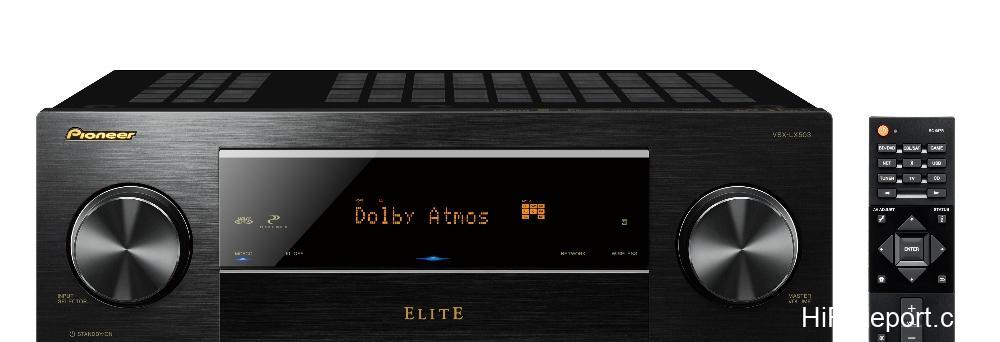
Not only does this unit possess rich features essential for the music streaming era, but it also includes a Phono input terminal, allowing users to connect a turntable.
Internal Architecture and Amplification
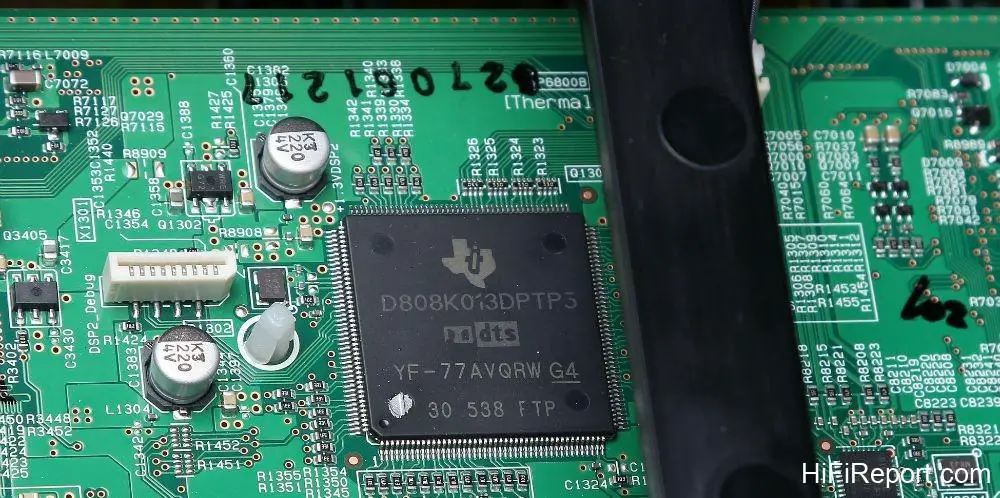
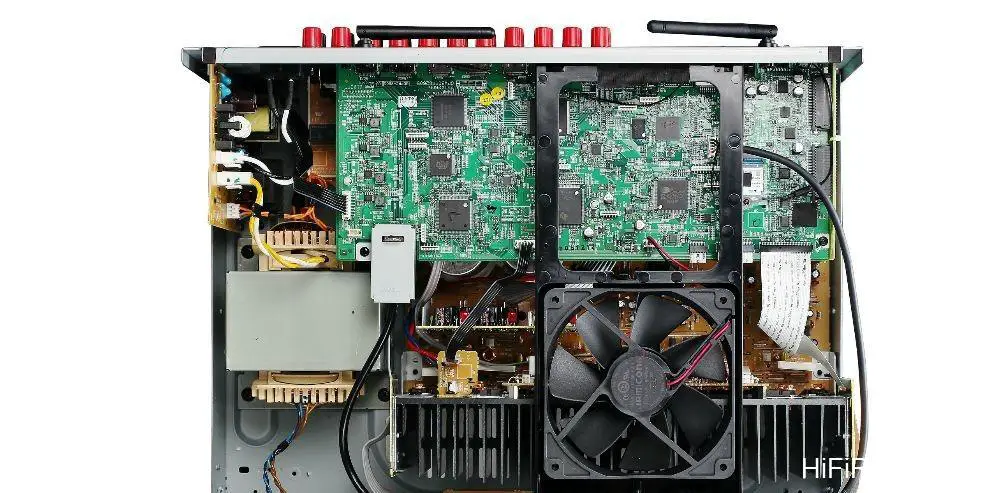
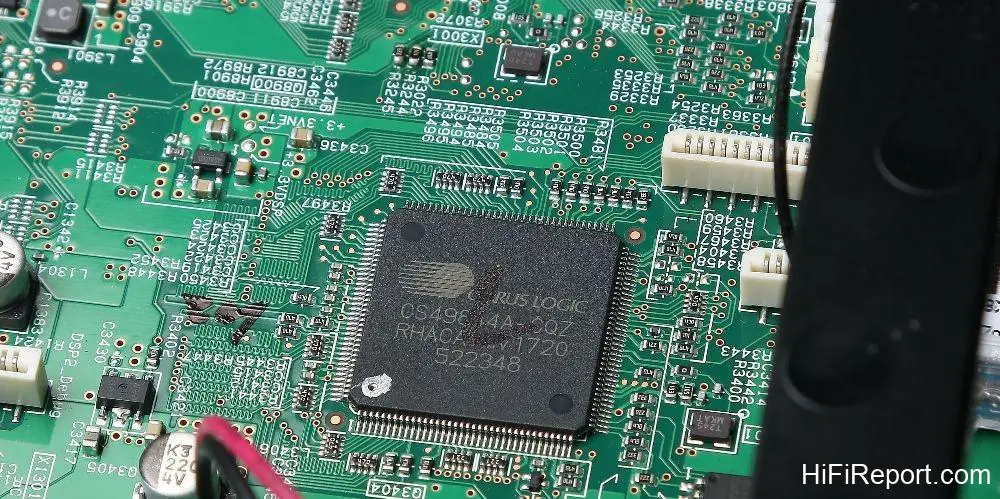
Examining the internal circuit architecture of the VSX-LX503 reveals significant differences from the SC-LX502. In the surround decoding section, the SC-LX502 previously used a single 4-core 32-bit DSP chip, the Cirrus Logic CS49844A, to handle all audio processing. The VSX-LX503, however, is equipped with two DSP chips: one is still the Cirrus Logic CS49844A, and the other is a TI Aureus TMS320DA808 (D808K013TPDP5).

I speculate this configuration is due to the increased channel count of the VSX-LX503, requiring higher processing power for multi-channel decoding and Pioneer’s original MCACC digital sound field calibration.
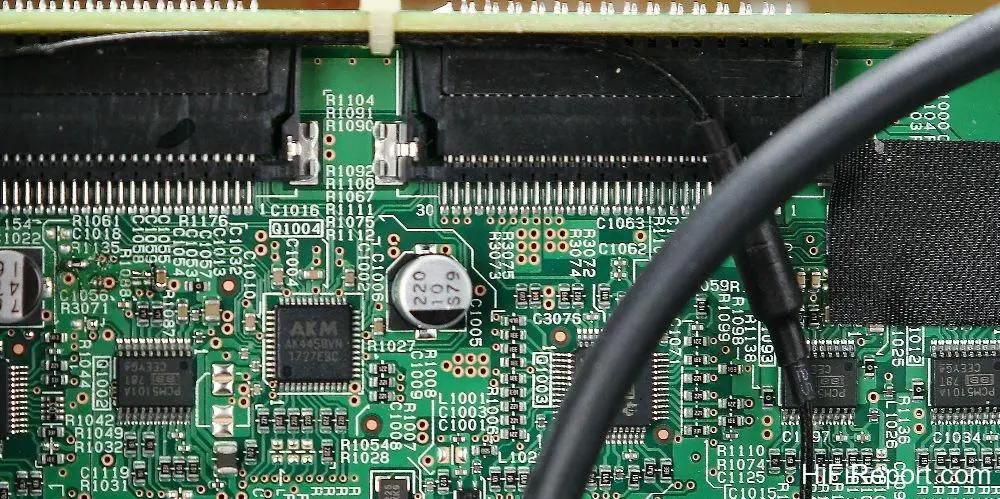
After the digital audio processing is completed, the signal is sent to the digital-to-analog conversion circuit located on the far right of the digital main board. A single 32-bit 8-channel DAC chip, the AKM AK4458VN, performs the primary channel D/A conversion. Additionally, three two-channel DAC chips, the TI PCM5101A, handle the D/A conversion for secondary channels in the main zone as well as for Zone 2 and Zone 3.

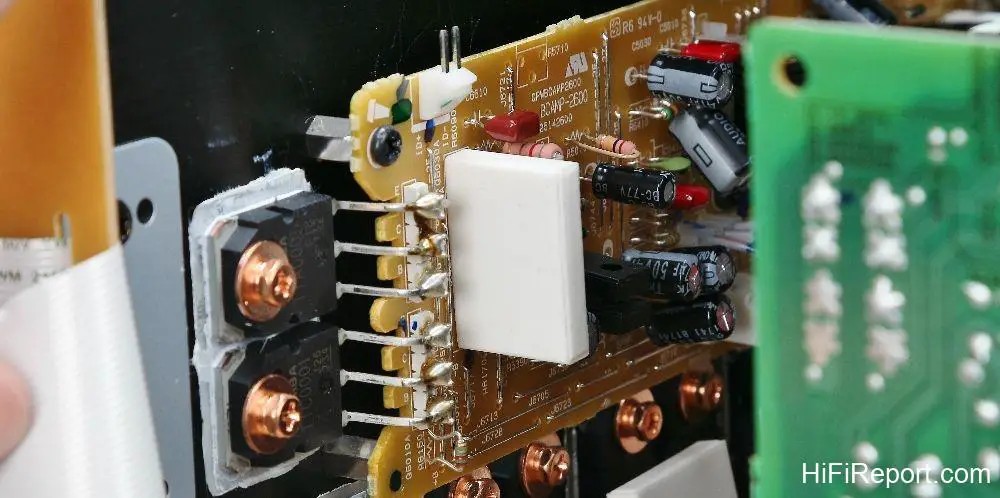
A significant change in the VSX-LX503 is its amplifier circuitry. Previous generations of Pioneer’s “LX5x” series utilized Class D amplification. This time, the VSX-LX503 makes a substantial departure, abandoning Class D and switching to Class AB amplification. The architecture and components of all nine amplifier channels are identical. Each channel is composed of approximately 13 various transistors plus passive components.
Each channel uses a pair of Toshiba “Triple Diffused” power transistors, TTA0001/TTC0001, in a push-pull configuration. These two power transistors are capable of continuous output current of 18 amperes and a peak instantaneous output current of up to 35 amperes. The selection of these transistors suggests the designer intended the VSX-LX503 to have higher instantaneous current output, giving movie sound effects more explosive power.
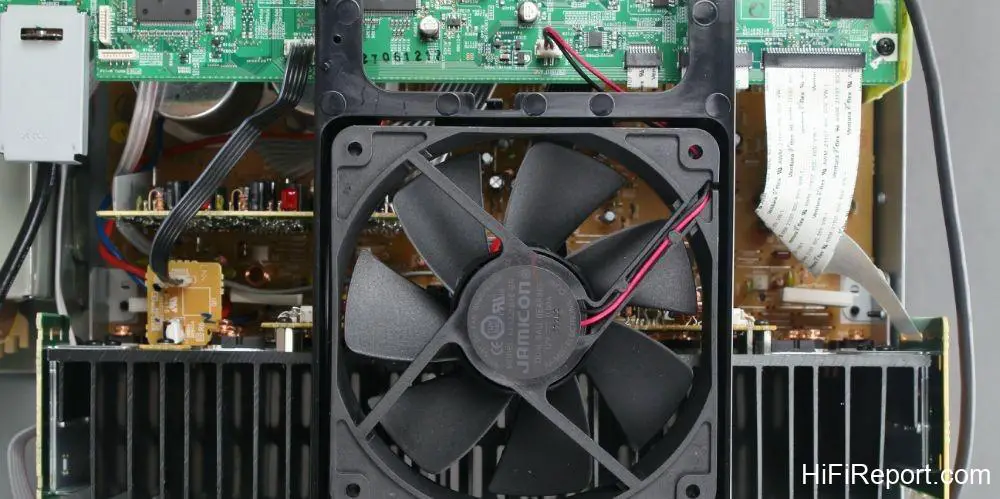
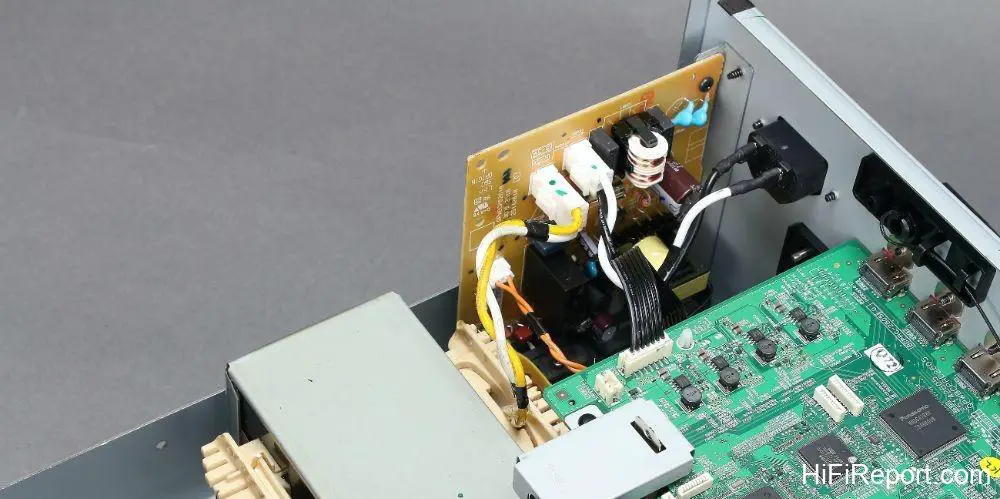
However, Pioneer’s official websites in various languages do not mention this specific design detail. That’s fine; I’ll proceed with my observations. The main audio circuit is powered by a substantial Bando copper shielded transformer. Following the rectifier circuit, two custom-made 15,000μF filter capacitors are used. From this, it is evident that the power supply is indeed robust and prepared to handle instantaneous high output from the amplifier circuit while maintaining good stability.
Based on the circuit design, the VSX-LX503 is undeniably an AV receiver designed with an emphasis on robust instantaneous high current output capabilities.
MCACC Tuning Philosophy
In my previous review, I mentioned that an AV receiver’s character isn’t solely determined by its hardware specifications. The equalization and subwoofer level adjustments performed by “automatic sound field calibration” are often the key factors in defining a receiver’s personality.
Lower and mid-range models, with their relatively limited amplifier circuitry and power output capacity, often apply attenuation in the high frequencies and increase the subwoofer signal output. This makes users perceive their movie sound effects as quite impactful. In contrast, most flagship models do not do this; they aim for a “precise” calibration targeting a flat and balanced response.
Any “impact” is then achieved solely through the amplifier circuitry’s capability, without easily “boosting” the subwoofer output. So, for a mid-range model like the VSX-LX503, will it follow the “cinema-oriented” approach of lower-priced models or the precise calibration of flagship units?
Listening Experience
Initially, I used this unit to play 2-channel Hi-Res music files to test its ability to drive floorstanding speakers (with the subwoofer inactive). Listening to rock music at high volumes, the VSX-LX503 demonstrated capabilities almost comparable to flagship models. It drove the not-so-easy-to-drive Pioneer S-1EX speakers to produce full, thick, and powerfully dynamic bass.

I then changed the left and right channels to “Small,” opting for a 2.1 channel setup (subwoofer crossover set to 80Hz), and compared the sound with MCACC engaged versus the 2.0 channel listening state. The bass quantity did not increase (indicating MCACC did not deliberately boost the subwoofer output on this unit).
Instead, because MCACC reduced room standing waves and achieved phase consistency across all channels using Phase Control, the previously “slightly bloated” bass became tighter, more controlled, and faster. Far from attenuating the high frequencies, it even appropriately compensated for the roll-off caused by the tweeter’s off-axis response.
Therefore, with “MCACC EQ: On,” the treble sounded slightly brighter than in Pure Direct mode, making the musicians and vocalist feel more forward, as if my seat were closer to the stage.
Having auditioned 2-channel music, it’s clear the VSX-LX503’s MCACC calibration leans towards the “precise and realistic” approach of flagship models. You might wonder if this characteristic, compared to a “cinema-oriented” tuning, would disadvantage its movie sound performance. Not at all! The powerful amplifier circuitry allows it to drive the bass frequencies *outside* the subwoofer’s responsibility range with tremendous force.
If your left and right speakers have good low-frequency extension, set them to “Large.” My setup, using one M&K X12 active subwoofer alongside the VSX-LX503 driving a pair of S-1EX speakers, produced bass so full-bodied it felt like using two or three subwoofers simultaneously – it was incredibly fierce!
I have always believed that “cinema-oriented” receivers over-modify the high frequencies (starting roll-off at 15kHz or even earlier), making the treble sound “muffled” and suppressing the intended excitement of movie sound effects. For example, sharp metal scrapes or shattering object sounds come across as too gentle, lacking aggression, which prevents the listener from feeling immersed in the tension. The VSX-LX503 is the complete opposite.
Whatever sound a movie effect should have, and whatever intensity it should convey, it presents it clearly and boldly, without any unnecessary embellishment. Wild sports car engine sounds, powerful explosions and bombardments, intense battle scenes with a hail of bullets – the VSX-LX503 delivers all of these with tremendous energy, high dynamics, and a superior level of aggression that keeps you on edge.
In terms of soundstage, pairing this unit with a 5.1.4 channel speaker setup created a tight, three-dimensional spatial envelope. Moving sound objects at height had very distinct shape and localization. Even when playing Dolby TrueHD and DTS-HD Blu-rays without overhead effects, you can choose DTS Neural:X or Dolby Surround to engage the overhead speakers and create a three-dimensional soundstage effect. Users can also select Pioneer’s own sound field modes (such as Ent.
Show, Drama, Action, Rock/Pop, Classical, Unplugged, Sports, etc.) to match various content types, which also provide a three-dimensional soundstage effect.
Recommendation
If you’ve assessed your listening space and determined that a 5.1.4 or 7.1.2 channel setup is just right, and you are eager to experience “aggressive” movie sound effects, I can tell you plainly that the VSX-LX503’s ferocity is on par with many higher-end and flagship models. Furthermore, its realistic musical playback and overall balance are among the top performers in its price range.
Given the VSX-LX503’s build quality, which exceeds its class, and its actual performance, I believe it offers outstanding value for money and should receive our magazine’s Best Recommendation award.
Sample Playback Highlights
**DTS 2018 Demonstration Disc UHD BD**
The VSX-LX503 does not rely on “modifying the treble or boosting the subwoofer output level” to make the sound appear thicker or stronger. It purely leverages its own powerful amplification to deliver high dynamics and energy. By not modifying the treble and instead applying proper equalization calibration, the high frequencies remain complete and clear, with no loss of detail.
This enhances the sense of “distance” for sound objects moving in the three-dimensional soundstage. Effects like objects rapidly approaching from afar and whizzing past are rendered with greater excitement.
**Akiko Suwanai – Poeme Multi-channel SACD**
When playing DSD files or receiving external DSD audio input, the unit can operate in “DSD Direct” mode, allowing the DSD audio signal to bypass the DSP chip processing. The 1-bit signal is sent directly to the AK4458VN for conversion into an audio signal. During actual listening, I could fully appreciate the warm, smooth, richly textured, and highly detailed yet soft sonic characteristics of DSD music files and SACDs.
Specifications
* Type: 9.2-channel AV Receiver
* Rated Power Output: 180W x 9 (6 ohms, 1kHz, THD 1%, single channel driven)
* Maximum Effective Output Power: 215W x 9 (6 ohms, 1kHz, THD 10%, single channel driven)
* Headphone Output: 85 mW + 85 mW (32 Ω, 1 kHz, 10% THD)
* Total Harmonic Distortion: 0.08% (20 Hz – 20,000 Hz, half power)
* Signal-to-Noise Ratio: 106 dB
* Frequency Response: 5 Hz – 100 kHz / +1 dB, –3 dB (Direct/Pure Direct)
* USB Terminals: x2
* 6.3mm Headphone Output: x1
* Subwoofer Outputs: x2
* Speaker Output Terminals: x11
* Pre-outs include: 11.2 channel, Zone3/Height2, and Zone2
* HDMI Terminals: 7 In / 2 Out
* Composite Video Input Terminals: x2
* Stereo Audio Inputs: x5 (including PHONO)
* Component Video Input Terminal: x1
* Digital Input Terminals: Optical x2, Coaxial x1
* FM/AM Antenna Terminals: x1 each
* LAN Terminal: x1
* Dimensions (W×H×D): 435×185×386mm
* Weight: 13 kg