
Primare I15 Prisma MK2 Review
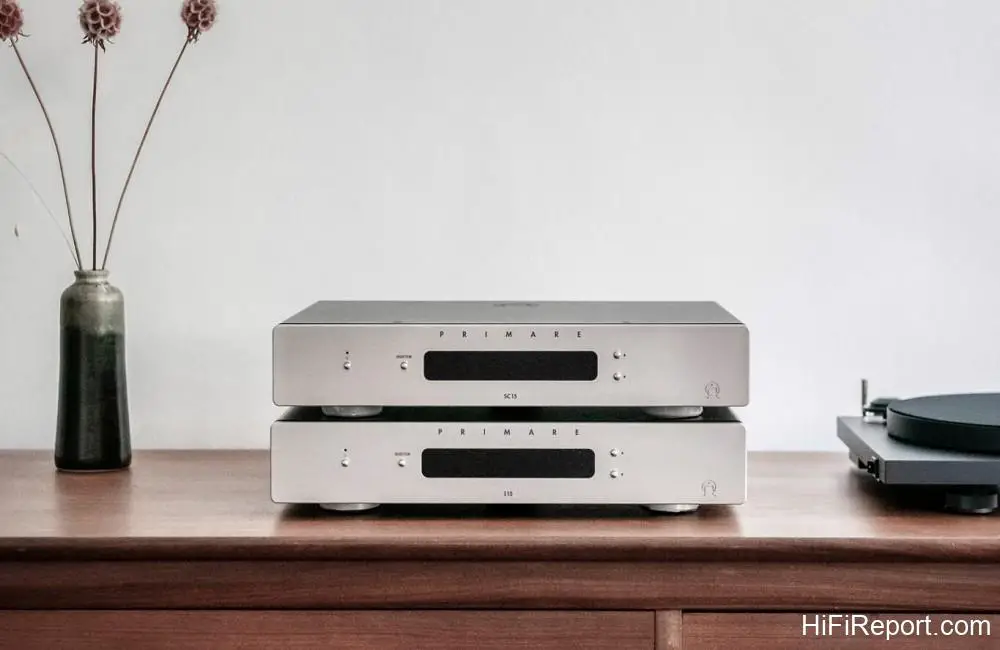
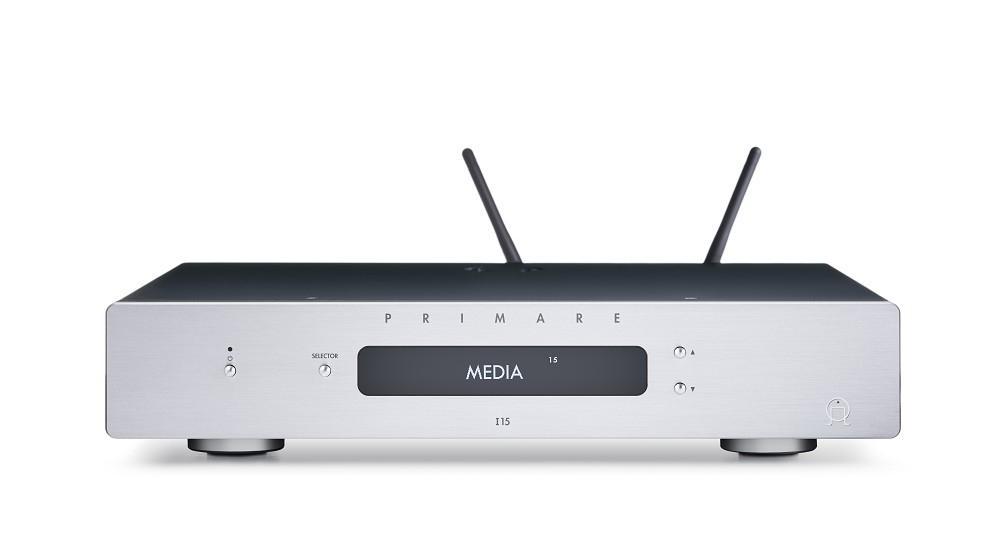
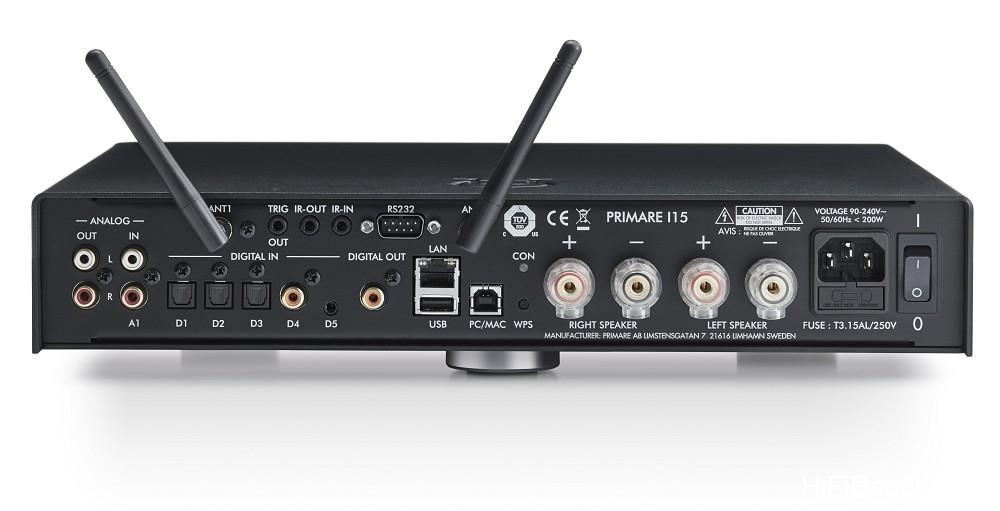
The I15 Prisma MK2 is more than just a European brand; it’s a genuine Swedish-made premium product. Its exterior is simple and refined, measuring 35 cm wide and a mere 7.3 cm high, yet it boasts impressive power output and abundant functionality. A single I15 Prisma MK2 unit combines the functions of a DAC, a network streamer, and an integrated amplifier. Digital inputs include optical, coaxial, 3.5mm mini-plug, and USB-B terminals.
Connectivity and Features
The USB-B input supports up to PCM 384kHz/24bit and DSD128, while other digital inputs are compatible with up to 192kHz.
The unit’s network capabilities include AirPlay 2, Roon Ready, Spotify Connect, and Chromecast. It can stream music files shared from a NAS, PC, or mobile devices (DLNA) over the network. Compatible music file types include WAV, LPCM, AIFF, FLAC, MP3, MP4 (AAC), WMA, OGG, and DSD. The USB-A terminal on the rear panel also allows you to connect a USB hard drive or flash drive containing music files. It supports NTFS and FAT32 formats up to 2TB and the same music file types as DLNA.
While the unit can play shared music files “over the network” or use a USB storage device as a music library “via USB,” Primare explicitly states that the USB storage device should be considered a “secondary option.” Network playback is prioritized for superior sound quality compared to USB hard drives. This likely reflects their findings from extensive in-house testing.
Internal Design and Build
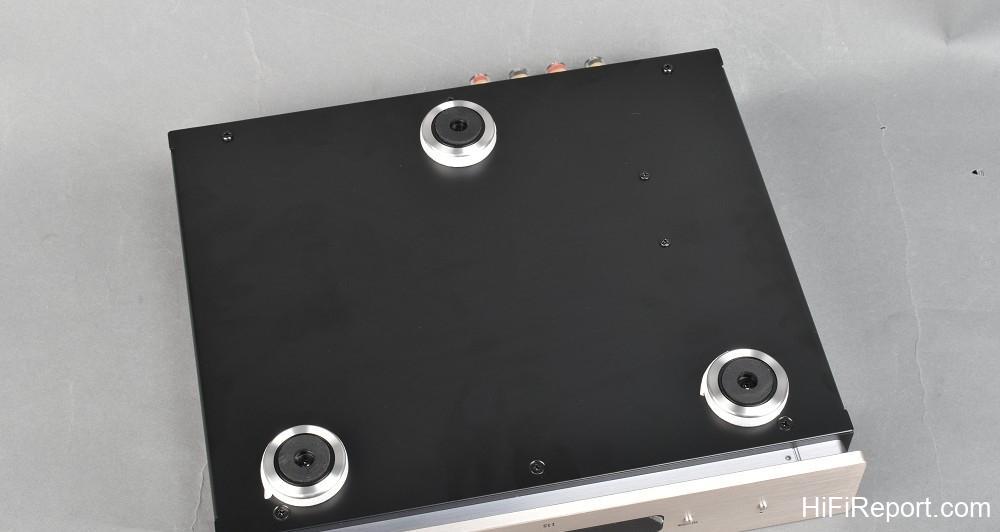
Regarding hardware construction, the I15 Prisma MK2’s chassis maintains the brand’s consistent “three-point support” design. As shown in the image above, it features three isolation feet arranged in a “two at the front, one at the rear” configuration. This setup ensures that no foot is ever suspended, providing enhanced stability.
Inside the unit, the circuitry of the I15 Prisma MK2 remains similar to its predecessor, the I15 Prisma, utilizing a design based on a “main circuit board + various modules.” This modular approach simplifies assembly, contributing to the relatively accessible price point for this “Made in Sweden” amplifier.

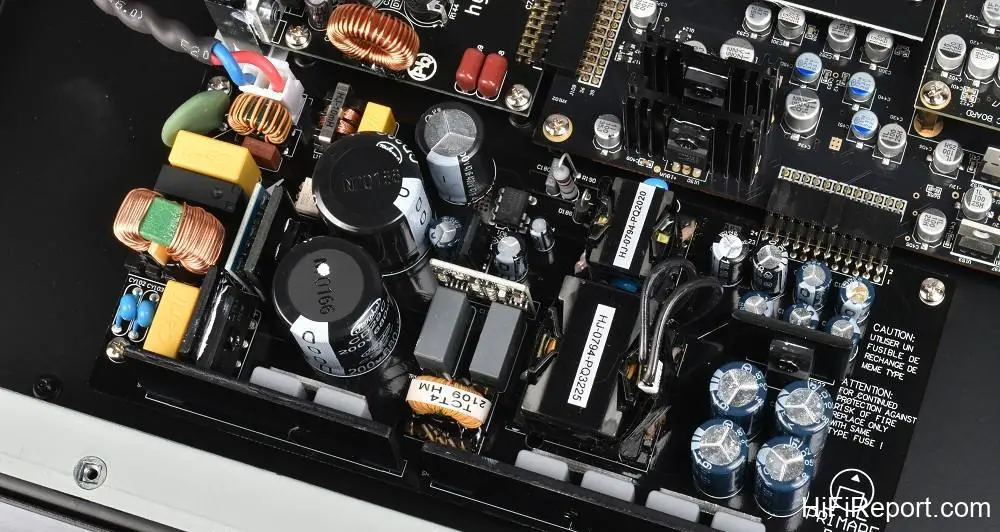
As seen in the image above, Primare’s switching power supply board is located at the front of the unit, the main circuit board occupies the rear half, and the module bearing the Primare logo in the center is the Prisma Bluetooth and network module.
DAC and Amplification
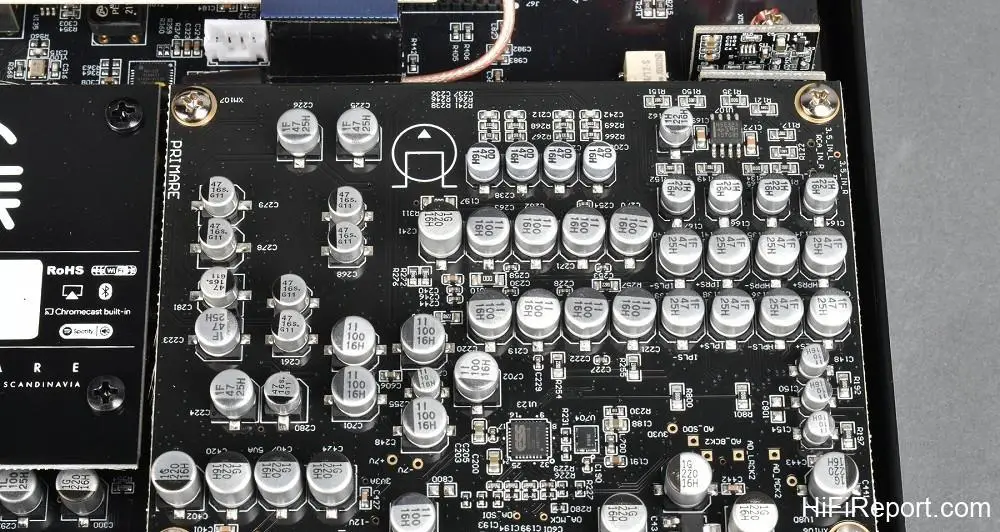
The I15 Prisma MK2 uses the GigaDevices GD32F303 single-chip system with a Cortex-M4 high-performance core to handle streaming and music file decoding and playback. The most significant change in the I15 Prisma MK2 compared to the I15 Prisma is the digital-to-analog conversion circuit board located in the upper right corner of the main circuit board (see image above).
The previous generation used the AKM AK4490 DAC chip, which had a signal-to-noise ratio of 120dB and total harmonic distortion of -112dB. The I15 Prisma MK2, however, adopts the ESS ES9028Q2M, featuring a signal-to-noise ratio of 129dB and total harmonic distortion of -120dB. Objectively, this revision represents a genuine upgrade in the DAC section, offering improved dynamic range and lower distortion performance compared to the previous model.
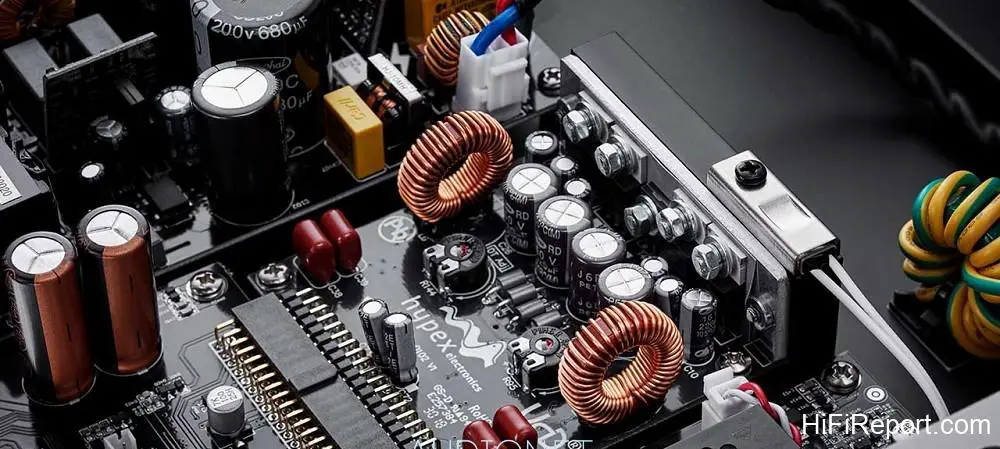
The I15 Prisma MK2 features analog inputs and a discrete two-channel preamplifier circuit. For the power amplifier section, it employs the Hypex UcD102V1 module. Audiophiles familiar with Primare might find this surprising, wondering why they use another company’s Class D module when they have their proprietary UFPD Class D amplification. Primare’s explanation is that this choice helps keep the product price more competitive.
I also noticed that this unit uses a “special version” of the Hypex UcD102V1 (see image above), with clear differences in the printed circuit board and the inductors used in the output low-pass filter compared to the standard UcD102 module. Comparing it specifically to the UcD102V1 module used in the I15 Prisma, the I15 Prisma MK2’s inductors are visibly more substantial.

In fact, Hypex’s Class D modules are primarily designed to be customized for ODM clients, allowing manufacturers to apply their tuning expertise and imbue the amplifier with the specific sonic characteristics of their brand. Therefore, beyond changing components and the board, I suspect Primare, with its extensive experience in Class D amplification, might also have altered some parameters within the UcD section. The sonic performance will ultimately speak for itself.
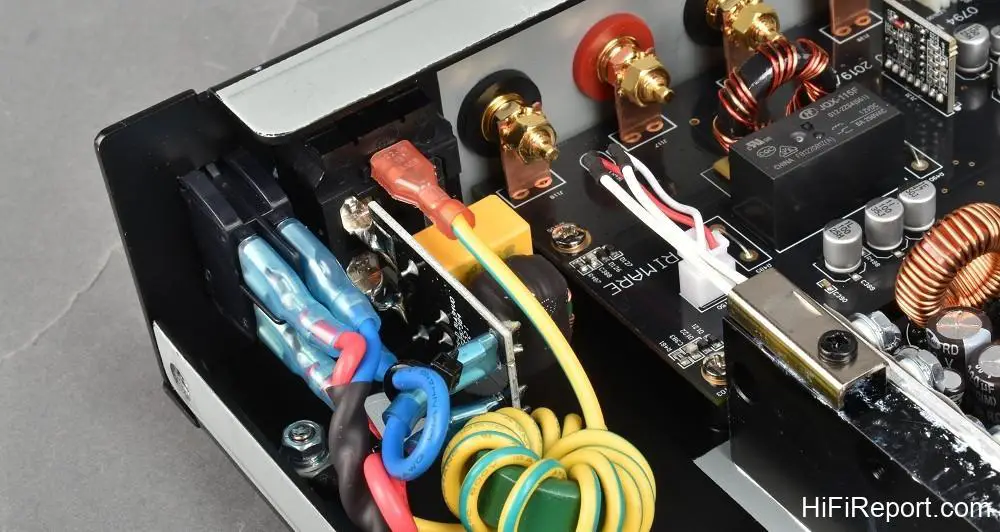
I observed that both the power cord inlet (image above) and the input section of the power circuit board (lower left in the image below) feature AC filtering circuits. This design serves a dual purpose: it simultaneously reduces power noise entering the unit while also suppressing noise emitted by the switching power supply from affecting the power path.
Listening Impressions
For my listening test, I paired the I15 Prisma MK2 with Pioneer S-1EX floorstanding speakers. This pairing was deliberate. The S-1EX features TAD coaxial drivers with beryllium tweeters, making them highly revealing of a streaming amplifier’s sound quality and requiring significant driving power. In terms of price, this is certainly an over-specced pairing for the amplifier’s category, yet the I15 Prisma MK2 genuinely demonstrated performance beyond its expected price range.
Listening to Beyoncé’s “My House,” the inherently rich bass of the track was reproduced with precision, exhibiting strong punch. The low frequencies were dynamic, clearly defined, and impressively supple. This level of bass control is truly outstanding among integrated amplifiers priced under $3,000-$4,000 USD.
The I15 Prisma MK2 is capable of allowing speakers to unleash their full energy and impact in most home environments. The extent to which you can exploit this depends on your room’s soundproofing and your neighborly relations. How loudly one can play music is a practical concern, which is why I particularly value a streaming amplifier’s sound quality at medium and low volumes. Having encountered Primare products since the 1990s, I can attest that their style has remained remarkably consistent.
Although I just mentioned the I15 Prisma MK2’s excellent speaker driving capability, I believe Primare amplifiers truly excel at “leisurely listening.” At normal or even low volumes, the sound is exceptionally clear and transparent, with pure mids and highs set against an incredibly quiet background. This allows you to effortlessly perceive delicate textures, a noble and elegant character, and the inherent beauty of the music itself.
No music feels dull or monotonous; even “solos” from instruments like piano, violin, flute, or harp reveal the beauty of the music through the rich expression of the performance (timbre and dynamic variations) and the acoustics of the space.
With its fresh elegance and noble character, I believe the superb musicality is the greatest advantage of this European premium product, the I15 Prisma MK2, within its approximate price range (the distributor has not yet provided a suggested retail price, but I can estimate the ballpark).
For urban homes where volume might need to be limited, yet you still desire to hear nuanced sound quality and musical beauty, you will find very few amplifiers capable of delivering this, and even fewer at an accessible price. I strongly recommend taking the time to listen to this unit.
Specifications
* Type: Two-channel streaming integrated amplifier
* Rated Power: 100 watts per channel (4 ohms), 60 watts per channel (8 ohms)
* Gain: Preamplifier 16.5 dB, Speaker output 42.5 dB
* Frequency Response: 20Hz〜20kHz (±0.1 dB)
* Total Harmonic Distortion: Max 0.05% (20Hz〜20kHz, 10 W at 8Ω)
* Signal-to-Noise Ratio: Digital >90dB, Analog >80dB
* Digital Inputs: 3.5mm mini-plug×1, Coaxial×1, Optical×3, USB-B×1, LAN, WLAN, Bluetooth, USB-A
* Digital Output: Coaxial×1
* Analog Inputs: RCA single-ended x1, 3.5mm stereo jack x1
* Signal Outputs: Two-channel analog RCA
* Dimensions (W×H×D): 350×73×329mm
* Weight: 6.4 kg