
Stein Music HighLine Bobby L Signature Speaker Review
Did you visit the audio exhibition in December 2019? Madison Audio showcased the Stein Music HighLine Bobby L Signature speakers from Germany at the event – a pair of speakers as tall as an adult man.
Madison Audio has been promoting the HighLine series speakers for some time, and they’ve been a recurring presence at audio exhibitions. However, this time, they presented the flagship model of the series, encouraged by Stein Music’s owner, Holger Stein himself.
“Mr. Stein visited the TAA audio exhibition last year and helped us with speaker placement and tuning. He taught us how to maximize the potential of Stein’s various accessories.”
“This gave us confidence in these speakers,” said Mr. Chen, the head of Madison Audio. He mentioned that when the speakers first arrived, they spent a lot of time adjusting them, especially in their listening room on Tingzhou Road. Despite the small space, these large speakers could fit in, but achieving pleasant and high-quality sound was challenging.
Holger Stein, however, had solutions and plenty of “toys” at his disposal. Mr. Chen has been an agent for Stein for many years, but it was only during Stein’s visit to Taiwan last year that he learned so much more. Equipment and accessories are static objects, but people are dynamic, and their application is dynamic. Only when you understand how to use them dynamically can you create living sound.
After the TAA exhibition, Mr. Chen continued to experiment for a few months. This time, even without Holger Stein’s presence, he was confident in showcasing the HighLine Bobby L Signature at the exhibition. Upon returning, he enthusiastically invited me to visit. It’s an experience of playing a large system in a small room – challenging, but the more challenging, the greater the sense of accomplishment when you succeed.
The day before my visit, I called Mr. Chen to schedule a time. He excitedly said, “The system sounds fantastic now, the dynamic contrast is huge, maybe even a thousand times better! You have to come and listen!”
Modular Cabinet Design
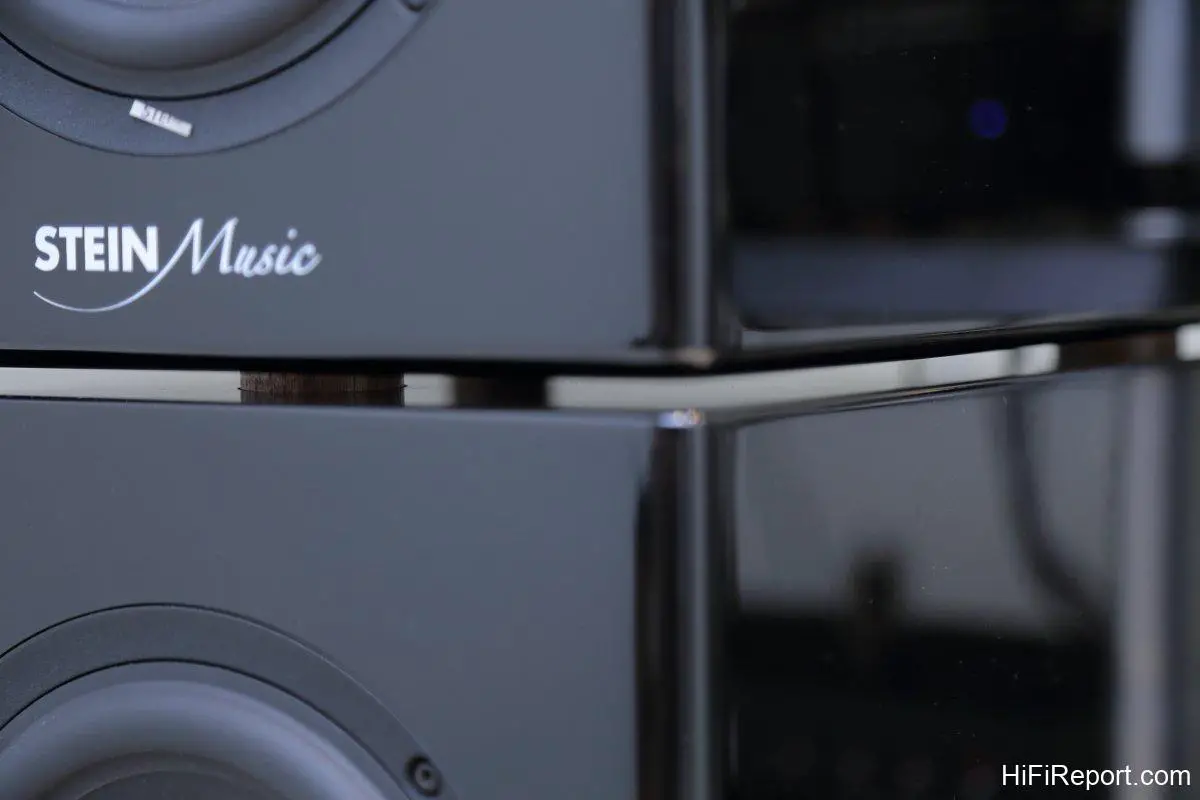
The Stein HighLine Bobby L Signature speakers stand nearly 1.7 meters tall. However, they are not monolithic but employ a modular design, combining two products: the HighLine Bobby S Signature bookshelf speakers and the Bass Extension low-frequency columns. Adding one bass extension column below the bookshelf speaker creates the Bobby M, and stacking another bass extension column on top results in the Bobby L. This modular design reduces development costs and offers users a step-by-step upgrade path.
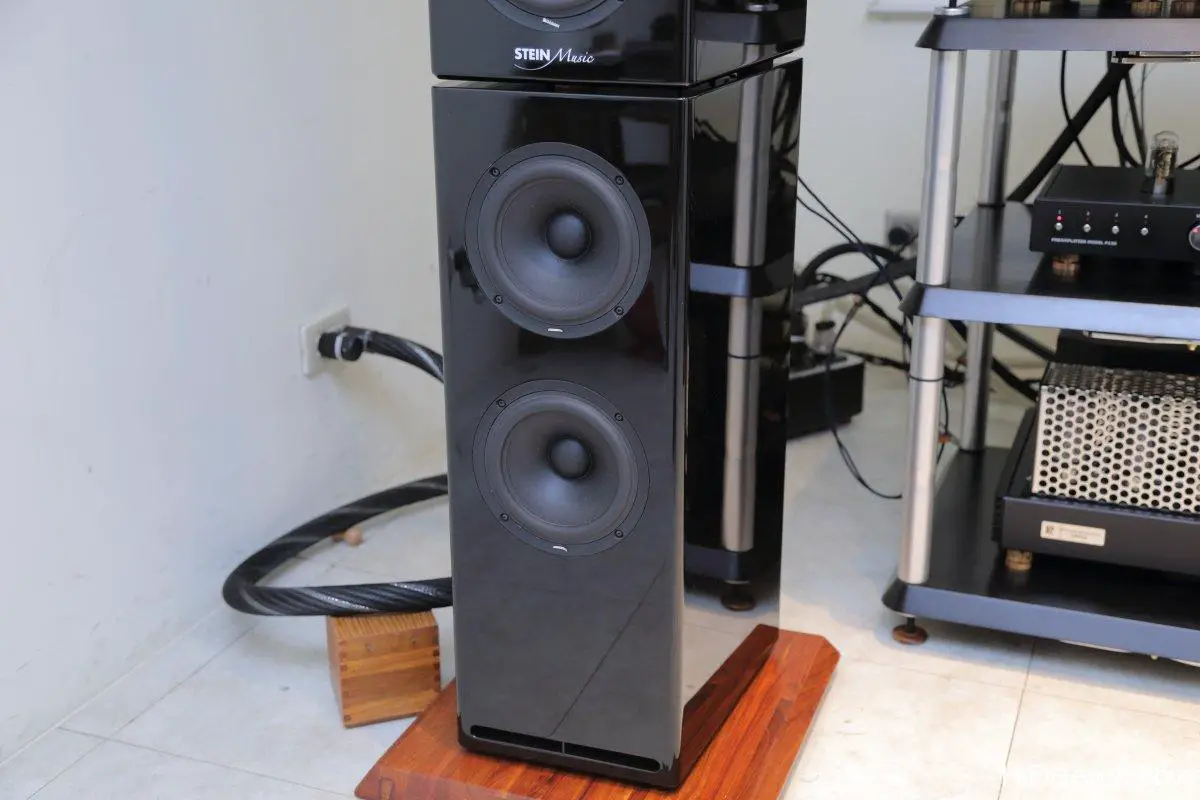
The Stein HighLine Bobby L Signature is a pair of modular speakers about 1.7 meters tall, combining the HighLine Bobby S Signature bookshelf speaker with the Bass Extension bass column. The bass extension uses two bass drivers identical to those in the Bobby S.
Custom Drivers with Ingenious Details
The Bobby S Signature speaker, positioned in the middle section, is a complete 2-way, 2-driver bookshelf speaker. All drivers are custom-made to Stein’s specifications by driver manufacturers.
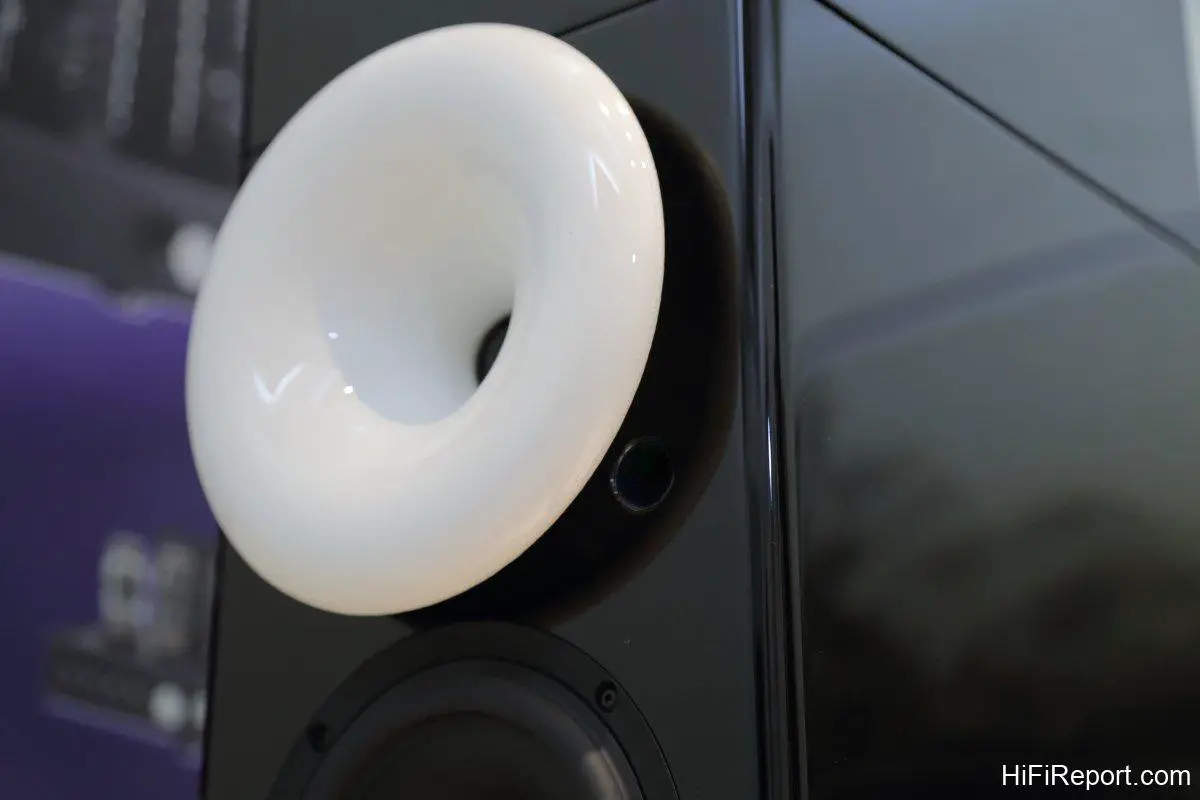
The tweeter is a silk soft-dome unit with a resonant frequency lower than its operating frequency. The copper housing behind it reduces coil inductance and phase shift. The chamber behind the driver is damped and features an open circular vent to regulate pressure. Notably, a circular horn made of polymer material is added in front to enhance high-frequency efficiency and projection distance through horn coupling.
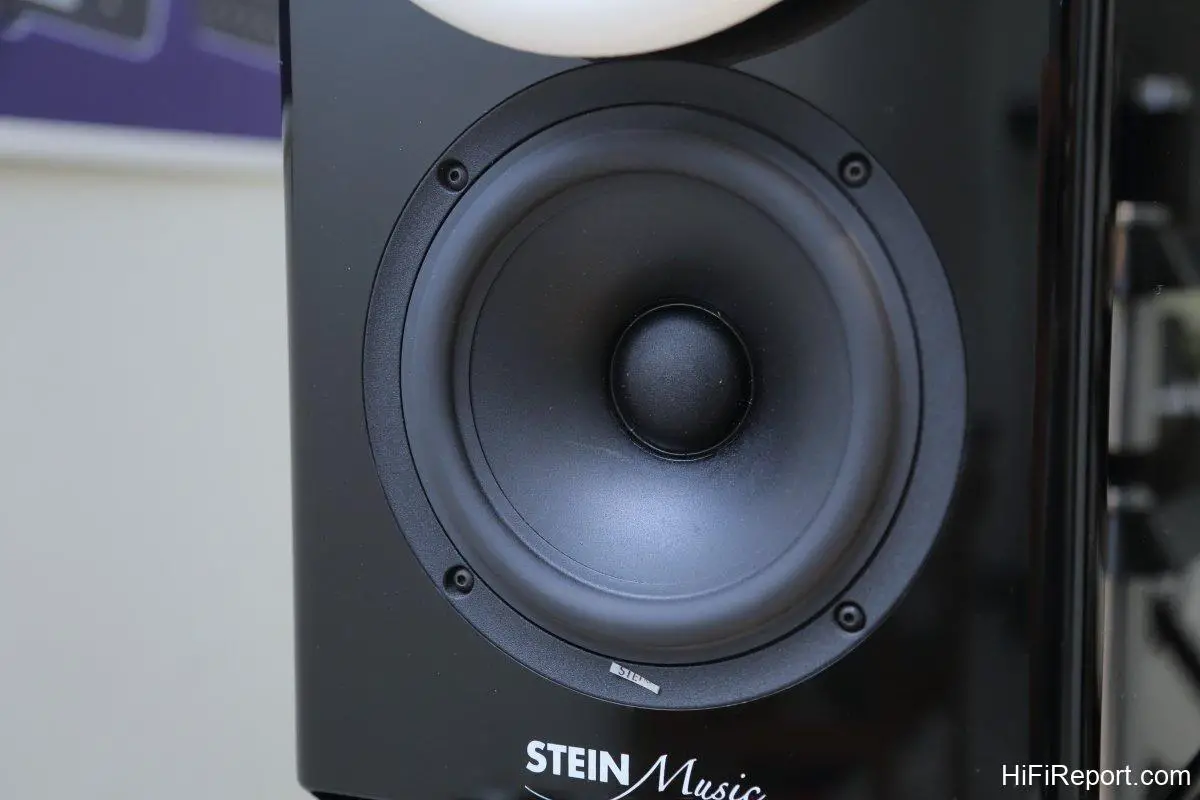
The woofer is a 15cm paper cone mid-bass driver with a soft surround for quick response and a copper-clad aluminum voice coil wound on a fiberglass voice coil former. The driver features an open aluminum frame for high structural strength and efficient heat dissipation. Furthermore, Stein uses pure silver wire for the short internal wiring from the positive and negative terminals to the diaphragm of both the tweeter and woofer, highlighting their meticulous approach.
In addition, Stein’s proprietary Maestro tuning lacquer is applied to all speaker drivers to provide appropriate damping and modify diaphragm resonance. Each speaker (including the Bobby S and bass extension) has three wooden footers at the bottom.
Premium Crossover Components and Signature Magnetic Field Optimizer
The crossover is another highlight, utilizing Mundorf oil-filled copper foil capacitors and Beyschlag precision resistors. Inductors are custom-wound in-house. The component selection and configuration are finalized after repeated listening and tuning by Holger Stein.
The HighLine speakers are available in standard and Signature versions. The Signature version additionally incorporates Stein’s patented InLine Silver magnetic field optimizer in the crossover. This optimizer is designed to eliminate magnetic distortion from speaker cables, thereby enhancing signal clarity. It is also sold separately for users who wish to upgrade their existing speakers.
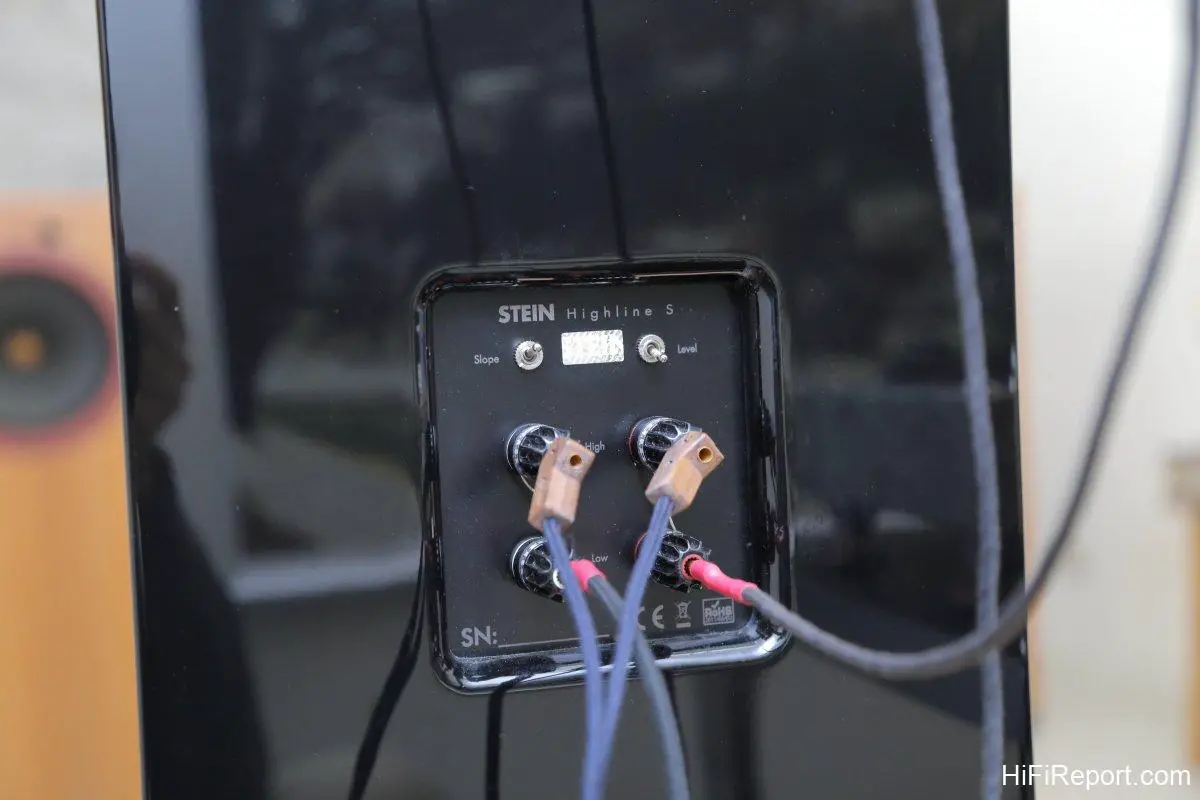
Moreover, on the back of the Bobby S Signature, above the speaker terminals, there are two toggle switches. One is labeled “Slope,” used to adjust the crossover slope for integration with the bass extension; the other is “Level,” for adjusting the high-frequency output. According to Madison Audio, speaker cable capacitance can sometimes attenuate high frequencies. Increasing the “Level” can compensate for this loss. This design adds adaptability to the speakers and provides personalized options for users.
On the back of the Bobby S Signature, above the speaker terminals, there are two toggle switches: “Slope” for adjusting crossover slope with the bass extension, and “Level” for high-frequency adjustment.
Four-Centimeter Thick Rear Baffle, No Internal Damping
The speaker cabinet design is also unique. Stein eschews flashy designs but doesn’t completely adhere to conventional rectangular boxes. Instead, the speakers are designed with a front-narrow, rear-wide shape and non-parallel side panels to reduce internal standing waves. To enhance structural integrity, the cabinet joints are filled with a rigid damping material. To cope with back wave pressure, Stein thickened the rear baffle to a substantial 4cm.
With such a robust cabinet, Stein believes that damping material is unnecessary. Therefore, neither the HighLine Bobby S Signature nor the Bass Extension bass columns contain any internal damping wool.
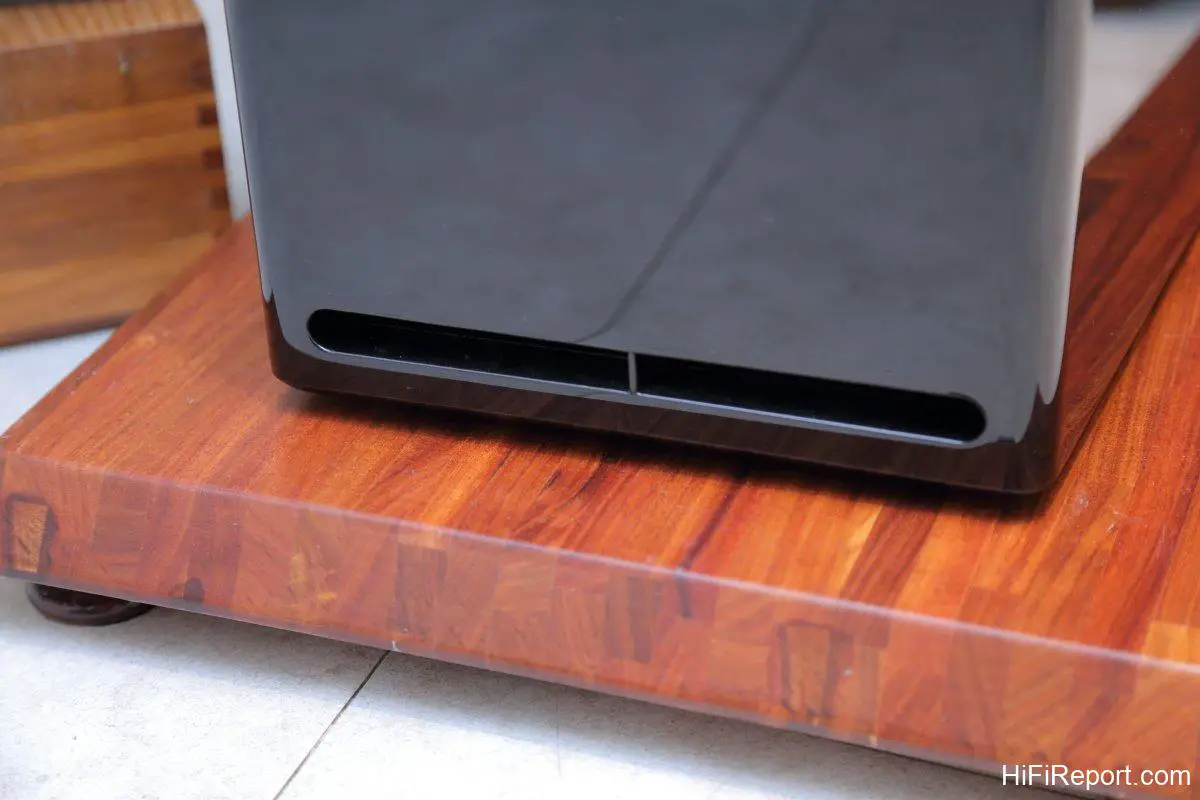
As for the Bass Extension bass column, each unit houses two woofers identical to those in the Bobby S Signature. The cabinet shape and construction are generally similar, creating a cohesive look when stacked. The bass extension uses a bass-reflex design, but instead of traditional circular ports, it features two rectangular openings at the bottom.
The Bobby S Signature, while not bass-reflex, has two small circular vents behind the tweeter horn. These are not bass-reflex ports but rather openings to vent internal pressure and adjust the Q value. These design choices are quite unconventional, demonstrating Holger Stein’s unique approach to speaker design.
The Bobby S Signature, although not bass-reflex, has two small circular vents behind the tweeter horn for pressure relief and Q value adjustment. The woofer is a 15cm paper cone mid-bass driver with a soft surround for quick response and a copper-clad aluminum voice coil on a fiberglass former.
Furthermore, each driver has a strip of Stein’s patented E-Pad sticker attached below it for controlling micro-vibrations.
Tuning Touches Evident in Details
Many people know Stein from their footers and small accessories. The HighLine Bobby L Signature speakers also incorporate many of their own products. Besides the magnetic field optimizer in the Signature version crossover, each speaker has three wooden footers at the bottom. Additionally, each driver has a strip of Stein’s patented E-Pad sticker attached below it, which controls micro-vibrations.
Stein factory applies small strips of E-Pad below the drivers before shipping, a unique tuning technique by Holger. The bass extension uses a bass-reflex design with rectangular openings at the bottom instead of traditional circular ports.
Unforgettable Munich Experience
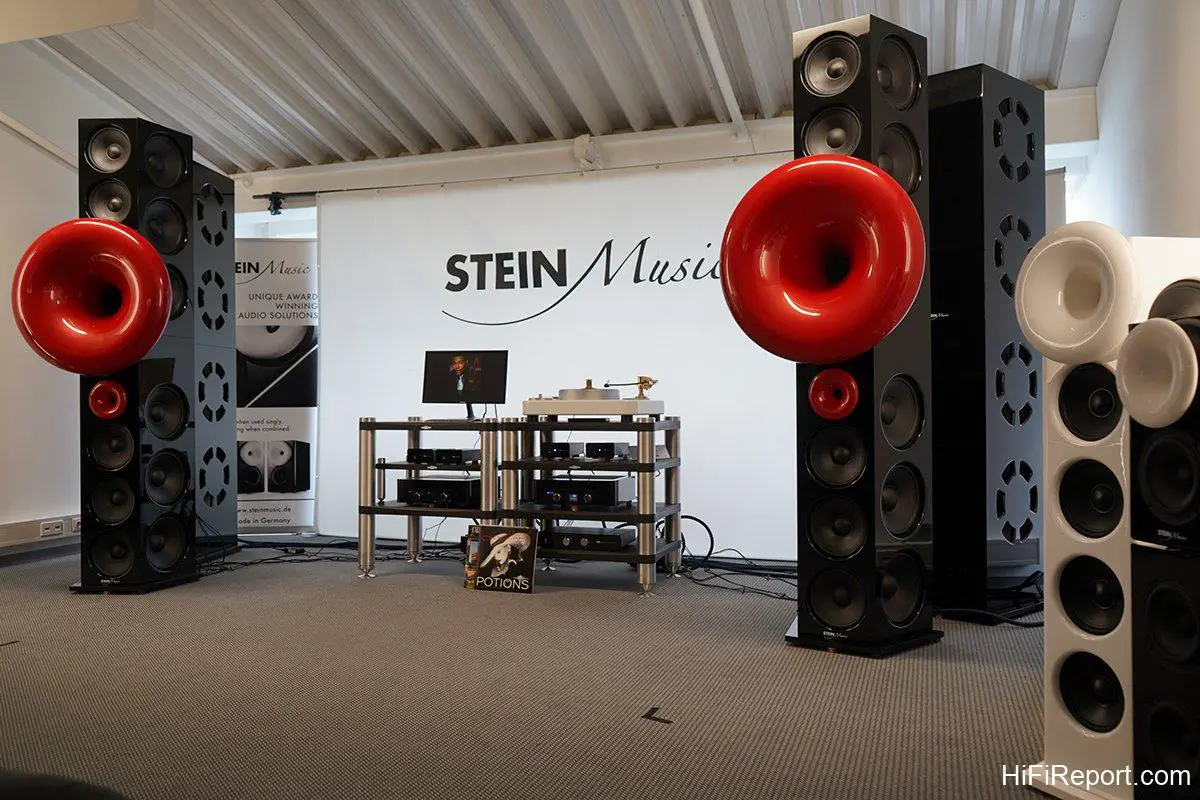
Before detailing the listening report, I want to share a prior experience. Last year at the Munich High End Show, I experienced the allure of Stein’s flagship TopLine Bob XL speakers. It was a four-piece behemoth, designed with a combination of horn and open baffle concepts. The main speaker featured drivers on the front and both sides, while the two bass columns had drivers facing each other on either side.
Sitting in the last row, on the edge, looking at these massive speakers and numerous bass drivers, I expected overwhelming bass. Surprisingly, the sound was very gentle and natural, with a balanced frequency response across the entire range. Even at high volumes playing opera and orchestral music, it remained comfortable to listen to.
At the TAA audio exhibition, I met Holger Stein and specifically told him this story, expressing my admiration for his balanced and natural tuning approach. Based on my Munich experience, I had high expectations for the HighLine Bobby L Signature even before visiting Madison Audio.
Stein showcased their flagship TopLine Bob XL speakers at the 2019 Munich High End Show. It was a four-piece system combining horn and open baffle designs.
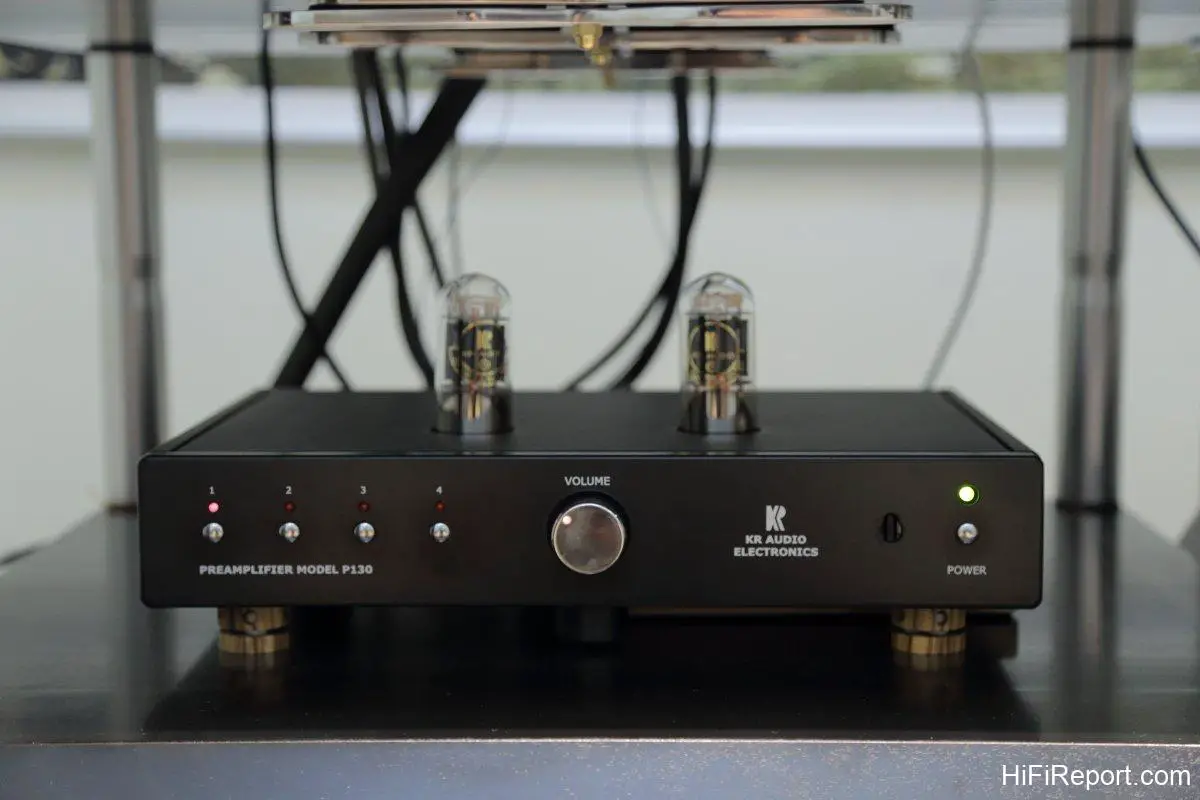
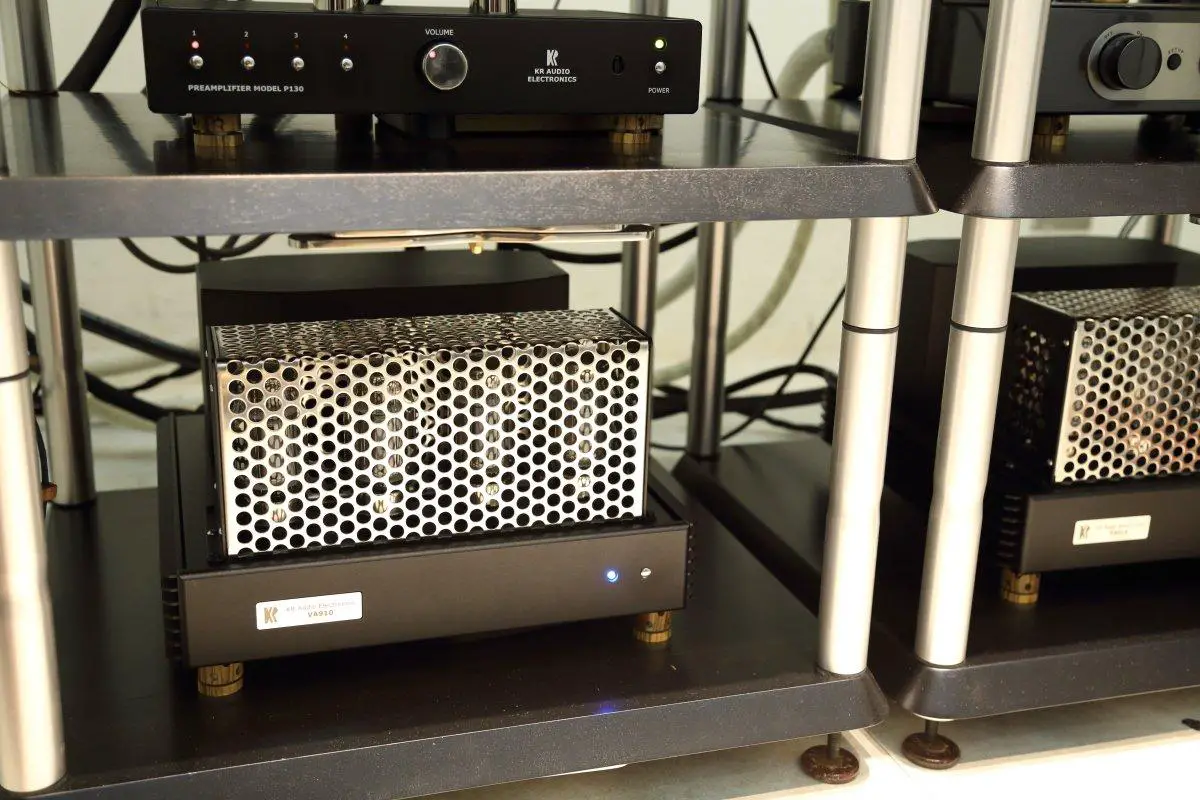
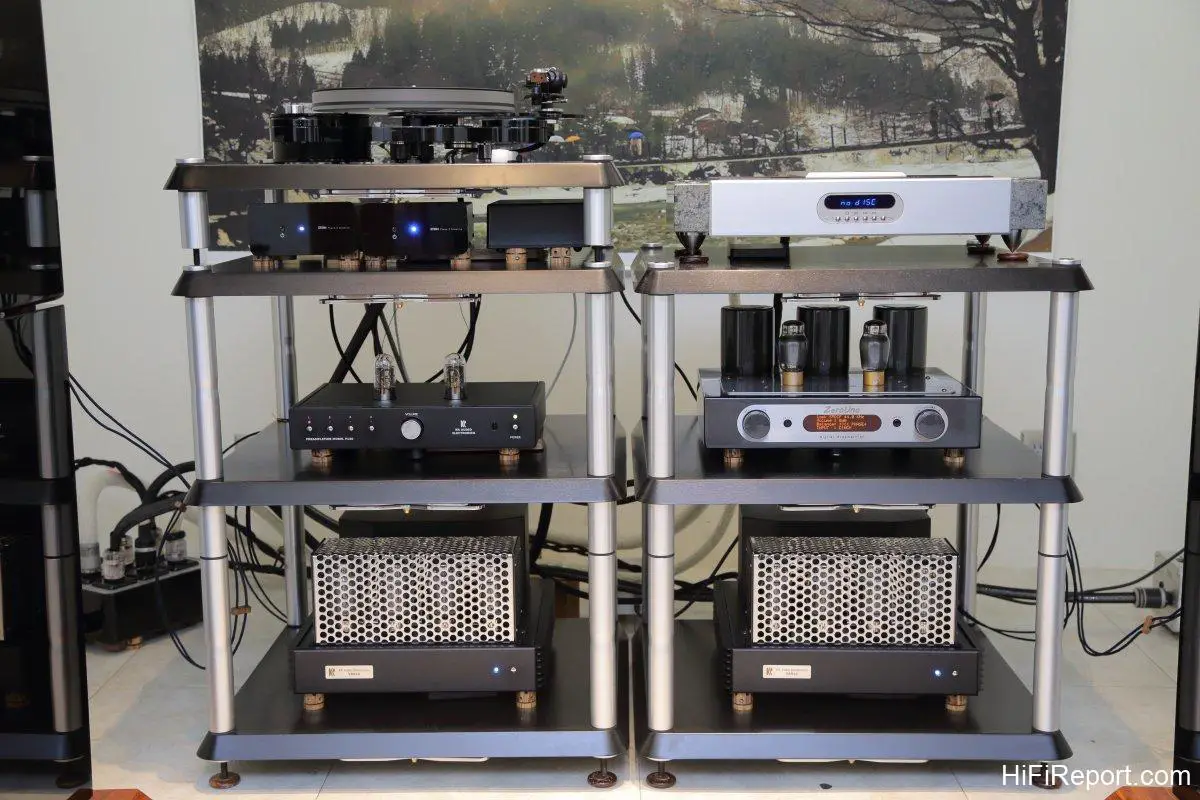
At Madison Audio, the system was, of course, paired with their products. The amplification used for this listening session consisted of tube electronics from the renowned Czech manufacturer KR Audio, including the P130 preamplifier using two KR5 tubes and the VA910 monoblock power amplifiers, each delivering 160W of power using four KT120 tubes per channel.
The equipment used for the listening session at Madison Audio were all products they distribute. Amplification was from the renowned Czech tube manufacturer KR Audio, the P130 preamp and 160W VA910 monoblock power amps.
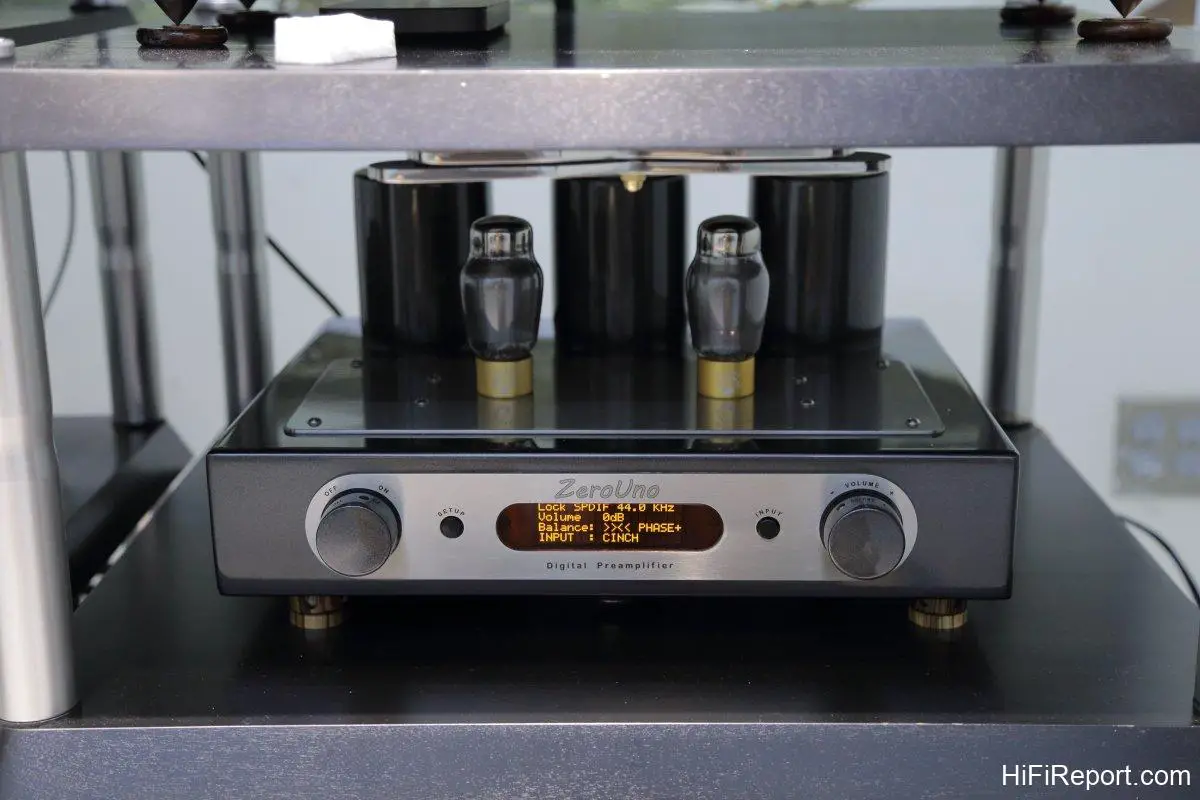
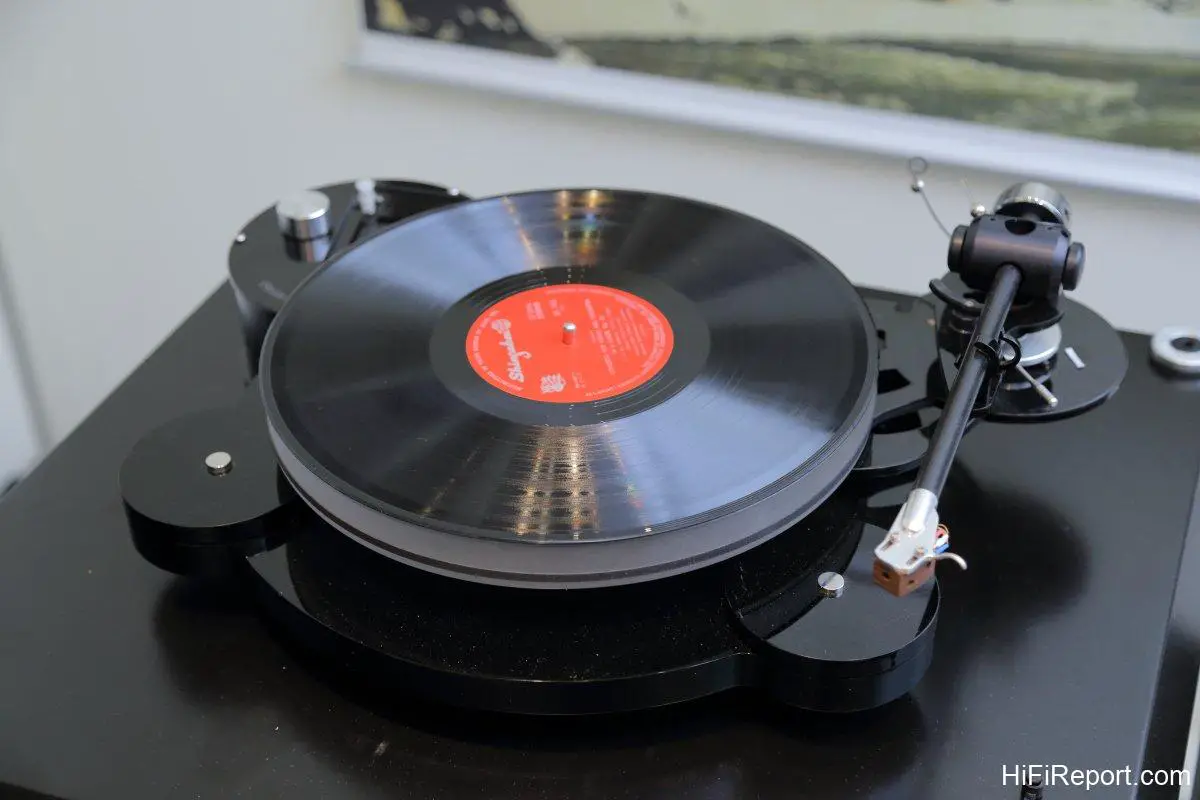
The digital source was a French Icos Fado CD Elsberg CD player, digitally outputting to an Italian CanEVER ZeroUno tube DAC for decoding. For analog, a British Origin Live Aurora MK3 turntable was used.
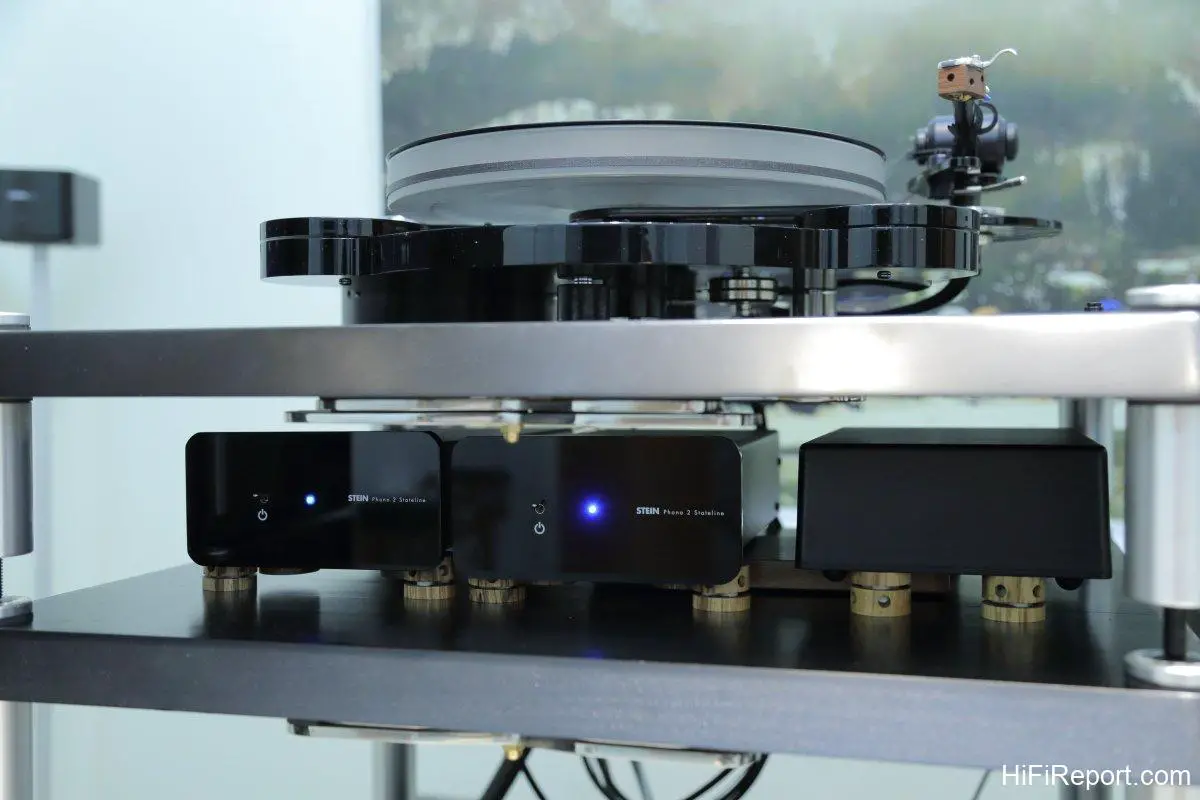
Madison Audio prepared two sources: digital and analog. The digital source was the French Icos Fado CD Elsberg CD player, feeding digital signal to the Italian CanEVER ZeroUno tube DAC. The analog source was a British Origin Live Aurora MK3 turntable, equipped with their own Encounter tonearm. The cartridge was a Stein Music Aventurin 6 MC cartridge with a housing made of alternating layers of mahogany and carbon fiber. The phono stage was naturally a Stein Music flagship Phono 2 Stateline Signature with a separate power supply.
The setup also included numerous Madison Audio distributed tuning accessories, including Vertex AQ Pico grounding boxes, Yushan cable resonance control boxes, Stein Music Natural Plus isolation feet, Quantum Organizer magnetic field processors, Harmonizer room acoustics processors, and more.
With such an impressive setup driving the Stein HighLine Bobby L Signature speakers, what kind of sound would they produce?
Organic Sound
I started listening with Sarah Vaughan’s 1985 live concert recording from Paris. Track two, “Summertime,” is an a cappella performance. Sarah Vaughan’s vocals were clearly focused but not sharply etched, with a touch of softness in timbre. The dynamic variations in her vocal range and volume, the dynamic shifts in her singing, showcased Sarah Vaughan’s captivating charm. In her singing, the flow of musical sounds was smooth and rounded, the texture was silky, completely grain-free, and without any jagged edges – a very analog impression.
Track three, “Just Friends,” features a trio, and the lively introduction immediately revealed a different atmosphere from the previous track. Here, the music’s dynamics unfolded freely, not feeling confined in the small room. Even without the Harmonizer room acoustics processor, the soundstage could open up, avoiding excessive congestion. Of course, in a larger space, the sound would certainly be even more relaxed, but with the help of Stein Magic Stone tuning blocks, the soundstage could still expand. If you are limited to listening in a small room, you might want to try Stein Harmonizer combinations at Madison Audio. I had tried them years ago, and revisiting Madison Audio’s listening room, I was reminded of the wonderful effects of the Stein Harmonizer.
On this system, the overall sonic density was excellent, the vocals had body and energy. Sarah’s versatile singing styles were all clearly presented. Listening further to track four, “Wave,” the characteristic of “organic sound” became even more apparent. In this song, you could sense Sarah changing the resonance points of her voice and adjusting her mouth shape to create different timbres; very vivid imagery. Towards the end, she playfully faded out, softer, softer, and softer until the very end, then added a snoring sound, making the audience laugh, and I laughed too. The sense of realism was excellent.
Last time I visited Madison Audio to listen to Leedh speakers, I also brought this CD. This time with Stein speakers, the listening experience was completely different, but both aimed for the same goal: not pursuing extreme hi-fi performance but making music more accessible.
Demagnetization Works!
Just as I was about to get up to change CDs, I noticed a Stein DE2 CD demagnetizer on a small table nearby. I had heard that Stein also made CD demagnetizers, but had never tried one. This time, I decided to give it a try. I took Sarah Vaughan’s CD from the player, demagnetized it, and then put it back in to relisten to the songs.
It worked! After demagnetization, the sound became more focused, with fewer rough edges. The separation of instruments improved, detailed information emerged more easily, and the low-frequency transients became more defined.
I shared my experience with Mr. Chen, who told me a tip: demagnetizing the CD three times, front, back, and front again, yields the best sonic results. “Mr. Stein told me this when he came to the exhibition last year.” I followed his advice and tried it, and indeed, it was even better than demagnetizing once. From then on, for every CD I listened to, I repeated this “front-back-front” process.
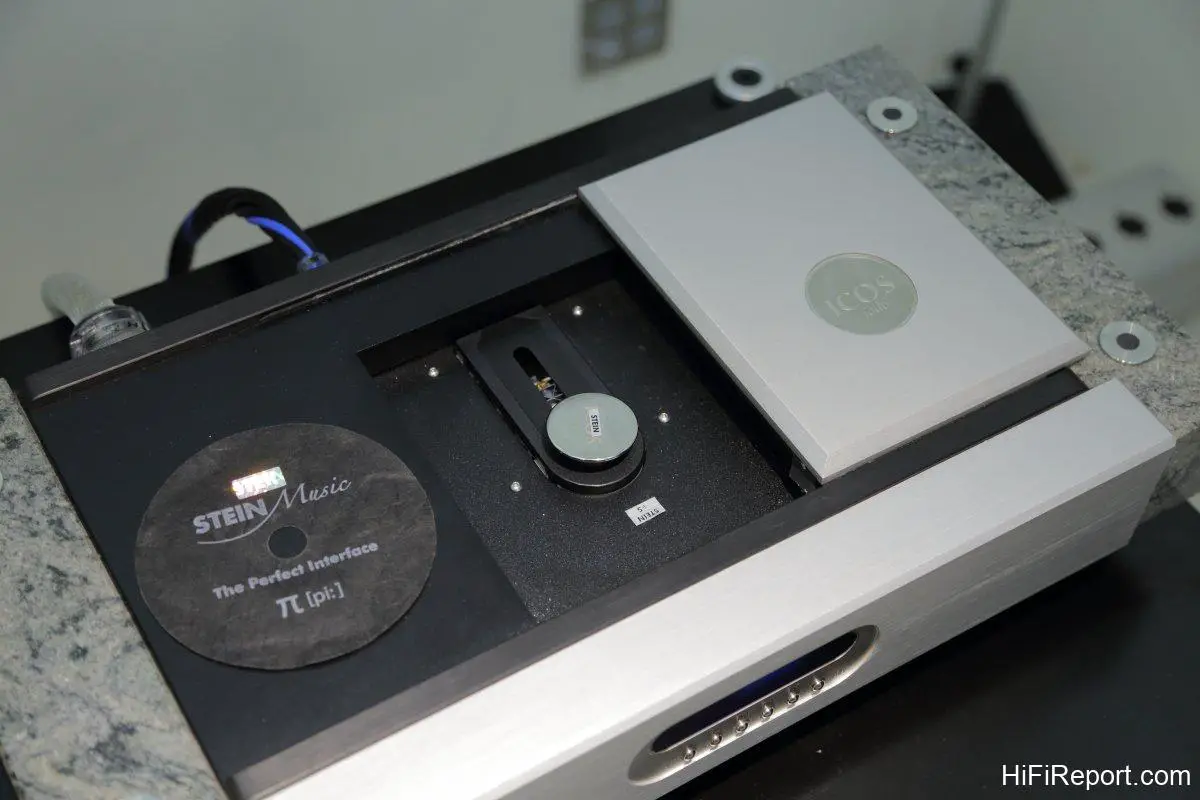
The French Icos Fado CD Elsberg CD player was used as a transport that day. However, you can see Madison Audio’s tuning efforts: not only was a Stein Perfect Interface Pi CD mat added, but also Stein E-Pad Plus damping stickers. The digital signal was output from the Icos Fado CD Elsberg CD player to the Italian CanEVER ZeroUno tube DAC for decoding, a DAC known for its warm, rich, and full sound.
Harmonizer Assists, Breaking Small Room Limitations
Sarah Vaughan sang jazz, let’s try some pop music. I put on “Eivør Live” by Faroese singer Eivør Pálsdóttir, also a live concert recording. Why do I keep choosing live recordings? Because Stein repeatedly emphasized in interviews that his speakers aim to recreate the feeling of a live performance, not canned music. His words were still fresh in my memory, and this time listening to the HighLine Bobby L Signature, it was a good opportunity to verify his claims.
The opening drumbeat of the first track, “Mín Móðir,” was powerful and energetic. Would it work in such a space? I pressed play, and as expected, the unavoidable low-frequency standing waves needed to be addressed. The amplified specific frequency peaks were disrupting the sound balance. I tried turning on the Harmonizer room acoustics processor, starting with the two front units. Wow, it really worked! The sound became more relaxed. I then tried turning on the two rear units as well. This time, the effect was even better, and not just 1+1=2, but a 1+1=3 improvement. I had used Harmonizers before and knew they were a positive addition. Experiencing the top-tier setup again, I was not surprised by its effectiveness.
Eivør sang with dramatic fluctuations, vocal articulation was clear, and without turning down the volume, with the help of the Harmonizer, I could confidently enjoy the beauty of “Mín Móðir.” Track two, “Where Are the Angles,” is an English song with Eivør accompanying herself on nylon-string guitar. The nylon-string acoustic guitar sound was enchanting. Although the Stein speakers have horns for the tweeters, the highs were not harsh or aggressive. The nylon-string guitar sounded springy and solid. The upper and lower bass extension columns provided a full-bodied cabinet resonance. Even when Eivør soared to high notes, the vocal timbre retained good density, sounding very realistic.
Track five is the well-known “Nature Boy.” Eivør’s rendition is another flavor altogether. She sang gently with breathy vocals, and when she reached dolphin-like falsetto notes, it truly transported you to heaven, truly Wang Xiaoyu reborn. The more I listened, the more I felt Holger Stein was right. Although both of these records are very well-recorded and audiophile-pleasing, I didn’t pay much attention to the hi-fi aspects from beginning to end. I simply followed Sarah Vaughan and Eivør’s singing, traveling through time and space to the live venue, joining the audience in fascination and intoxication.
Smooth and Rounded Texture, Clear Details Without Harshness
Next, I listened to Petricia Petibon’s Spanish song collection, “Melancolía.” Counting this, it was already the third female vocal album, but jazz, pop, and classical bel canto singing styles are all different. It wasn’t intentional, but this system indeed excels at reproducing vocals.
The entire system, through the HighLine Bobby L Signature, produced a warm and rich sound with a touch of lingering resonance. Details were clear but not harsh, and the sound had a smooth and rounded texture. I don’t know if this sonic signature came from the Stein speakers, the KR amplifiers, or the CanEVER ZeroUno DAC. In my experience, KR and CanEVER both have warm and rich characteristics, but these components combined did not result in excessive richness. Instead, they poured out musicality.
How did this record sound? Petibon’s singing was smooth and graceful, her vocal lines polished and refined, neither sharp nor rough, and also smooth and supple. Although the orchestra was not large, it accompanied Petibon beautifully. The notes plucked from the double bass had a soft texture within the elasticity, and with each pluck, poetry emerged. Guitar was added in the fourth track, flamenco guitar sounding crisp and powerful, the guitar notes ringing out. Petibon’s calling-style vocals were captivating and melodious, full of Andalusian charm. With the addition of percussion and hand claps, the music became richer. There were not only dynamic undulations but also rhythmic force and layers. As the musical density increased and the harmonies became richer, the larger the scale of the instrumentation, the more the Stein speakers showcased their abilities.
This is the P130 preamp using two KR5 tubes.
Sweet and Luscious Ripe Fruit Flavor
Next, I put on Schumann’s Piano Concerto in A minor, Op. 54, performed by Radu Lupu and André Previn. We were moving step by step. A piano concerto can showcase both the grandeur of the “king of instruments” and the momentum of an orchestra. And this version of Schumann’s Piano Concerto performed by Lupu is excellent in both performance and recording quality. I always bring it with me for listening sessions. Whether I use it or not is another matter, but having it with me gives me peace of mind.
The opening fortissimo was powerful, and then the music unfolded gently. The system at Madison Audio this time had a warm and fragrant sound. To use an analogy, it was like sherry cask aged whiskey, rich and opulent, with a sweet aftertaste. The piano notes were solid and also carried a warm, rounded density, sounding particularly woody. Listening to the second movement, the music slowed down, and its elegant demeanor became even more pronounced. Listening to the after-sound with a hint of diffused halo, it added a touch of warmth.
I need to revise my analogy: this whiskey is probably not just sherry cask aged, it should be “heavily sherried” or emphasize first-fill sherry casks to have such a sweet and rich ripe fruit flavor.
The Stein speakers’ sound not only led my thoughts to whiskey tasting, but at that moment, I was also drinking the coffee I brewed before leaving home. I used my usual method, 89-degree water for the first pour, a 1:16 ratio, and small-batch brewed 12.5 grams of coffee. I like to use a slightly lower temperature to bring out the sweetness and layers of acidity, and small-batch brewing ensures the whole process is not too long, avoiding bringing out unpleasant off-flavors.
What Stein is doing is the same as what I pursue in coffee: presenting the best essence of music, removing as many interfering factors as possible.
This is the VA910 monoblock power amplifier, each channel using 4 KT120 tubes for power amplification, delivering 160W of power. A Stein Q2 magnetic field processor is faintly visible below the P130 preamp above.
CD Demagnetization, Equipment Magnetization, Better and Better
I could hear such rich information hidden in the CD, which is related to what I mentioned earlier, demagnetizing each CD three times, front-back-front. Demagnetization is a procedure to remove interfering factors. Stein’s “magnetization” technique is also.
I tried removing the Q2 magnetic field processor placed under the Icos Fado CD player, and the sound immediately dulled, losing its spirit and vitality. Putting it back, everything “returned to normal.” Which one is normal? Stein’s explanation is: he does not change the music itself, but solves those factors that interfere with and change the essence of the sound, those factors from vibration and electromagnetism. Because the effect was obvious, I also recorded this impromptu experiment.
Back to the music. Lupu’s performance here is superb, exhibiting elegance and wisdom in composure. His piano notes are clean, and his dynamic control is precise. Listening to how he transitions from the passionate fervor of the first movement’s ending to introverted restraint in the second movement, yet still revealing rich aromatic emotions everywhere, you will understand why I like this version so much.
The system led by Stein speakers showed rich musicality here, drawing you into the music, rather than focusing on the sound itself. The third movement was again magnificent, the orchestra’s layers were clear, the instrument separation was good, yet not overly analytical and clinically separated. This is musicality!
Layered Performance of Separation and Integration
To elevate human love further, I listened to Fauré’s Requiem conducted by Cluytens. It featured orchestra plus vocals, with baritone and soprano solos, a mixed choir, and organ accompaniment, another type of large-scale composition. Fauré’s Requiem is different from others’ works. The entire piece does not exhibit fear and dread, but rather presents a sense of peace and gentleness. When he originally composed this Requiem, he was criticized by the church, which believed that this music was too humanistic and should not be used during Mass.
On this system, I heard a broad and full sound. The orchestra and choir showed layers, but the layering performance was both separated and integrated. In this way, it felt more like a live musical performance, more like what you hear in a concert hall. In fact, not only Stein, but the other equipment brands in this system, the manufacturers do not emphasize outstanding hi-fi performance. What they pursue is the embodiment of musicality.
How to describe this musicality? I think the most important thing is to bring out the emotions in the music. Only when the emotions of the music are conveyed can it be moving. Listening to Fischer-Dieskau’s singing in the second track, “Offertorium,” and then to Angeles’ rendition of the most beautiful Pie Jesu in classical music, can say it all. If you still cannot grasp it, listen to the final “In Paradisum,” and when the choir’s voices rise, you will understand.
The analog source used was a British Origin Live Aurora MK3 turntable, equipped with their own Encounter tonearm. The cartridge was a Stein Music Aventurin 6 MC cartridge with a housing made of alternating layers of mahogany and carbon fiber. In fact, on the turntable and under the record, there was also a Perfect Interface π record mat.
Vinyl System Equally Impressive
At this point, Mr. Chen walked in. Hearing that I had been playing my own CDs, he reminded me to be sure to listen to his vinyl system. It consisted of an Origin Live turntable and tonearm, paired with a Stein MC cartridge and Stein Phono 2 Stateline Signature phono stage.
He put on Rimsky-Korsakov’s “Scheherazade,” conducted by Ernest Ansermet with the Orchestre de la Suisse Romande. The majestic theme at the beginning of the first movement is the Sultan’s entrance. The violin plays a graceful yet firm melody, that is Scheherazade. As the story unfolds, it tells of a shipwreck, the storm and rain and raging waves, all in the music. What is heavy is the churning sea, truly vivid imagery. The music then enters “The Story of Prince Kalendar,” this movement revolves around the theme of Baghdad festivals, turning away from the gloomy and terrifying atmosphere of the previous movement. Here is full of joy and festivity. The back-and-forth interplay of oboe and harp is truly beautiful, and the strings then repeat the theme. Unknowingly, I had listened to the entire side. Truly Scheherazade, she tells Sultan story after story, and here I was, track after track, record after record, unwilling to leave.
Next, he recommended I listen to Glazunov’s Violin Concerto, Semyon Snitkovsky on violin, with Gennady Rozhdestvensky conducting the Moscow Radio Symphony Orchestra. Glazunov’s music is full of romanticism, and the melodies are particularly beautiful, especially in this famous work. The violin solo in Scheherazade is the theme of the heroine, requiring a sweet and gentle temperament, unlike here in the concerto, where the violin has more room for expression, and the sound is more prominent. I cannot tell you how the Origin Live turntable is, how the tonearm is, or how the Stein MC cartridge performs. There is only one system here. I can only say that what I heard in Glazunov was full of expression. The violin solo in the recapitulation of the first movement, the double-stop playing was truly wonderful, clear yet integrated sound lines, intertwined together. The sound had density and was full of detail, the violin notes were neither dull nor warm. Truly wonderful musicality, and I finished listening to another track.
The two units on the left are the Stein Phono 2 Stateline Signature phono stage, one is the phono stage main unit, and the other is the power supply. The unit on the right without LED lights is the power supply for the Origin Live Aurora MK3 turntable.
Details Emerge, Large Dynamic Contrast
When the vinyl system is well-tuned, details emerge, and with complete dynamics, the music naturally becomes infectious. Listening to Delibes’ “Lakmé,” conducted by Alain Lombard with the Opéra-Comique Orchestra, this Lakmé sung by Mady Mesplé is a classic in recording history, holding a definitive status. The overture at the beginning is impressively grand. In the famous duet of Lakmé and Mallika, the beautiful and delicate voices are truly enchanting. The bass strings pluck, pluck, giving the flowing music a stable rhythm, also making the songs more expressive.
There was also a record Mr. Chen recommended me to listen to in the phone call the day before, Shirley Horn’s “Violet for Your Furs” album. Mr. Chen especially recommended listening to the title track, the first song on side B. Shirley Horn’s voice was clear and focused, as if she were standing in front singing live. She played the piano herself, with drums gently accompanying in the back. This is a live recording from the 1981 Dutch Jazz Festival in The Hague. Before even noticing the “live recording” note on the record information, I felt this record did not sound like a studio recording. This record had an indescribable sense of air, which is common in live performance recordings; and indeed it was.
Mr. Chen said that those extremely faint drum accompaniments I was hearing now only appeared after he tuned and tuned again. What he initially heard was completely different from what I was hearing now. This is why he told me that the system’s current dynamic performance is a thousand times better than before tuning. An audio system requires effort. Whoever puts in more effort, gains more. Vinyl systems, especially so.
Masterpieces Created by Passion
Holger Stein, the founder of Stein Music, is a person full of passion for audio and music. Because of this passion, he developed so many small accessories. In fact, they also have amplifiers and cables. The speaker cables I used when listening to the HighLine Bobby L Signature speakers were Stein speaker cables.
This visit to Madison Audio to audition the HighLine Bobby L Signature was truly a pleasant experience. Because Mr. Chen, the person in charge of Madison Audio, has the same attitude towards audio and music as Holger. Just listening to him talk about audio and records, even before hearing the sound, you already feel it sounds good. Passionate people always bring positive energy.
I felt that this afternoon at Madison Audio’s listening room was not work, but enjoying music. This system is not for challenging it with those audiophile elements. It allows you to easily and deeply enter the musical mood and enjoy the emotion brought by music.
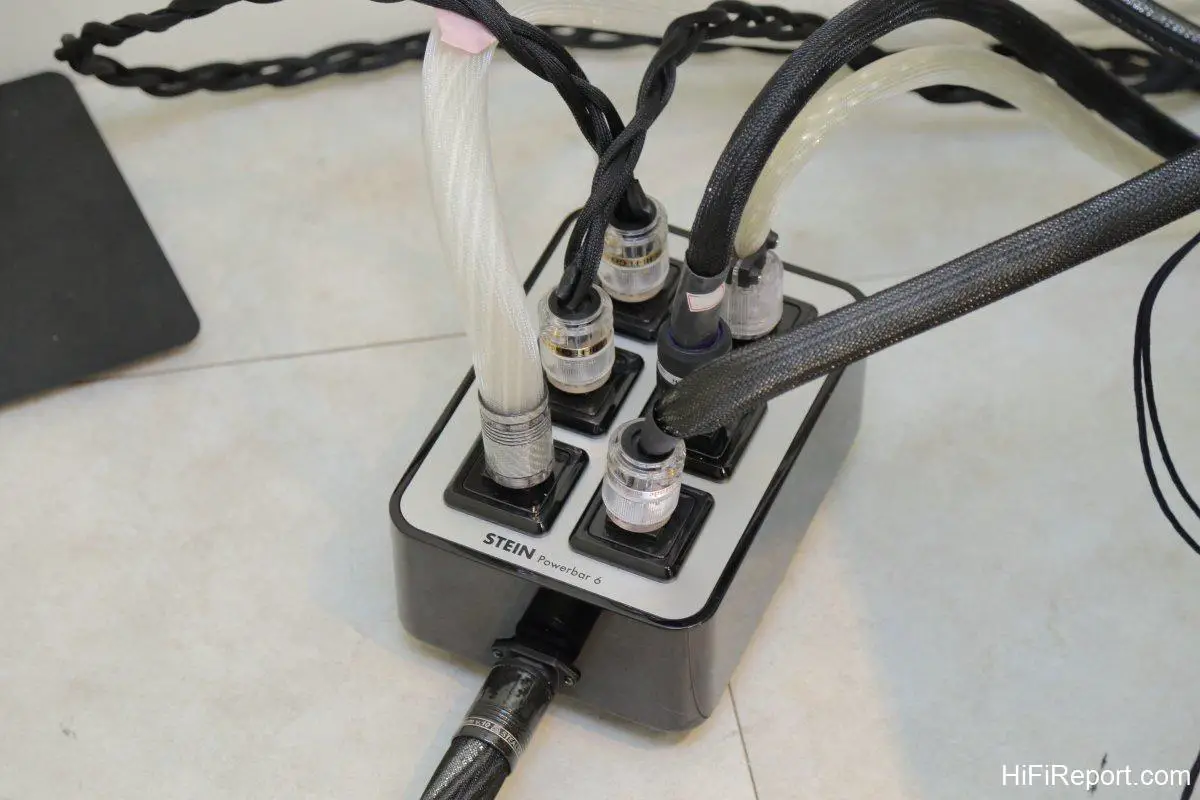
Stein also offers power strips. The Powerbar 6 does not perform filtering, it is simply a power distributor, but according to Madison Audio, probably because of Holger Stein’s secret techniques, even a power distributor has a huge impact on the sound.
Specifications
* **Type:** Modular 6-driver 3-way floorstanding speaker
* **Components:** HighLine Bobby S Signature + HighLine Bass Extension bass column x2
* **HighLine Bobby S Signature Drivers:** 25mm soft dome tweeter x 1 (horn loaded), 150mm woofer x 1
* **Frequency Response:** 45Hz – 24800Hz (-3dB)
* **Sensitivity:** 88dB
* **Impedance:** 4 ohms
* **Crossover Frequency:** 2400Hz
* **Dimensions:** 395 x 280 x 290mm (H x W x D)
* **HighLine Bass Extension Bass Column Drivers:** 150mm woofer x 2 (two units per channel)
* **Low Frequency Extension:** 34Hz
* **Sensitivity:** 89dB
* **Impedance:** 4 ohms
* **Dimensions:** 620 x 280 x 290 mm (H x W x D)