
TEAC NR-7CD All-in-One Player Review
Many audio enthusiasts are aware of TEAC’s release of the high-quality All-in-One player, the NR-7CD. This unit incorporates all mainstream functionalities, capable of reading various signal sources, performing its own decoding, and featuring a built-in amplifier circuit to directly output analog signals to your preferred passive speakers.
Users simply need to prepare their music, be it CDs, digital files, or even vinyl records, and select a pair of speakers to effortlessly enjoy high-quality music. Moreover, the NR-7CD is undeniably stunningly beautiful.
New Vintage Flagship Series
TEAC designates the NR-7CD as “New Vintage.” “Vintage” evokes a cherished era from the past, suggesting that this device carries on certain elements from that time. By prefixing it with “New,” the manufacturer signifies that this equipment aligns with the modern age, embodying a fusion of TEAC’s 60 years of traditional craftsmanship with the latest contemporary technology.
Let’s begin with the unboxing experience. The NR-7CD, priced above ten thousand USD, represents a significant departure from TEAC’s previous designs. The packaging now closely resembles that of Esoteric, their top-tier sister brand within the group. The box prominently displays the “DSD” logo, confirming DSD file playback support, a feature already present in prior models – naturally, it’s indispensable for a flagship unit.
Further down, we see Bluetooth wireless capability indicated, along with direct login support for TIDAL and Qobuz for online streaming.
Both the outer box and internal packaging are impeccably neat and provide ample protection. Despite shipping from Japan, the unit arrived in pristine condition, suggesting even more robust external protection during transit.
The essential accessory is undoubtedly the remote control. Of course, the original manufacturer’s warranty is included, and HiFiReport adds its own guarantee card for units sold through them. This card serves as vital proof that your equipment purchased from the audio dealer is an officially imported product.
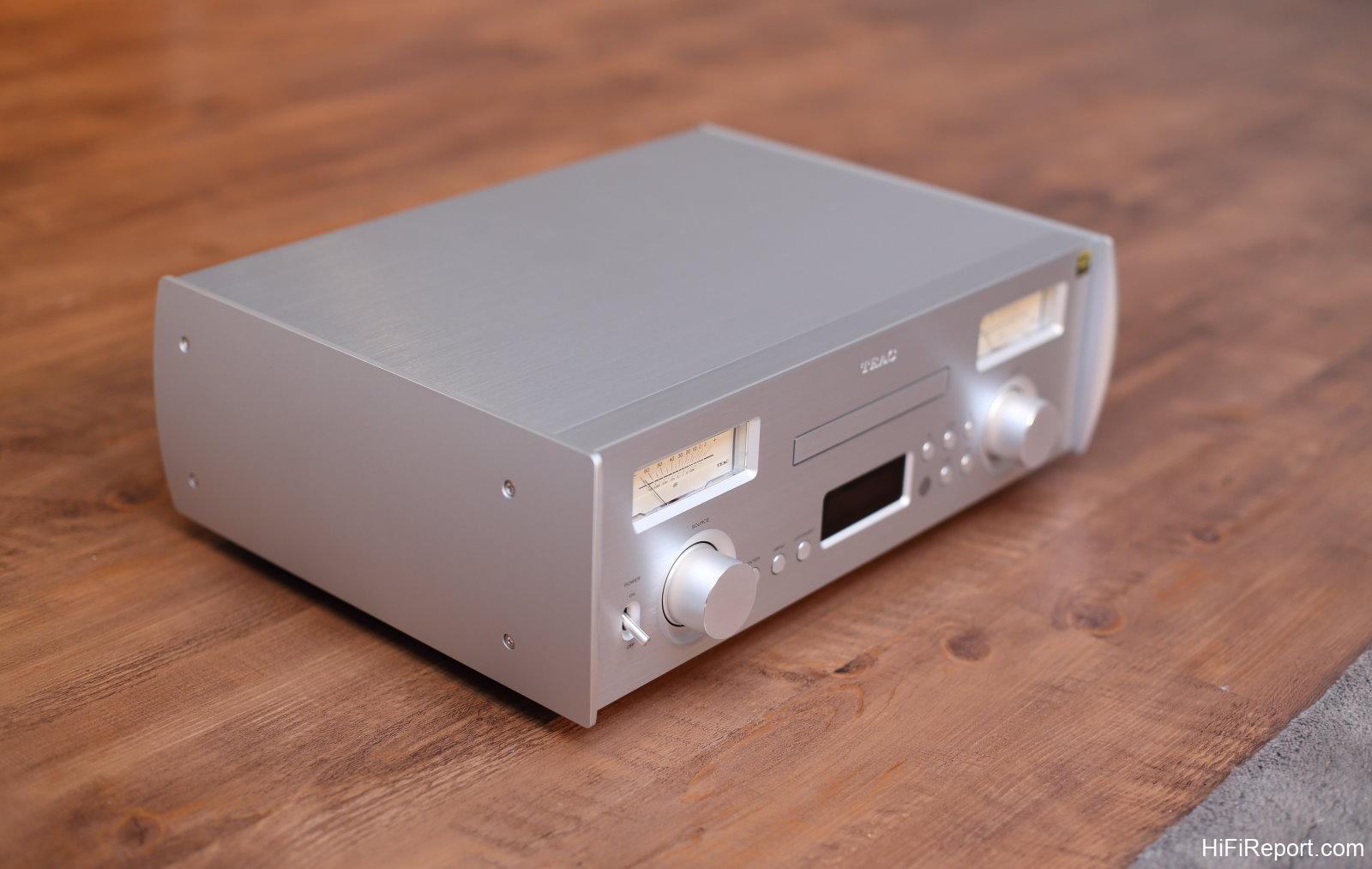
The main unit itself is encased in protective paper and film, but let’s skip those formalities and get straight to admiring the NR-7CD, shall we? The silver aluminum exterior not only reflects light but seems to emit its own glow. We’ll examine the front panel closely once we place it on the rack.
Esoteric Design Elements
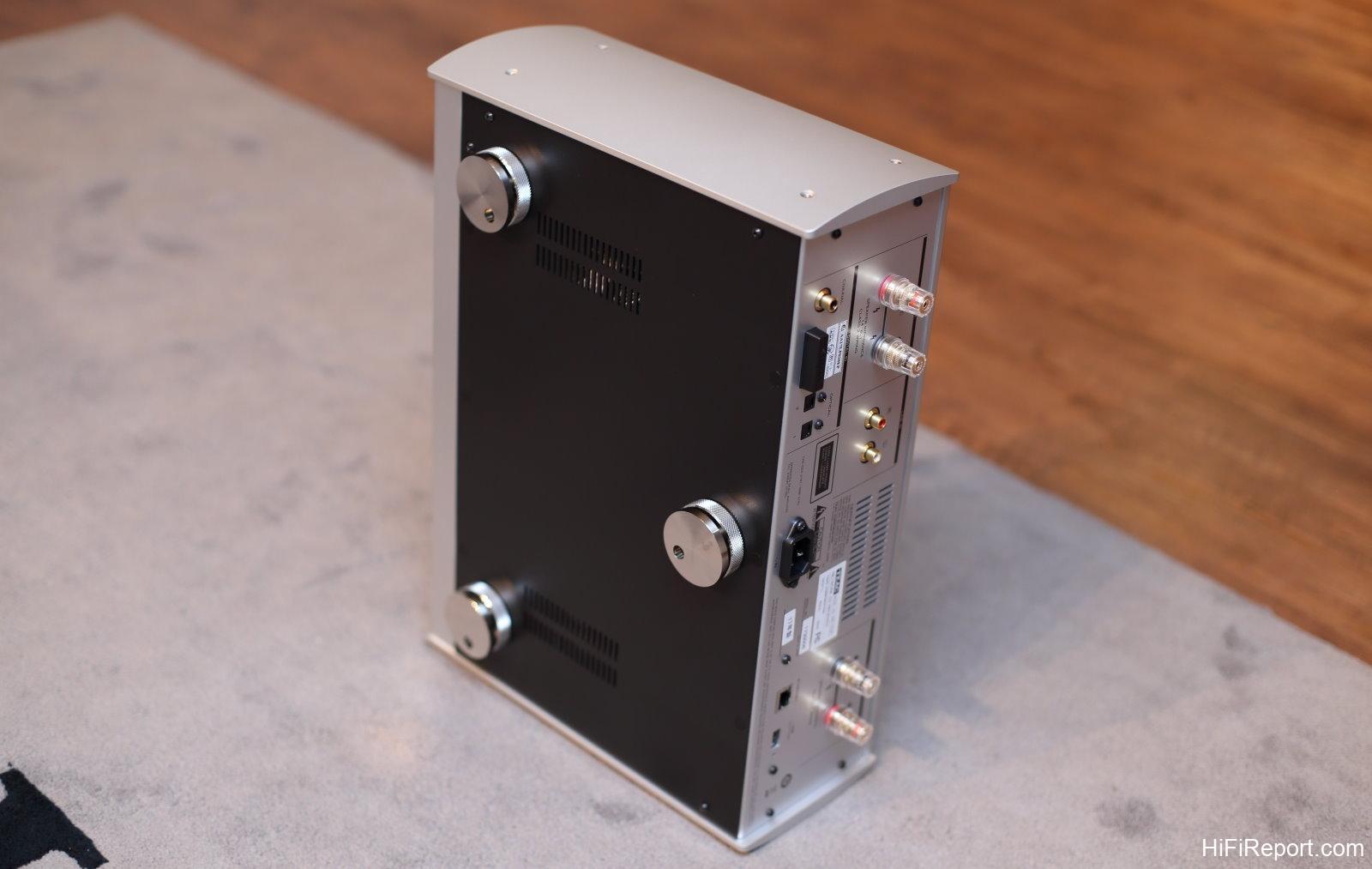
Let’s take a moment to stand the NR-7CD upright to appreciate the specialized design of its foot cones. The three-point cone system is another design cue borrowed from Esoteric. The cones themselves are dual-layered; the upper portion is fixed to the chassis, while the lower part, which contacts the equipment rack, allows for a degree of movement. This effectively dampens and absorbs external vibrations, preventing them from rigidly transmitting into the unit.
Additionally, two ventilation ports are present on the bottom. The NR-7CD employs Class D amplification, known for its high efficiency and low heat generation, making these small vents sufficient.
This image provides a clearer view of the foot cone structure. Because I’ve stood the NR-7CD upright, the lower portion of the cones tilts slightly due to gravity. They are designed to pivot subtly through 360 degrees.
Retro VU Meters
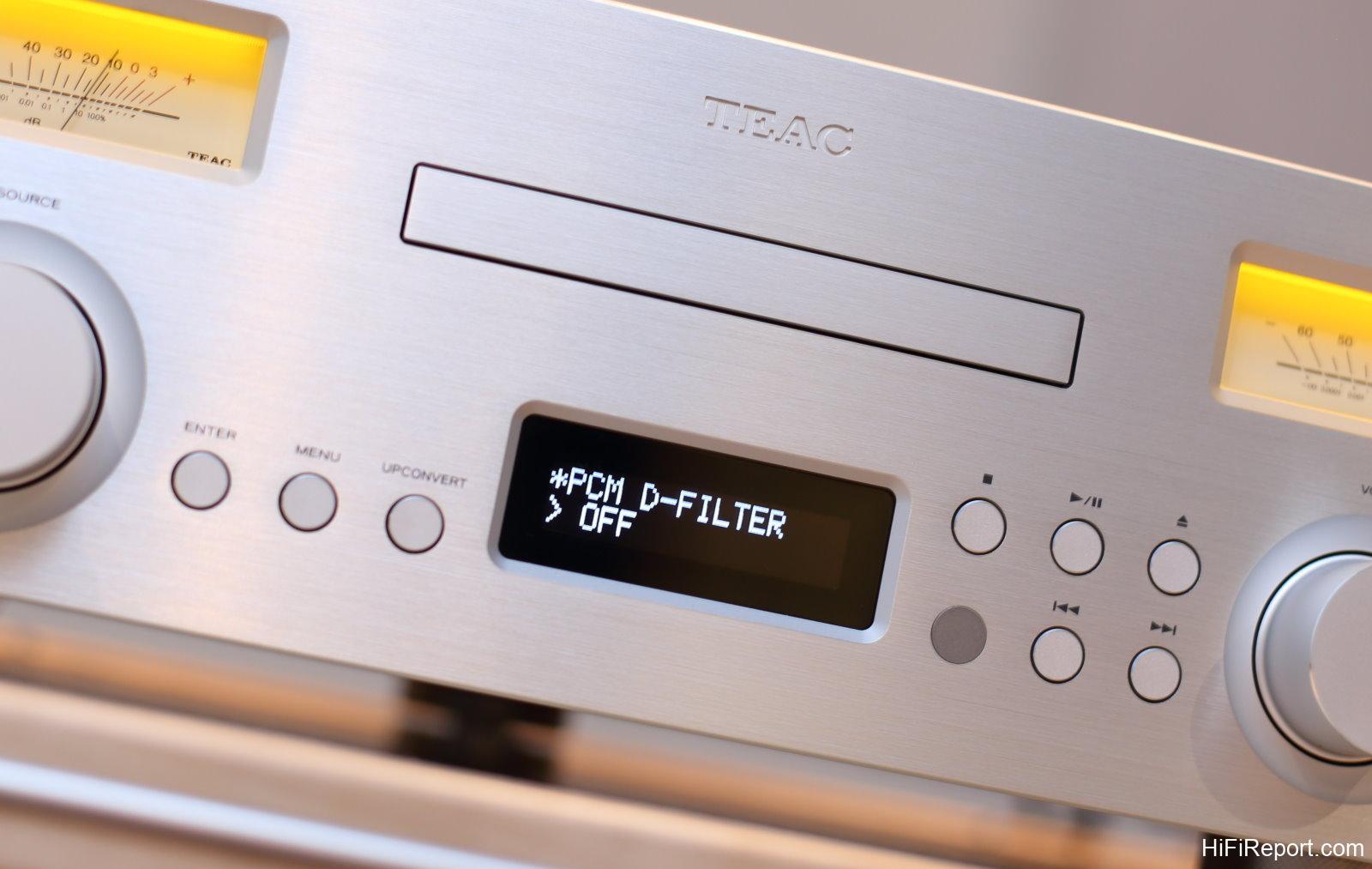
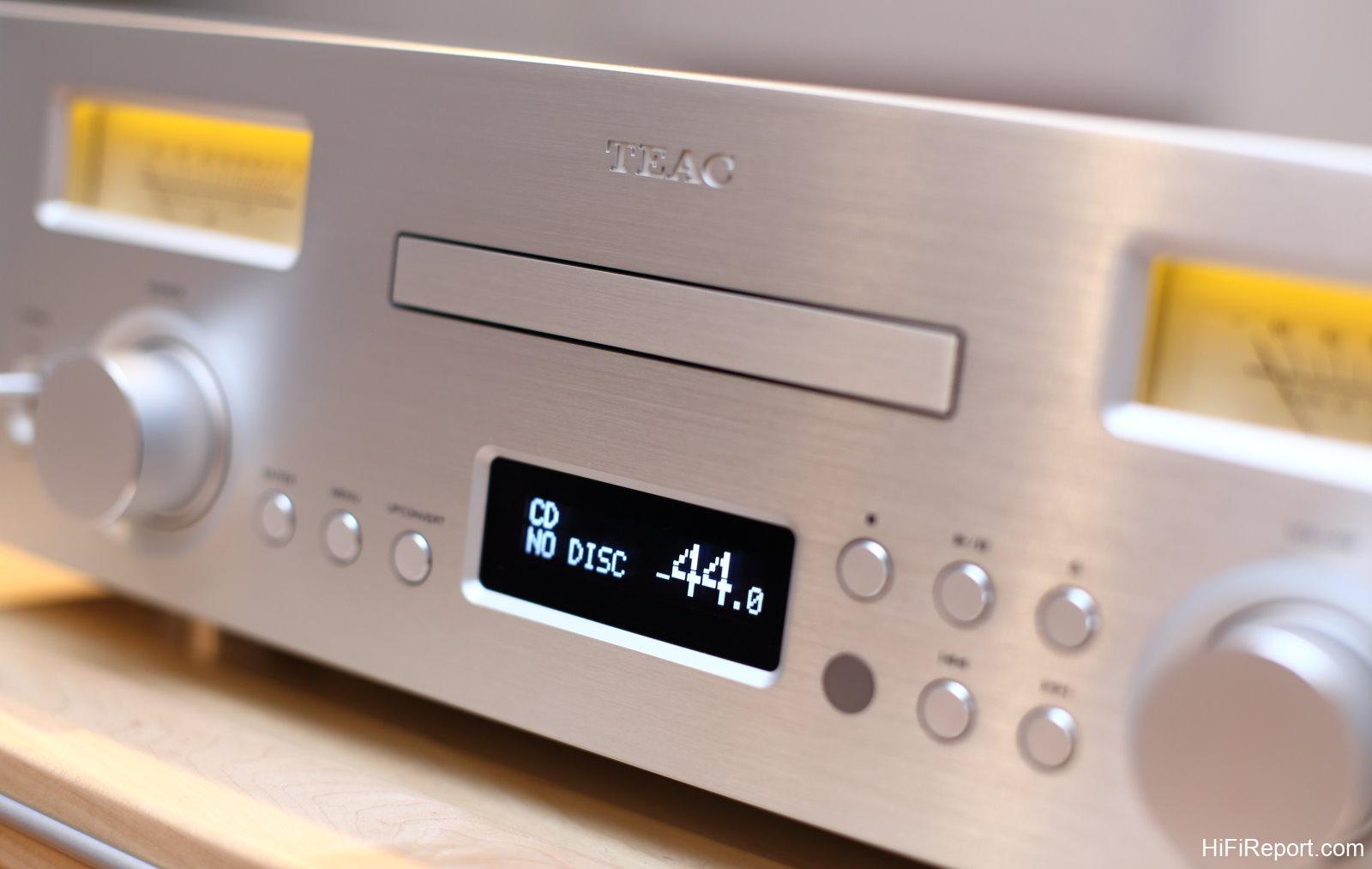
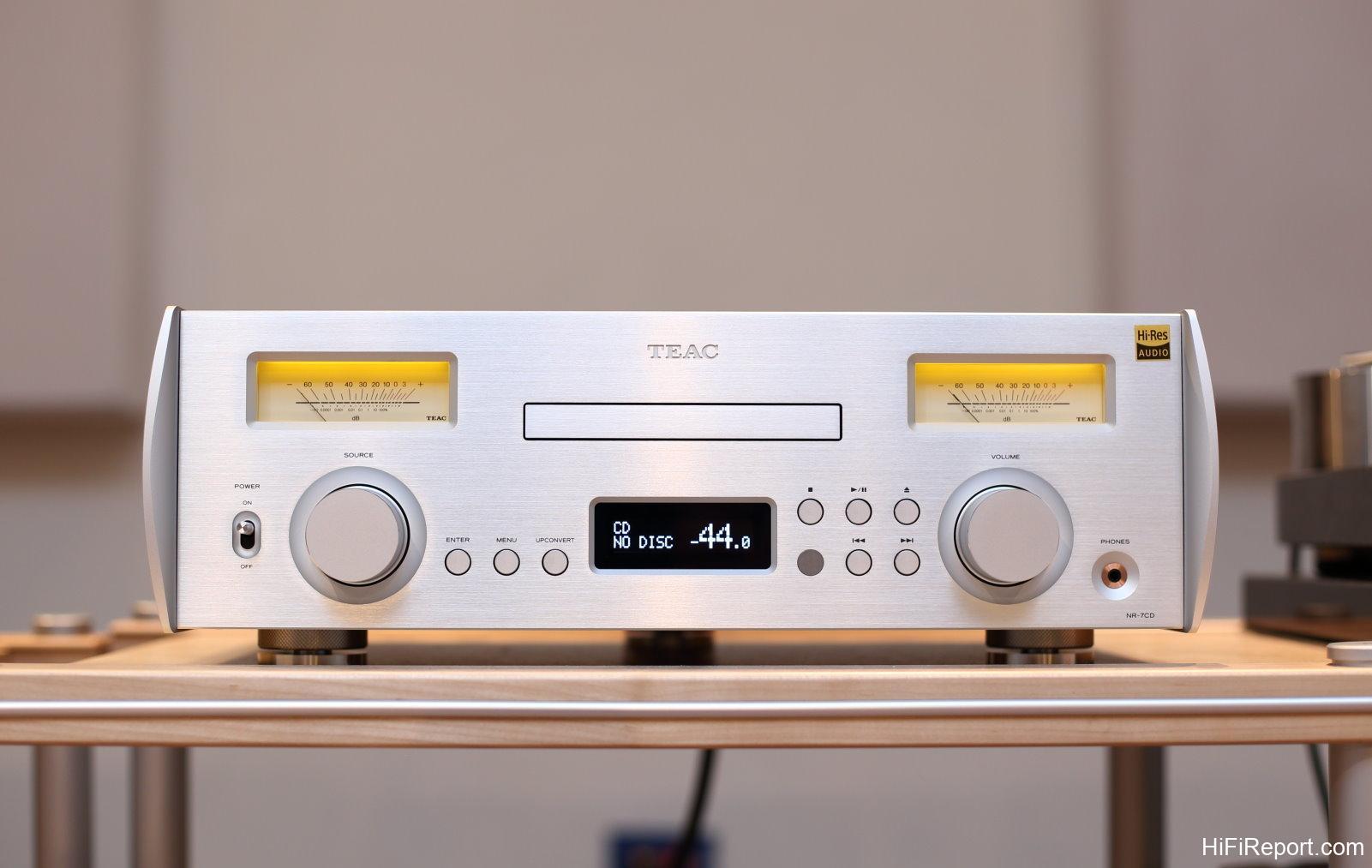
Once racked and powered on, we can truly witness the “glow.” The NR-7CD features two captivating VU meters, significantly enhancing its visual appeal. TEAC has incorporated VU meters in past equipment, but the NR-7CD’s full-size chassis allows for larger, more prominent meters. The TEAC logo is subtly engraved at the top center, with the CD tray positioned centrally, and a display screen below.
This screen presents track information and volume levels, and is also used to navigate and view the NR-7CD’s various settings.
Flanking the screen are operational buttons. On the left are ENTER, MENU, and UPCONVERT. The NR-7CD features upsampling capabilities, and this button allows for quick switching between different upsampling rates during music playback. The buttons to the right of the screen control basic playback functions: play, stop, eject, previous track, and next track. Two large aluminum knobs control volume and source selection respectively. A 3.5mm headphone output is located on the far right.
The power switch on the far left is a vintage-style toggle, adding a touch of nostalgic charm.
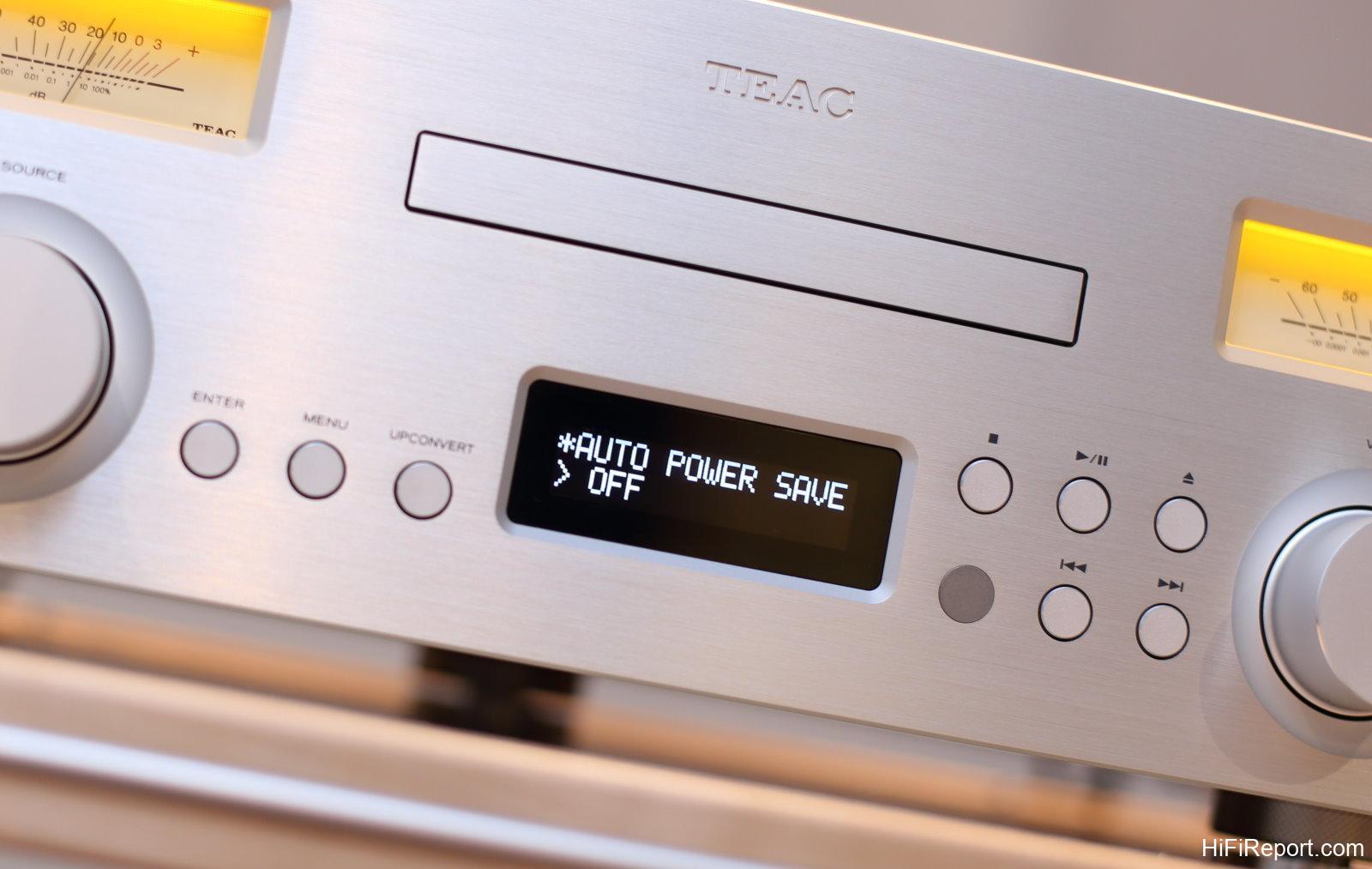
The central luminescence emanates from the display screen, which offers three levels of brightness adjustment. It shows the input source and the audio sampling rate, and when playing CDs, it also displays track number and elapsed time.
The 3.5mm headphone jack on the right indicates that the NR-7CD’s headphone amplifier uses TEAC’s proprietary HCLD (High Current Line Driver) technology. It can deliver 500mW+500mW of power into 32-ohm impedance, sufficient to drive even 600-ohm headphones. The jack utilizes a separate ground design for left and right channels, ensuring optimal channel separation when using headphones with a 4-pole plug.
The aluminum volume control knob uses a high-precision bearing connection, offering a smooth, refined feel akin to Esoteric’s volume knobs.
Many amplifiers feature VU meters for visual feedback. During normal operation, avoid prolonged periods in the red zone to prevent potential damage, but their primary purpose is to provide an exceptional visual experience. The meter brightness is adjustable across three levels.
Silent CD Mechanism
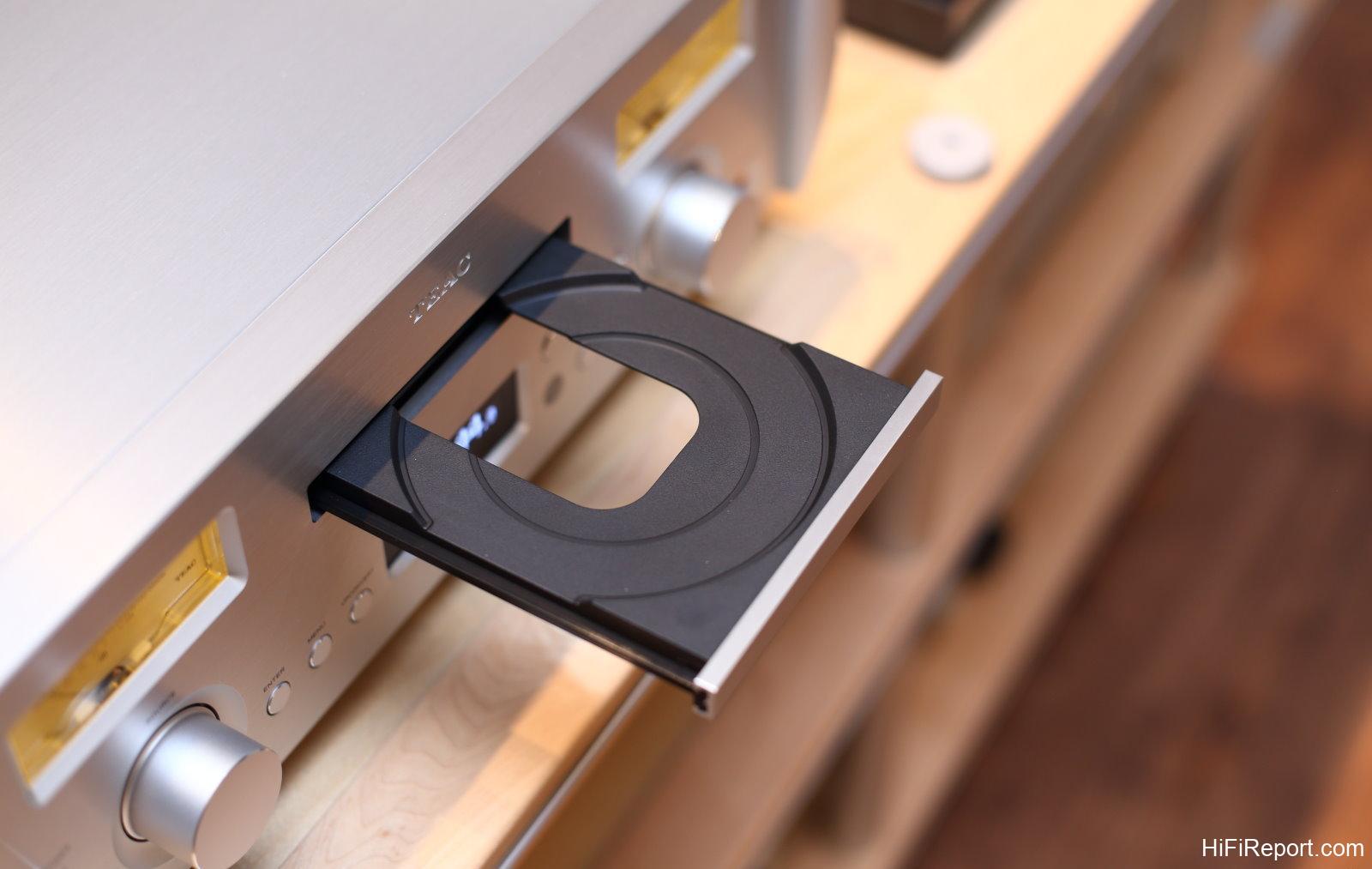
TEAC’s CD drive mechanisms are consistently a strong point. It’s no exaggeration to say that finding CD mechanisms superior to TEAC’s in the world is a challenging task. The mechanical structure used in the NR-7CD is remarkably refined, a point repeatedly emphasized by Mr. Oniki from TEAC during his visit. In actual use, the disc tray operates with exceptional quietness, and the mechanical movements are remarkably smooth and precise.
Versatile Functionality
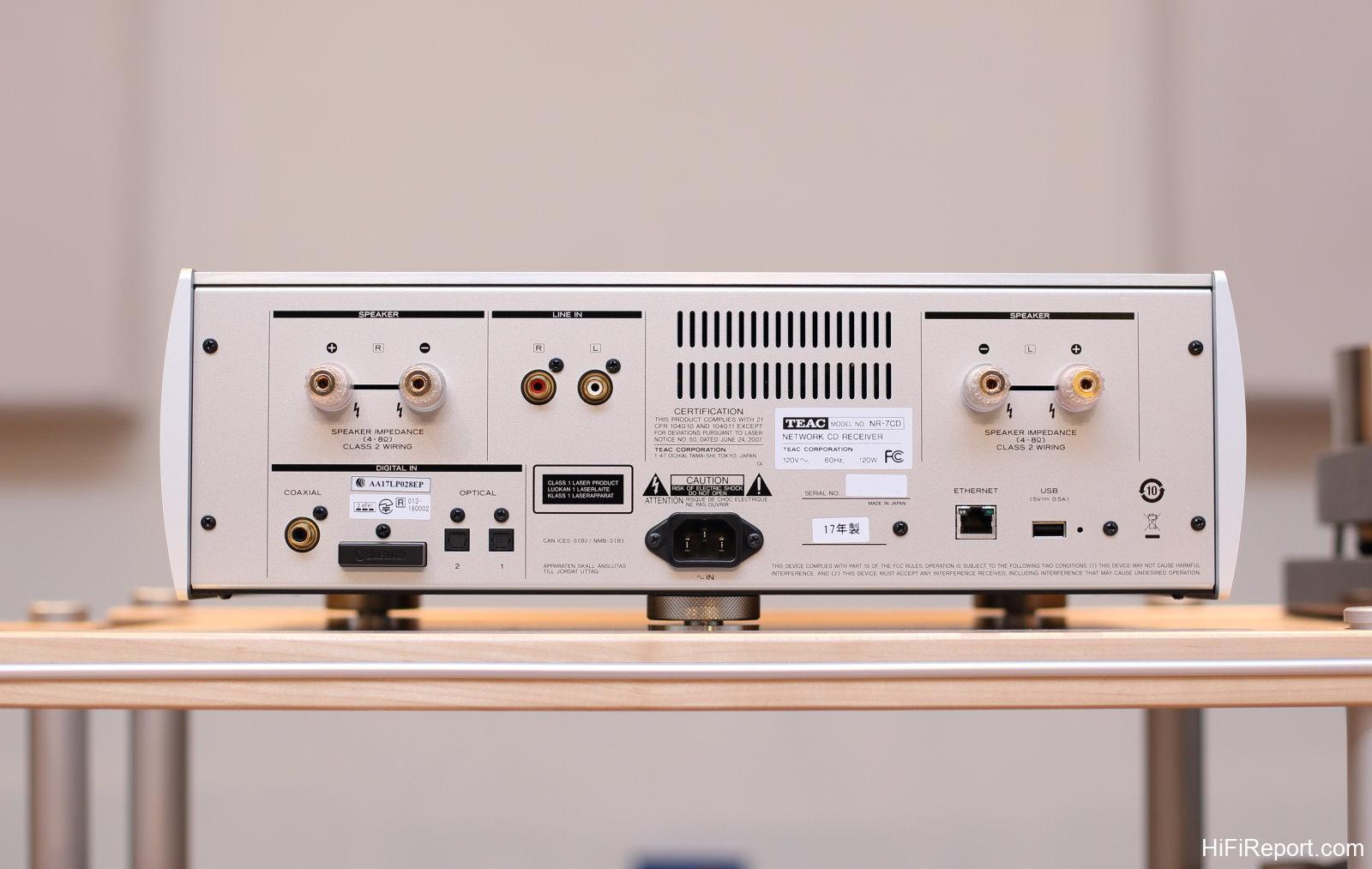
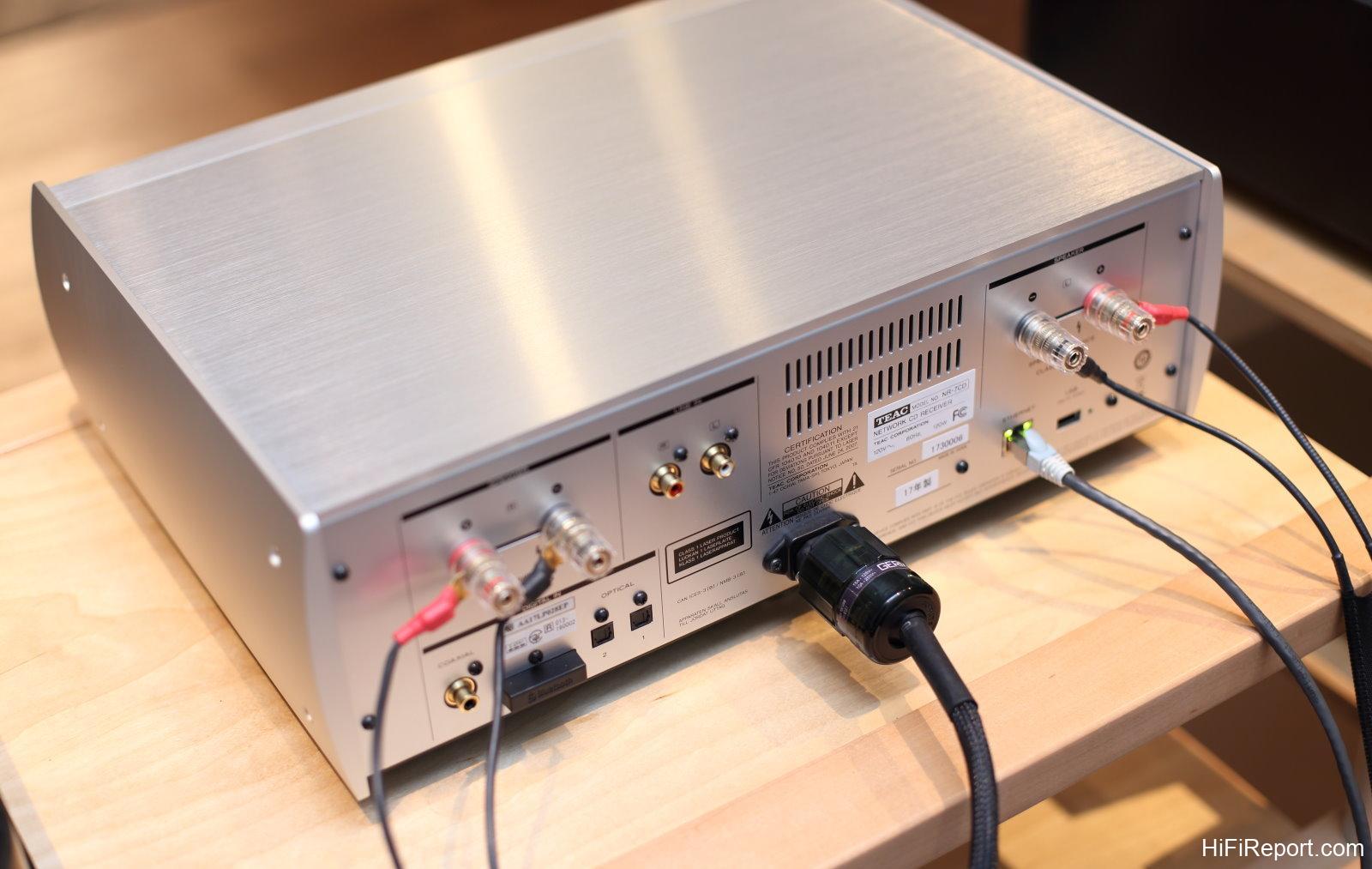
The rear panel of the NR-7CD also features a ventilation port. Beyond the speaker output terminals, there’s a set of LINE IN analog inputs, significantly enhancing the NR-7CD’s versatility. Connecting a turntable requires only a basic phono preamplifier to output the signal directly to the NR-7CD. Digital input terminals are located in the bottom left corner, including one coaxial and two optical inputs.
Notably, these three inputs can receive DSD 2.8MHz signals via DoP (DSD over PCM) transmission, and PCM signals up to 192kHz/24bit. The wireless Bluetooth receiver module (black rectangular block) is also situated here.
The crucial network port is located on the bottom right. Network streaming is highly significant for the NR-7CD, its importance rivaling even pure CD playback. All network streaming functionalities depend on this network port. The USB 2.0 port to the right allows for playback of music files from USB drives or portable hard drives, controlled through the same network streaming app.
The rear panel layout reveals a clear organizational principle: the upper half is dedicated to analog inputs and outputs, with ventilation ports also positioned above, while the lower half is entirely dedicated to digital input sources. This is because the NR-7CD employs a two-layer circuit board design. The upper layer houses the analog circuitry, and the lower layer houses the digital circuitry.
The digital-to-analog converter (DAC) acts as a dividing line between the two, isolating and insulating the digital and analog circuits to prevent mutual interference.
Upsampling for All Sources
Technically, the NR-7CD utilizes TEAC’s proprietary “RDOT-NEO (Refined Digital Output Technology)” upsampling circuitry. This can upsample all digital input sources to a maximum of DSD 12.2MHz or PCM 384kHz, smoothing digital waveforms and bringing them closer to analog reproduction. Additionally, a USB input is provided for connecting USB drives to play music files. After processing by RDOT-NEO, the signal path becomes fully independent for the left and right channels.
Balanced Analog Circuitry
The NR-7CD adopts a fully balanced analog circuit architecture. From the preamplifier stage and power amplifier stage to the final output, everything is designed with independent left and right channels. This architecture is termed “Full Stage Dual Monaural Differential Circuit.” As shown in the diagram, after the RDOT DSD UPCONVERTER, the left and right channel outputs become independent and feed into separate AK4490 DAC chips.
From this point onward, a fully independent structure is maintained. Isolators between the RDOT and DAC stages further prevent signal interference. Analog input signals are also processed independently for left and right channels from start to finish.
Volume control is handled by a 4-channel Volume Controller, likely similar to Esoteric’s QVCS (Quad Volume Control System) technology. This system divides volume control into four sections: positive and negative for both the left and right channels. Each volume adjustment independently controls these four sections, maintaining signal independence and preserving channel separation and accurate phase response.
For the power amplifier stage, two ICEpower-manufactured Class D power amplifier modules, “50ASX2,” are used in a BTL (Bridge-Tied Load) balanced configuration. Each channel employs one module, achieving a maximum output power of 140W+140W (4Ω). The headphone amplifier utilizes a separate HCLD high-current amplifier circuit.
The NR-7CD employs AKM VERITA AK4490 DAC chips, with one dedicated to each channel.
TEAC has developed a new AMAC (Aluminum-Block Mounted Amplifier Construction) structure for the NR-7CD. Both the DAC and amplifier circuits are mounted on 10mm thick aluminum plates, aiming for the shortest possible signal paths and optimal heat dissipation.
Placing the TEAC NR-7CD alongside the K-03X, both units exhibit unique textural qualities and are quite similar in heft.
Reducing cable clutter is a significant advantage of All-in-One devices. Only speaker cables and a power cord are needed for CD and Bluetooth playback. Adding a simple network cable unlocks the vast majority of functionalities. Network streaming offers broad applicability, encompassing internet radio, online streaming services, and connection to external storage drives (NAS). Furthermore, user-friendly control apps enhance operational convenience.
TEAC HR Streamer App & Specifications
TEAC offers a dedicated, free control app for the NR-7CD called “TEAC HR Streamer.” This app is identical to the one Esoteric previously released for the N-05, and song lists and memory settings are interchangeable between them. Downloading either app will suffice. This app is essential for utilizing network streaming features.
After launching the app, the primary settings involve selecting the connected device and music library. You can also customize the device name. The “Operation” section offers interface and operational preferences, configurable to personal habits. Regardless of settings, the app is designed for straightforward and effortless operation.
These are some display information settings. Choose whichever looks and feels most intuitive.
The album art display is generously sized, making album identification easy at a glance. Album and artist names are displayed below the artwork. A quick-access toolbar is located below the artist name, containing options for album sorting by name, artist, music, etc. Importantly, login options for Tidal and Qobuz are also found here.
The app allows for saving and recalling playlists. If you’ve previously used the Esoteric app, your saved playlists will be accessible here as well. This means that upgrading from the TEAC NR-7CD to an Esoteric N-05 in the future won’t require playlist re-organization; existing saved playlists can be seamlessly carried over.
Selecting Tidal from the toolbar allows for direct login and connection to Tidal. While I don’t have an account, it’s presumed that entering account credentials will grant access to Tidal’s music library. The same applies to Qobuz.
Song list display offers various options, including track-by-track views. In this mode, tracks are not categorized by album but are arranged alphabetically.
During song playback, a full-screen album art display option is available. Song information and sampling rate are displayed at the bottom. This app is clear, user-friendly, and offers stable connectivity, leaving little to criticize. The only point to note is that the NR-7CD’s upsampling function is not controlled via the app but is adjusted using the remote control or front panel buttons.
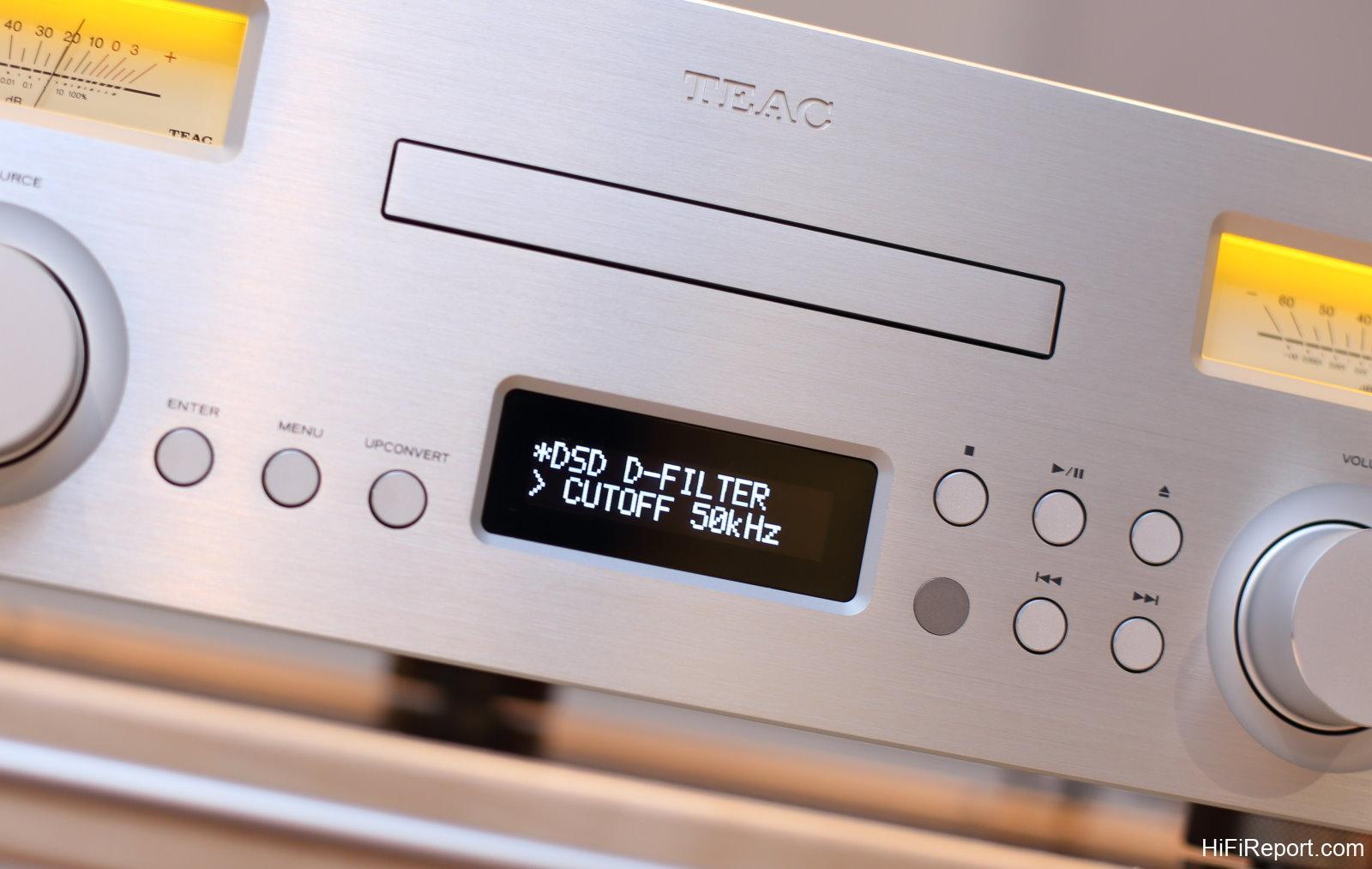
To engage upsampling, a “UPCONVERT” button is located to the left of the display screen. Pressing it cycles through 2Fs, 4Fs, 8Fs, DSD, and bypass modes. This function can be disabled to listen to the original audio file. This feature is applicable to any digital PCM input source.
The NR-7CD also provides four PCM digital filter options, which can also be bypassed. These settings are accessible through the MENU.