
UNio Poki 2.5G Audiophile Network Switch Review
Introduction & Build Quality
The UNio Poki network switch is a new product designed and manufactured by the Hong Kong-based brand ungnoi, distributed by HiFiReport. Sales have reportedly been strong over the past few months. We saw the actual unit at an audio show late last year, but shortages delayed our hands-on evaluation until recently.
Since its inception, ungnoi has maintained a remarkably high standard across its product line—vibration control feet, cones, equipment racks, and now this network switch—all designed with genuine High-End aspirations. Based on the finished units we have seen at various dealers, the design sensibility and craftsmanship surpass many European and American brands, fully justifying its market positioning.
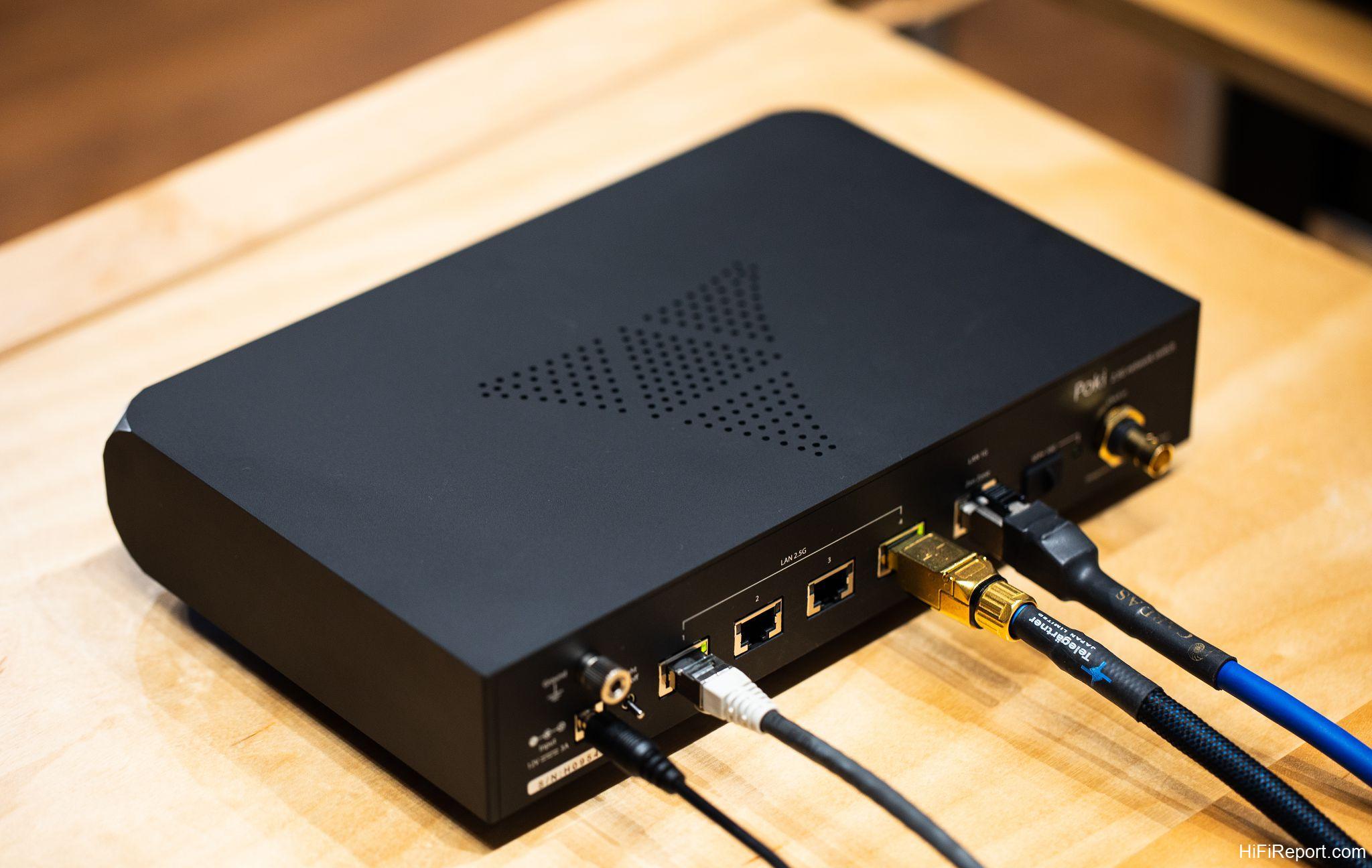
The UNio Poki chassis is CNC-machined from a single block of 6061 aerospace-grade aluminum. Aluminum is one of the most effective materials for shielding against external radio-frequency interference. Furthermore, the unit’s 3.2 kg (7 lb) weight ensures it remains planted firmly on an audio rack even after heavy audiophile cables are connected.
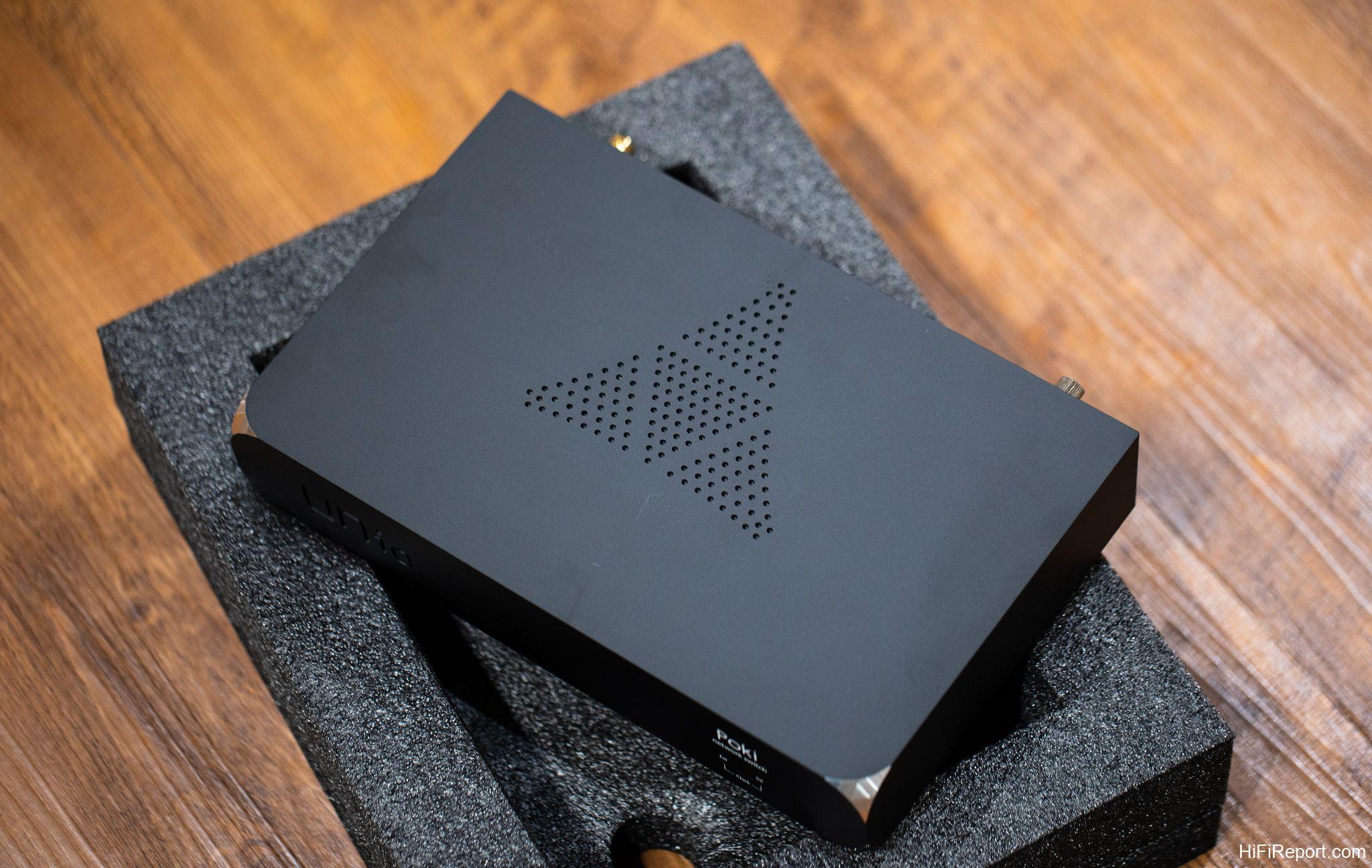
High-end cables are often heavy and stiff; we have frequently encountered lighter components being pulled off-balance or lifted by cable tension, an issue the Poki’s mass effectively eliminates.
Connectivity & Ports
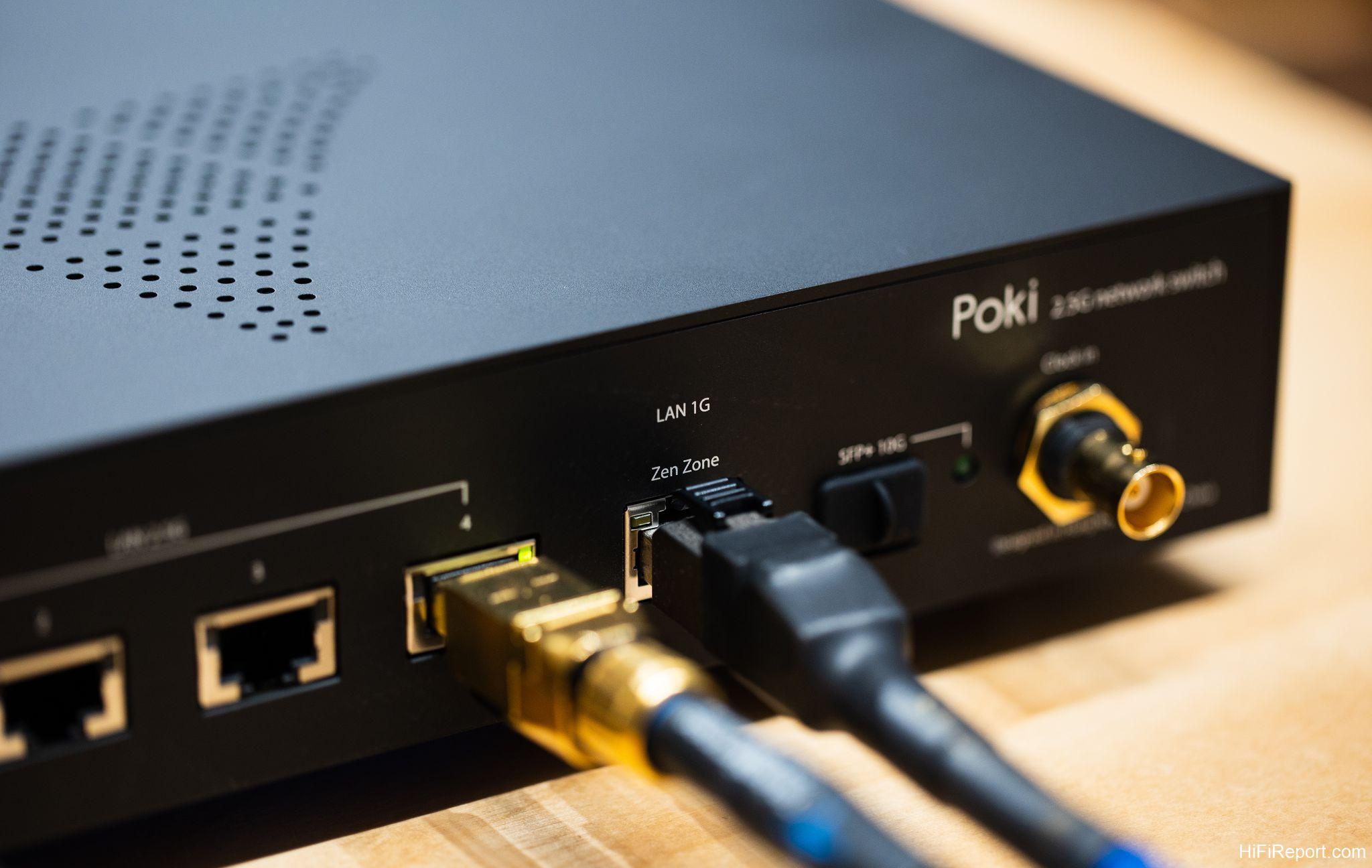
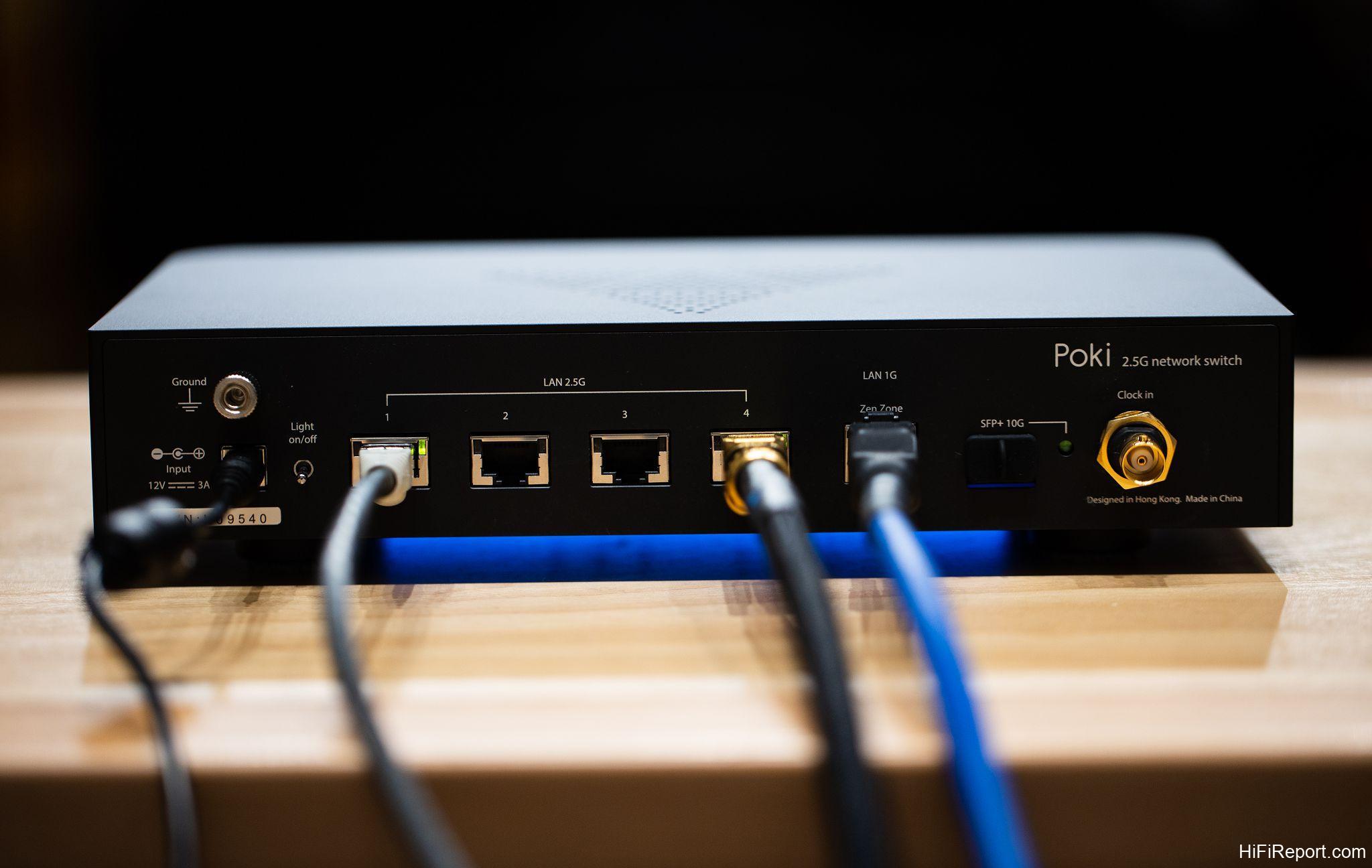
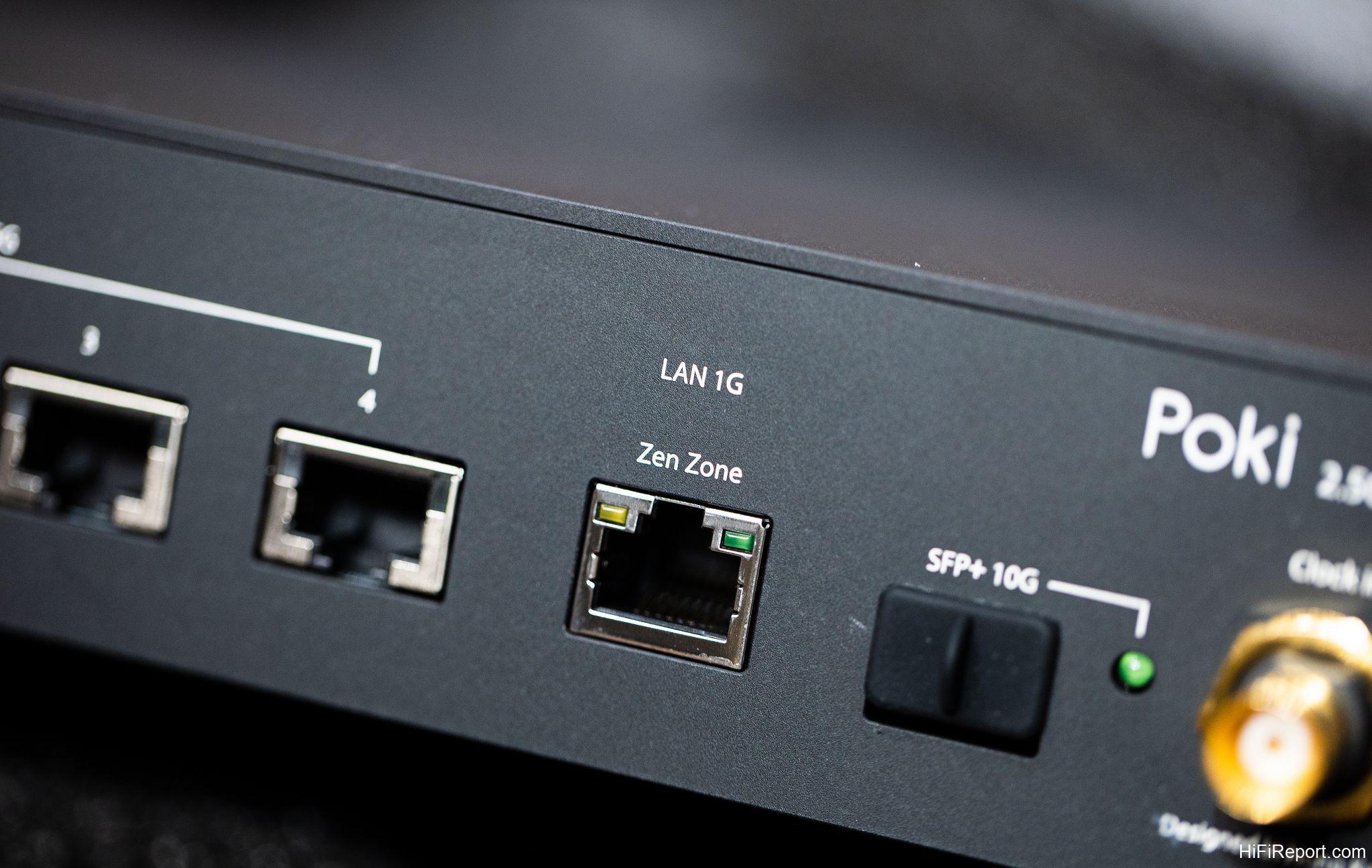
The UNio Poki utilizes a proprietary circuit board and provides five RJ45 Ethernet ports. The most critical among them is the dedicated “Zen Zone” port, designed exclusively for network streamers. This port features an independent shielding design, isolating it from the other four ports to minimize mutual interference. The Zen Zone port is locked to 1 Gbps—more than sufficient for real-time audio streaming—while the lower speed further helps avoid high-frequency noise.
The remaining four RJ45 ports support up to 2.5 Gbps, suitable for connecting to the external network, a music server/NAS, or a computer running a Roon Core.
The Poki also includes one SFP+ fiber port supporting 1 Gbps/10 Gbps speeds, allowing users to purchase compatible transceivers as needed. This port can link to other fiber-equipped devices such as network streamers, routers, or additional switches.
Clock System
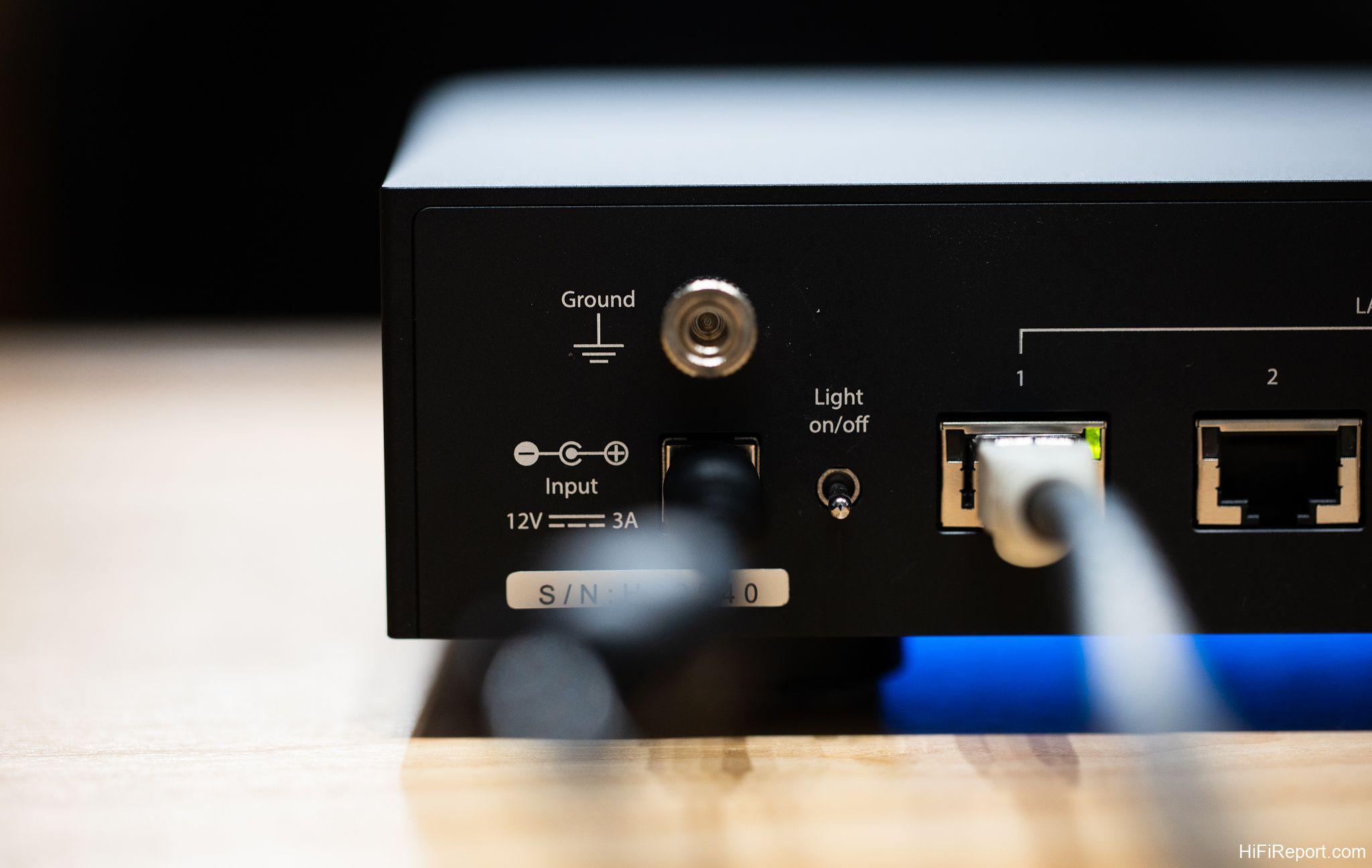
On the rear panel, the Poki provides a grounding terminal and a BNC clock input. The sole indicator on the front panel shows the clock status: internal or external. Without an external clock signal, it defaults to displaying the internal clock status.
Internally, the Poki employs a specially selected CHRONOS Class clock. After procurement, the design team subjects these clocks to extensive testing, selecting only the most stable specimens—roughly one out of every twenty units makes the cut. The external clock input accepts a 10 MHz, 50 Ω signal (sine or square wave), allowing users to connect a higher-grade master clock for further upgrades. UNio may also release its own high-end external clock product in the future.
Power Supply
The UNio Poki accepts 12V/3A DC input. A standard AC/DC adapter is included, but users are free to source superior linear power supplies for further refinement. Internally, four independent rectification and regulation stages generate distinct voltage rails for different circuit sections. Japanese-imported carbon-fiber shielding material is deployed between these power domains to isolate them from one another and suppress radiated noise.
Design Details
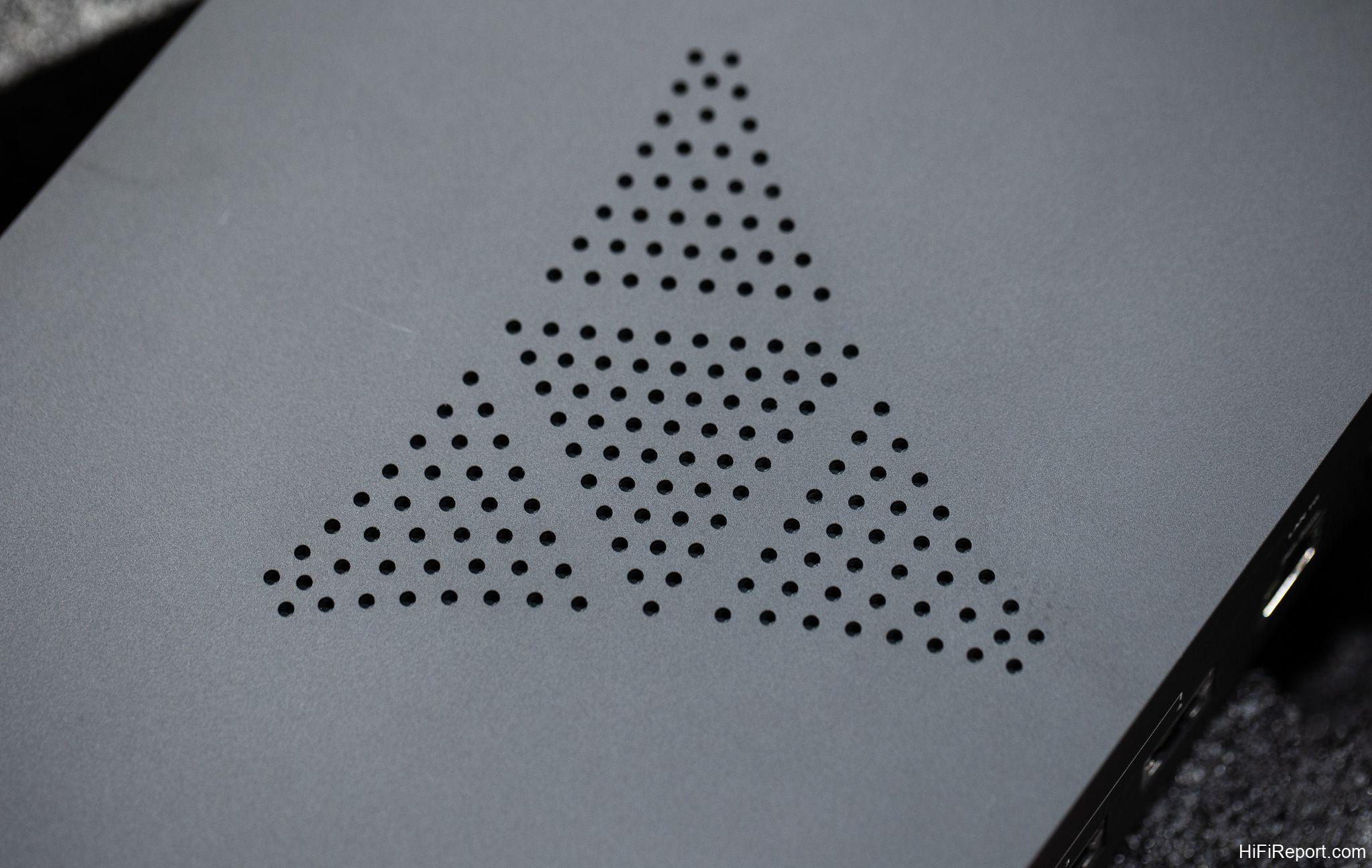
A single blue ambient LED strip resides on the unit’s underside. This serves no sonic purpose—it is purely for visual enjoyment. However, to prevent any potential noise contamination, the design team carefully isolated the lighting circuitry from the main signal path, and a switch on the rear panel allows it to be disabled entirely. The visual effect is striking when enabled. The industrial design extends to the top-panel ventilation pattern, which is both functional and aesthetically pleasing.
It is encouraging to see Asian-designed products progressively matching the visual appeal and tactile quality of their Western counterparts.
Listening Impressions: Tranquil Order & Exquisite Detail
Using John Williams’ *John Williams in Vienna* with the Vienna Philharmonic as a reference, the UNio Poki projected a distinctly rounded, organic texture. Finer, more natural details emerged; brass instruments exhibited a full-bodied luster, while strings shed all traces of dryness. The most satisfying improvement was a newfound crystalline clarity imbued with a sense of “wetness” or vitality. The silence of the musical background was profound.
Even during full orchestral passages, each instrument maintained a precise, stable position within an orderly soundstage. This coherent presentation allowed me to absorb every musical nuance and expression with greater patience and imagination.
The Poki’s ability to lower the noise floor proves even more critical with dense, energetic pop music. Whether handling electronic effects or fast, complex rhythmic passages—Eminem, Linkin Park, Imagine Dragons, Dua Lipa—grit and hash were significantly reduced. The music became a sequence of disciplined, passionate rhythms connecting each track.
The fiber connection offers an alternative pathway; the distributor’s testing indicates it yields an even blacker background when linking an upstream router, another switch, or a fiber-input streamer.
Listening Impressions: Exquisite, Silky Refinement (Wacko Wang)
I began with Ed Sheeran’s “Photograph.” Through the UNio Poki, the presentation was remarkably silky and delicate. In the quiet opening passages, the sound possessed a lightweight agility; despite its modest weight, it remained tightly focused and refined. The interlocking guitar plucks were dynamically alive, each note distinct with perfectly judged edge gloss, rendering the tone round and pearl-like.
As the lower registers entered, they displayed a crisp texture with fully portrayed elasticity and resonance. Even in gentler melodic lines, the performance felt remarkably rich.
When the chorus arrived, drums spread a dense, weighty low-frequency foundation with excellent mass and density, laying a solid bedrock for the song. Transitions from light to heavy, static to dynamic, were seamless. Quiet passages revealed shadow-like refinement; dynamic sections delivered visceral impact.
Amidst it all, micro-details remained crystalline: the air surrounding the soft vocals, the shift from chesty fullness to a delicate falsetto—every facet of the song was laid bare effortlessly.
Colorful Detail: John Mayer
Next, John Mayer’s “Slow Dancing In a Burning Room.” The opening electronic textures were deeply satisfying—layered, with exquisite nuance in the weight and decay of each note. Spatial rendering was excellent. Intermittent, crisp high notes appeared behind the forceful guitar lines; though small and fleeting, their timbre and texture were rendered without compromise.
Reverb tails were finely etched, expanding the soundstage width and combining with the guitar to create a genuinely deep sense of space.
The balance between elements was masterfully judged, yielding excellent contrast. Vocals sat slightly back in the mix but remained focused and substantive, never masked by the instrumentation. The distance between elements was well-preserved, creating the impression of the music wrapping around the voice. Electronic elements remained consistently full and juicy—almost tangibly so—assertive yet never usurping the vocal. The interplay between the two drove the song superbly.
Three-Dimensional, Emotionally Charged: The Civil Wars
Finally, The Civil Wars’ “Poison & Wine.” From the opening guitar plucks—whether underpinned by resonant bass or standing alone—the presentation was grounded and tangible. There was no sense of artificial emphasis, yet the tactile sensation of the performance was unmistakably clear. The low frequencies were stable and dense; abundant energy drove the string vibrations with conviction. The crisp texture felt vivid and alive, inviting endless repeat listens.
The vocal portrayal was equally distinctive. The male solo conveyed gentleness laced with quiet authority; as his register rose, the power transition was seamless. In harmony, the two voices intertwined beautifully—distinct yet intimately close. The female solo laid bare the emotion, the tension and resolve in her phrasing fully realized, infusing the clean timbre with rich tactile sensation.
With instruments rendered in three dimensions and the vocal atmosphere maximized, the UNio Poki’s performance was nothing short of masterful.
Specifications
* **Data Ports:**
* RJ45 Ports 1–4: 2.5 Gbps
* Zen Zone (Isolated Port): 1 Gbps
* SFP+ Port: 10 Gbps / 1 Gbps
* **Power Input:** DC 12V – 3A (5.5/2.1 mm)
* **Internal Clock:** CHRONOS Class Specially Selected Ultra-Low Phase Noise Clock
* **External Clock Input:** BNC, 10 MHz, 50 Ω, Sine Wave / Square Wave
* **Dimensions:** 270 × 168 × 48 mm (10.6 × 6.6 × 1.9 in)
* **Weight:** 3.5 kg (7.7 lb)