
Wireworld Starlight Cat8 Review
Digital audio streaming has become the market standard, and enthusiasts diving into network streaming are increasingly recognizing the crucial role of peripheral products like network cables and switches in affecting sound quality. Compared to standard IT-grade network cables, audiophile-grade products offer more stable transmission quality and superior sonic characteristics.
As everyone starts chasing high-end network cables, you might not know that one audio cable brand has been deeply involved in this field for many years. Not only have they launched several audiophile-grade network cables, but their technological innovation remains top-tier in the vast sea of network cables. This brand is Wireworld from the United States.
The Wireworld Starlight Cat8 ranks second in their range of network cables, sitting just below the flagship Platinum Starlight. The structure of the two cables is identical; the only difference lies in the conductor material. The Platinum Starlight uses Wireworld’s top-tier 7N OCC pure silver material, while the Starlight uses silver-plated copper. Below the Starlight is the Chroma, which uses oxygen-free copper conductors.
While researching the Starlight Cat8, I stumbled upon an article published years ago by Mr. Huang You-Yang in our New Audiophile magazine. He had already reviewed this cable, and surprisingly, its appearance and most technical specifications were the same even then. This discovery genuinely astonished me! That was over four or five years ago, a time when lossless streaming music was not yet popular, and high-end streaming equipment was scarce.
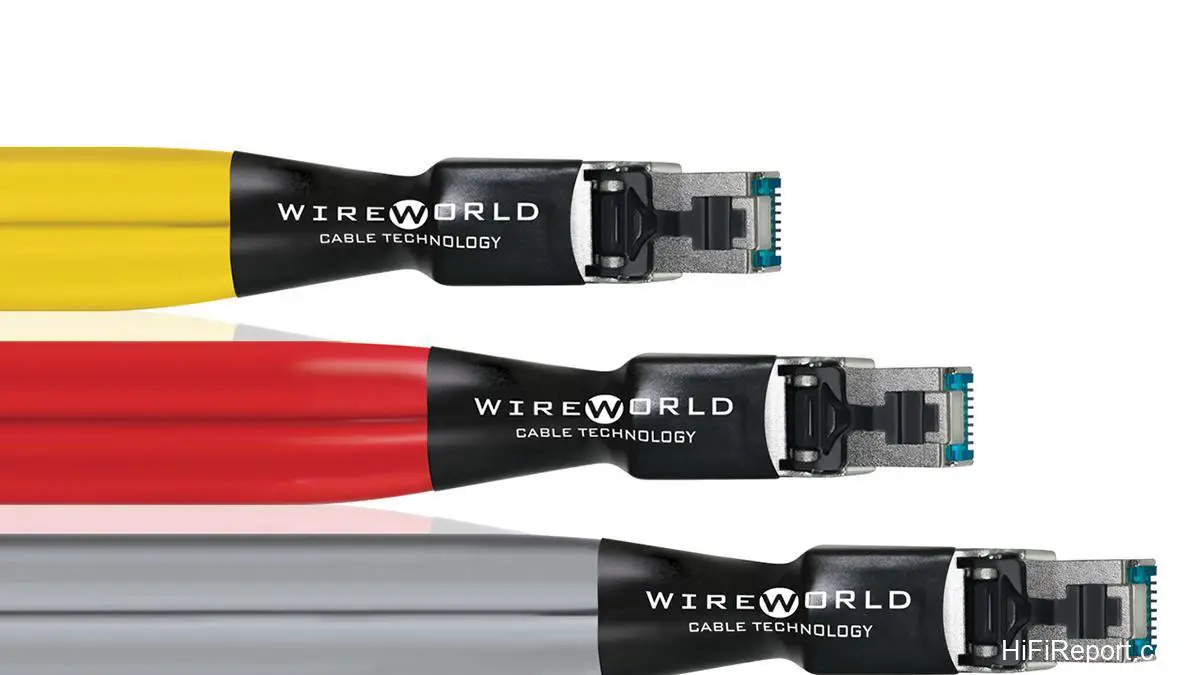
Wireworld demonstrated such incredible foresight; calling them pioneers of audiophile network cables would be no exaggeration.
In the realm of audio cables, Wireworld has always been a hot topic, and the reason is simple. Beyond consistently being at the forefront of the industry, Wireworld is a company deeply committed to science, designing cables from a practical standpoint. Their product technologies are transparent, and their grading is clear, allowing consumers to choose cables without getting lost in subjective cable “mysticism.”
This often leads to the feeling that you’re getting what you pay for, making purchases feel more reassuring.
Design and Technology
As the name suggests, the Starlight Cat8 meets the Cat8 transmission standard, supporting a bandwidth of 2000MHz and transmission speeds up to 40Gb/s, with a maximum transmission distance of 30 meters. This is more than sufficient for current lossless music streaming and will provide stable transmission quality for high-resolution audio-visual streaming content as it becomes more widespread in the future.
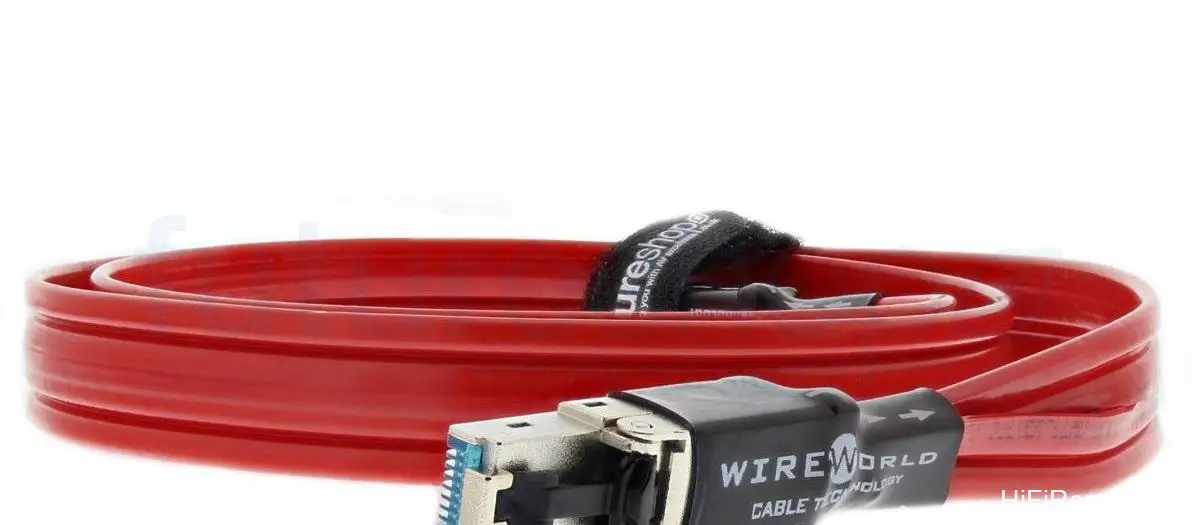
The Starlight shares the distinctive appearance of all Wireworld cables, deviating from the common round shape to adopt a robust, flat cable structure. It has a neat, industrial aesthetic and is particularly easy to manage. Even in the cramped space behind equipment racks, routing the cable is hassle-free.
This flat cable structure also incorporates specific acoustic considerations. Those familiar with cable design know that signal transmission is best when “straightforward,” and bundling or coiling cables tightly is undesirable. According to the manufacturer, this causes electromagnetic interference between signals, increasing “eddy current resistance” (often referred to as “swirl resistance”), hindering signal flow and consequently obscuring musical details.

Looking at the Starlight’s cross-section reveals eight conductors, each 23AWG in size, corresponding to the eight contacts on the RJ45 connector. The conductors are separated into four pairs arranged in parallel, with significant spacing between the pairs. This design ensures that regardless of how the cable is bent, the conductors maintain a consistent distance and angle relative to each other, drastically reducing electromagnetic interference.
It also effectively lowers “parasitic capacitance” that occurs when conductors are too close, correcting distorted signal waveforms and leading to more accurate signal transmission and, naturally, purer sound quality.
Furthermore, each individual conductor is insulated with Wireworld’s next-generation Composilex 3 composite insulating material. According to the manufacturer, this insulation minimizes mechanical noise and maintains signal purity, offering lower loss than traditional insulating materials like Teflon or PE. This is said to improve musical focus and dynamic performance.
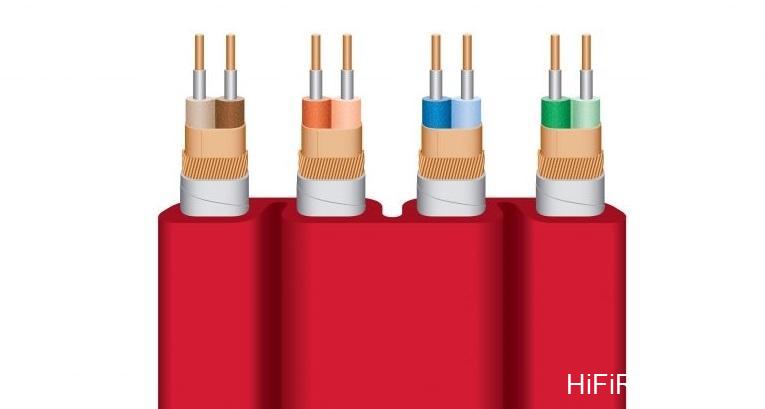
The outer layer features Wireworld’s exclusive Tite-Shield Twinax shielding technology, comprising 12 layers of shielding materials, including copper foil, copper mesh, and aluminum foil, effectively blocking environmental EMI and RFI noise. Finally, there is the “thick” outer jacket, which makes the cable remarkably tough and gives a sense of security during use.
Listening Setup and Initial Impressions
For testing, I used a Lumin D2 streaming player as the source, connected via a Waversa SmartHub 3.0 network switch, to compare the sound quality difference between the Starlight and a standard network cable. The power amplifier was a Keces S300, driving Dynaudio Emit 30 floorstanding speakers. The Lumin D2 has a warm and gentle sound signature, the S300 power amp also leans towards a thick sound, and the Emit 30 speakers are very neutral.
While the overall system might not be considered top-tier audiophile grade, the sound is well-balanced and enjoyable for long listening sessions. With the network switch, the sound density is higher, and details are richer. Before changing the cable, I didn’t feel the system was lacking anything. However, the Starlight proved quite impressive.
After switching to the Starlight, I immediately noticed improved balance across the three frequency bands. High-frequency extension and low-frequency depth were distinctly better. Energy across the entire frequency spectrum was enhanced, yet no single band felt overly prominent, indicating the cable’s neutral sound signature. It doesn’t seem to color the sound much but rather improves fundamental aspects like resolution and dynamics.
It was then I realized just how much upgrade potential this system still had!
Detailed Listening Experience
When I played Dvořák’s Piano Trio performed by the “Sitkovetsky Trio,” the first thing that struck me was the significantly larger soundstage. I could feel the horizontal and vertical space open up considerably, yet this didn’t dilute the density of the instruments. Furthermore, the cable provides an exceptionally quiet musical background, making the forms of the instruments much more vivid, with imaging that felt tight and dense.
It was only then that I realized that before switching to the Starlight, the instruments still had quite a bit of roughness or fuzziness. This cable is like lifting a thin veil from the music, bringing back all the lost details, making even subtle performance nuances incredibly clear. In addition, not only is the soundstage expansive, but the energy feels solid.
You can clearly feel the gaps between sound shapes, and these are now filled with rich hall ambiance, making the overall sound relaxed, full of moisture (lushness), and highlighting the musicality.
This advantage of a smooth and beautiful sonic foundation lent a sweetness to the string instruments in the chamber music. The bowing of the violin had a fine, fibrous texture, accompanied by a gentle woody tone. Even when playing in the upper positions, the violin maintained its body, a realistic texture built upon rich harmonic details, sweeping away the previous harshness and making the instrument’s outline clearer. Piano notes were round and elastic, with keystrokes feeling weighty.
It was also evident that the cable had excellent transient response, clearly rendering the musicians’ subtle performance expressions and dynamic shifts between soft and loud.
The bass notes, which previously sounded soft, lacking in focus, now felt firm and fast with elasticity. The sustain carried the delicate resonance of the piano’s soundboard, making the piano’s timbre more complete and rich. The mid-bass provided by this cable is full and elastic, coupled with impressive depth. This made the lower register of the cello even deeper, transforming previously blurred energy into clear bowing details, and the wood body resonance sounded tight and not bloated.
This improved the sense of distance between instruments; the piano trio no longer sounded crowded or compressed, presenting a clearer layering of the performance.
Listening to “Belafonte Sings the Blues” by Harry Belafonte, the vocal image was slightly set back a few steps, with a moderate size that felt prominent yet unforced. Unlike many network cables that emphasize resolution by artificially sharpening sibilance, the midrange felt solid and full, making Harry Belafonte’s voice thicker and more magnetic. His mouth shape wasn’t exaggerated, allowing the subtle emotions in his singing to flow naturally.
The cable’s expansive spatial reproduction also unearthed more details of the room’s ambiance. The details of the instrumental accompaniment had more room to spread out, making the instrument positioning feel more three-dimensional and preventing them from sounding crowded and blurred together. Details like the hiss of the cymbals’ decay and the resonance of the upright bass were more completely rendered.
This feeling was akin to moving the stage from a crowded small bar to Carnegie Hall; you didn’t need to concentrate intently to appreciate the dialogue between the singer and the accompanying instruments, enjoying the beauty of the music with greater ease.
Conclusion and Value
The sound quality of the Starlight is quite comprehensive. From vocals and chamber music to large-scale symphonic works, it consistently delivers a relaxed and smooth sonic character. The sound is very neutral, without significant coloring from tuning, offering an overall improvement in the quality of network streaming music. Listening blind, I genuinely considered buying it. And when I saw the distributor’s price, I was even more amazed.
Such a flawless network cable costs only around 10,000 NTD (approximately 317 USD for 1m, 11,880 NTD is for 2m, which is approx. 377 USD for 2m)! At that moment, I wrote the headline without hesitation: “Astonishingly High Performance-to-Price Ratio, No Regrets Buying This One!”
Specifications
* Type: Audio-specific network cable
* Connectors: RJ45, male/female pins plated with 24k gold, metal shell
* Conductors: Silver-plated oxygen-free copper solid core (23AWG)
* Structure: Patented “Tite-Shield Technology” structure