
Arcam CD5 Review
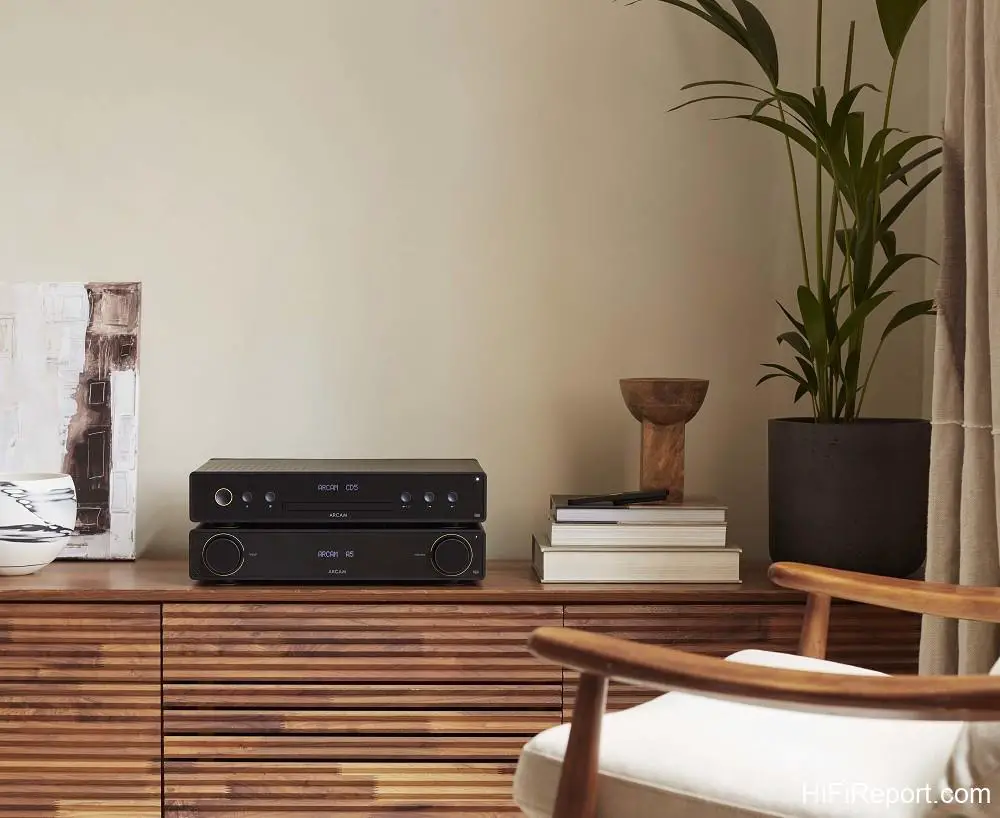
The Arcam CD5 takes its place as a distinguished member of the brand’s new Radia series. This range currently features three integrated amplifiers, alongside two digital sources: the CD5 CD player and the ST5 streamer. This clear separation between CD playback and streaming caters directly to user preferences, allowing enthusiasts to choose their desired format.
Furthermore, it simplifies the internal structure of each digital source, potentially reducing interference and leading to improved sound quality. The Radia series showcases a modern, aesthetically pleasing, and highly designed exterior. Careful consideration has been given to material selection: the front, rear, and top panels are all aluminum, enhancing the visual texture and build quality. The base is constructed from steel, equipped with four substantial isolation feet.
Connectivity
Around the back, the CD5 provides a pair of single-ended analog outputs, as well as optical and coaxial digital outputs, allowing it to function effectively as a standalone CD transport if desired.
Supported Formats and Features
From a functional standpoint, the CD5 clearly distinguishes itself from typical CD players. Beyond playing standard pre-recorded CDs and user-burned CD-R discs, it boasts the capability to read and play music files. Supported file types include WAV, FLAC, MP3, AAC, and WMA. The supported resolution extends beyond standard CD quality, capable of playing 96kHz/24bit WAV and FLAC files, qualifying it for Hi-Res lossless playback.
Music File Playback Methods
The key question is how these music files are played. Users have two primary methods. The first involves burning music files onto CD-R or CD-RW discs. A standard 750MB disc can hold approximately two albums worth of “CD quality” FLAC files. For 96kHz/24bit FLAC files, the capacity is limited to about 40 minutes of total playtime, meaning some albums might not fit onto a single CD-R.
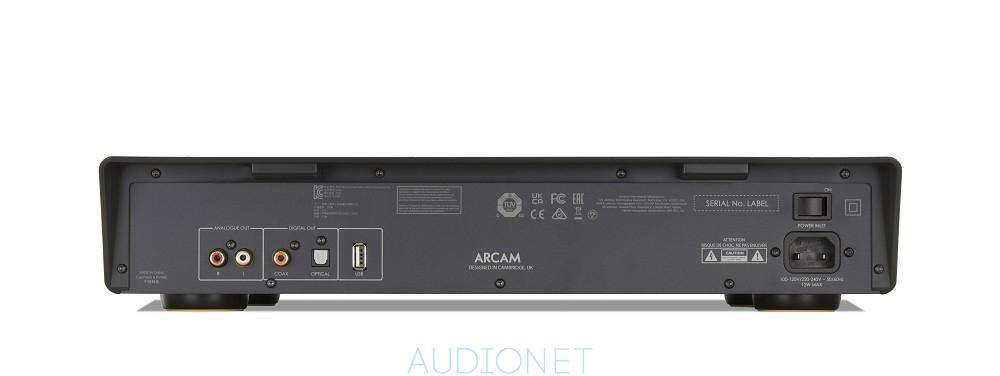
This leads to the second method: storing music files on a USB flash drive and plugging it into the USB-A port on the rear panel. Playback can then be controlled via the remote. This method bypasses the capacity limitations of CD-Rs, allowing you to store and play an entire 96kHz/24bit album from a single drive.
The USB storage playback function supports FAT16 and FAT32 formats (other formats are not supported). It can handle up to 512 folders and 65535 music files. While theoretically you could format a larger USB hard drive with FAT32 to store more music (surpassing flash drive capacity), the unit’s front panel display does not show file names during playback. For this reason, I lean towards using smaller USB flash drives, loading only a few albums or perhaps twenty-something individual tracks.
This makes it much easier to navigate and select the specific songs I want to hear.
Internal Design and Components
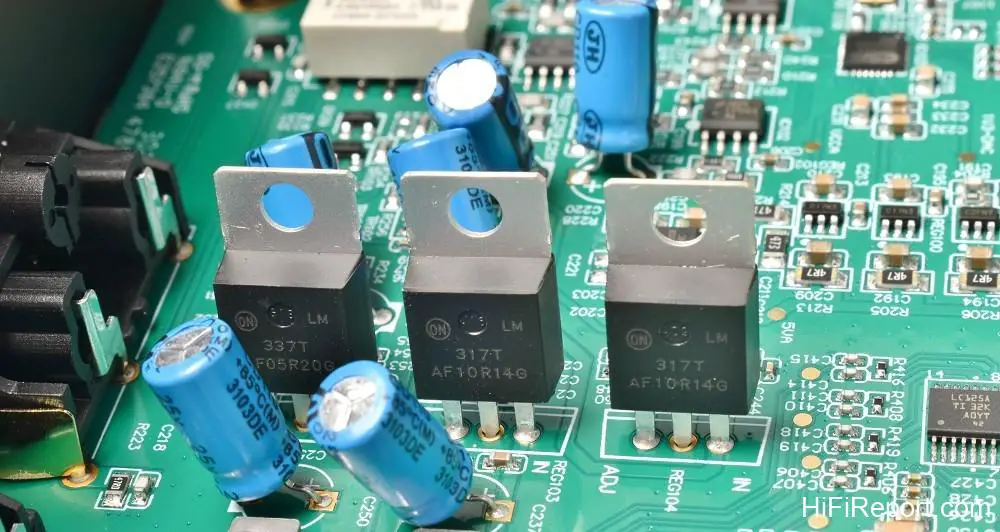
Let’s delve into the Arcam CD5’s internal circuitry. It utilizes an Asatech CD mechanism, positioned centrally at the front of the chassis. Internally, there are three main circuit boards. The CD drive control board is located conveniently next to the mechanism. The power supply board resides in the rear left section, though this isn’t the entirety of the power regulation.
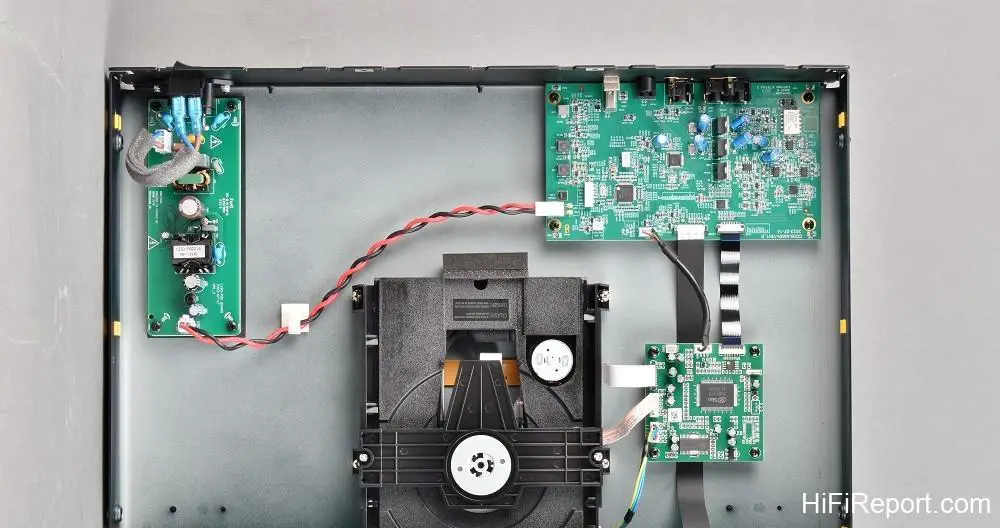
The critical regulation circuitry, including the single voltage supply for digital circuits and the positive/negative supplies for the audio circuits, is mounted on the largest main board situated in the rear right. The primary components here are three three-terminal voltage regulator ICs: one LM317 handles the single-voltage digital regulation, while a pair of LM317 and LM337 are dedicated to regulating the audio circuitry. This represents a rather traditional voltage regulation approach.
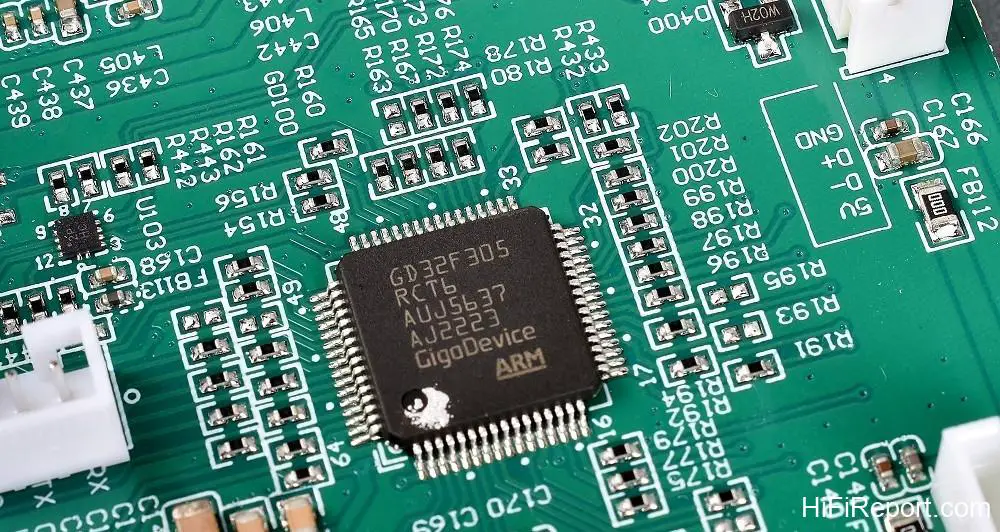
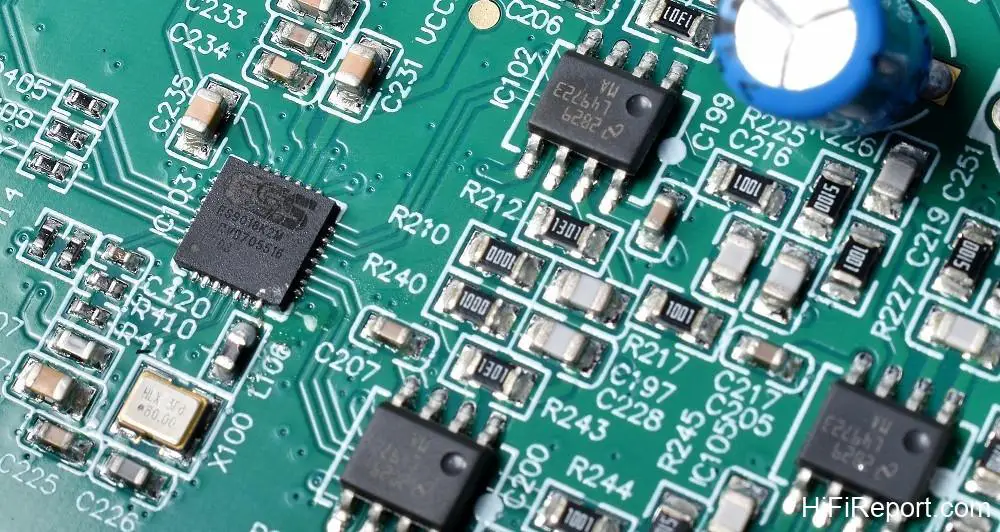
In the digital section, the unit incorporates a GigaDevice GD32F305 ARM Cortex 32bit MCU chip. This enables support for music file playback from both USB and CD media. The crucial digital-to-analog conversion stage employs the well-regarded ESS SABRE32 Reference DAC chip, the ES9018K2M, commonly found in many mid to high-end streamers and headphone amplifiers. This 32-bit DAC chip is known for its high dynamic range (127dB) and low distortion (-127dB THD).
Arcam has wisely utilized this DAC chip’s built-in feature of three distinct digital filter modes (Fast Roll-Off, Slow Roll-Off, and Minimum Phase), each offering a different sonic character that users can select for fine-tuning the sound to their preference.
Following the DAC chip, the I/V conversion and low-pass filtering circuitry employ the LME49723MA. This dual operational amplifier chip is a favorite among DIY audio builders and boasts ultra-low distortion (0.0002% THD), low noise, a high slew rate, and wide bandwidth characteristics. This choice is clearly a high-performance pairing for the ESS9018K2M. However, I believe there’s more to it.
In digital source components, the analog stage often has a greater impact on the final sound character than the DAC chip itself. I suspect Arcam’s choice of this particular op-amp, with its 17 MHz bandwidth and high speed, is intended to sculpt the CD5’s specific sonic profile. You should anticipate that the Arcam CD5’s sound will not be old-fashioned; rather, it will lean towards purity and high resolution.
Listening Setup
Observing the circuitry can certainly reveal the designer’s intentions, but the true sonic performance is best confirmed through listening tests. For this review, I paired the CD5 with a NAD C 389 integrated amplifier, Pioneer S-1ES floorstanding speakers, and a Monitor Audio Anthra W10 active subwoofer. This 2.1 channel system had been manually calibrated with the aid of measurement tools (without engaging Dirac Live).
The speakers were set up in an equilateral triangle, and the subwoofer handled frequencies below 80Hz (with the overall frequency response calibrated to within ±2dB). This system is directly sensitive, akin to a professional studio monitoring setup, allowing me to fully grasp the CD5’s sonic characteristics.
Listening Impressions and Sound Quality
Musicians often affectionately refer to their beloved instruments as “he” or “she,” and the sound quality an instrument produces can evoke a sense of masculine or feminine character. The same applies to audio equipment. Instances where I feel a component is “absolutely neutral” are rare. Most AV receivers tend to feel “masculine,” while many excellent tube amplifiers strike me as decidedly “feminine.” The Arcam CD5’s “gender” is unequivocally “she.”
Listening at comfortable volume levels immediately conveys her refinement, spirit, and elegance. The texture is incredibly delicate, clean, and possesses a sense of nobility. The sound is pure and transparent, utterly free from any sonic “mist.” Unless you specifically want to liven things up, there is simply no need to play music loudly with the CD5.
With the DAC filter set to the default “Fast” mode, the CD5 demonstrates exceptionally high resolution. It presents the timbre of instruments, vocals, and subtle spatial cues with unvarnished clarity. The sound is highly detailed yet completely devoid of any harshness. The mid and high frequencies remain harmonious and smooth. Despite having tuned my system to be quite rational in its baseline sound, the CD5 doesn’t alter this fundamental character.
Instead, it manages to convey fluency and excellent musicality even on such a revealing system.
If you prefer a slightly “warmer” tone to add more flavor to your listening experience, you can change the DAC filter from the default “Fast” to “Slow.” In this mode, the upper treble’s sheen becomes a bit more restrained. The third DAC filter mode, “Phase,” offers a sound character somewhere between “Fast” and “Slow.” I found this setting seemed to have a slightly higher sense of sonic density compared to the other two.
From realism and nuance to density, these three digital filter modes present subtle yet noticeable differences in listening experience. If you don’t perceive these differences, it might not be an issue with your hearing. It’s more likely that your audio system has significant coloration (leading to insufficient sensitivity) or that there’s still room for improvement in its setup and calibration.
Additional Remarkable Qualities
Beyond these listening impressions, the Arcam CD5 possesses several remarkable qualities. I anticipate that most audiophiles, upon their first listen, will immediately perceive an incredibly wide and expansive soundstage, even before focusing on fine details of tone and texture. The degree of separation is so high that it can even give listeners the impression of hearing “surround effects” from a two-channel system.
For instance, I’ve recently been frequently listening to “Gold -Mata Au Hi Made- (Taku’s Twice Upon a Time Remix).” I invited the editor-in-chief of *Audio Art* and our magazine’s own editor to have a listen, and they both commented that they heard sounds coming from behind them.
A second characteristic is how closely the sound quality of CD playback approaches that of Hi-Res music files. Without being prompted, even experienced audiophiles would have difficulty distinguishing between the two in terms of sound quality. The ability of the Arcam CD5 to make standard CDs sound like Hi-Res was truly beyond my expectations. A third point relates to the “friendliness of CD playback.”
Many older CDs in collectors’ libraries may have seen better days, exhibiting minor scratches or mildew. The Arcam CD5 exhibits a remarkably high tolerance for these imperfect discs. Passages that would cause skips or even prevent playback on other CD players were handled smoothly by the CD5.
Conclusion and Value
Today, veteran audiophiles purchasing a new CD player might be seeking to revisit the enjoyment of listening to music during the CD era. However, the Arcam CD5 offers experienced listeners a distinct departure from the sound they remember from the CD heyday of the 1990s. Go ahead and pull out those older CDs from your collection; you’ll be surprised by the significant difference – it’s like “re-discovering” them, the listening experience is so unlike before.
Arcam clearly demonstrates the advancements in audio components and manufacturing technology over the past two decades. With a price tag of just around $1,116 USD, its sound quality can surpass that of many high-end CD players from the 1990s that cost well over ten times that amount (and don’t forget the inflation over the last thirty years!). I was genuinely surprised to find a CD player at this price point possessing such a sense of nobility in its sound.
If you don’t mind the absence of balanced outputs, I believe this affordable CD player would not feel out of place even in a contemporary high-end audio system. With its unique character and sonic profile – its “sheer” presence – I consider the Arcam CD5 to be a device that breaks through traditional price/performance tiers. It is one of the most exceptional value digital sources currently available and easily earns our highest recommendation.
Specifications
* Type: CD Player
* Compatible Media: CD (Audio), CD-R (Audio / Data), CD-RW (Audio / Data), USB-A (Data)
* Compatible Files: WAV(LPCM), FLAC, MP3, AAC, WMA
* Supported Bit Depths: 16 bit, 24 bit
* Supported Sample Rates (kHz): 32, 44.1, 48, 88.2, 96
* Output Terminals: Digital Coaxial x1, Optical x1, Stereo Single-ended (RCA) x1
* Harmonic Distortion (1kHz): <0.007% * Frequency Response: 20Hz – 20kHz ± 0.05dB * Signal-to-Noise Ratio (A-weighted): 93dB/115dB * Maximum Output: 2.1V RMS * Maximum Power Consumption: 18W * Dimensions (W x D x H): 433 x 344 x 83 mm * Net Weight: 4.88 kg