
Innuos ZENmini MK3 Streamer Review
Innuos, a brand originating from Portugal, rapidly gained traction in the UK market before establishing a strong global presence. Founded in 2009, Innuos has dedicated itself entirely to the realm of digital streaming, specializing in music file storage, network streaming playback, and digital audio processing. Their goal is to deliver products that meet the demands of the modern streaming listener.
What sets Innuos apart from many other audio manufacturers is their dual capability in both hardware and software development. This means Innuos not only designs the physical components but also writes their own operating system software.
In recent years, they have further enhanced their ecosystem by developing the Sense App (available for both iOS and Android), providing a complete, end-to-end development capability that results in products boasting rich features, seamless interfaces, and genuine Hi-Fi sound quality.
It was this exceptional foundation and capability that caught the eye of Taiwan’s renowned distributor, Tiinlab Audio, several years ago. Recognizing the potential, Tiinlab introduced Innuos products to Taiwan, offering consumers more comprehensive solutions for their streaming needs. Innuos’s most successful line in recent years has been the ZEN series of streaming sources, available in three tiers: ZENmini (entry-level), ZEN (mid-range), and ZENith (high-end).
Tiinlab first introduced this series around 2017, at which point the products were already in their second generation, hence the “MK II” designation in their model names.
At that time, the ZEN series was primarily positioned as music servers. They included built-in hard drives for storing music files and could connect directly to a network, functioning much like a NAS. A major selling point of the ZEN series was their integrated CD Ripper function. With a slot-loading CD drive on the front panel, users could simply insert a CD, and the device would automatically rip the music into digital files, making them instantly available for streaming.
The differences across the three ZEN MKII models lay in their hardware sophistication. The entry-level ZENmini MKII offered core hardware and software functions, excelling as both a music server and CD Ripper, but utilized a switching power supply. Moving up, the ZEN MKII featured a larger chassis and upgraded to a linear power supply with an internal toroidal transformer, resulting in improved sound performance.
The top-tier ZENith MKII boasted an even more refined circuit design, with independent power supplies for the CD drive, hard drive, and main board. It also switched to quieter, vibration-free SSD solid-state drives for the highest audio quality, albeit at a higher price point.
Introducing the ZENmini MK3
Editors at our publication gave the second-generation ZEN products high praise in their reviews, which you can still find on our website. Given the impressive performance of the ZEN MKII series, Tiinlab Audio decided to import the full third generation lineup in 2023, unveiling them at the recent Kaohsiung Grand Hotel Audio Show. The subject of this review is the latest, third-generation entry-level model: the ZENmini MK3.
Key Differences from the MKII
So, what are the key differences between the third and second generations? The changes are quite significant.
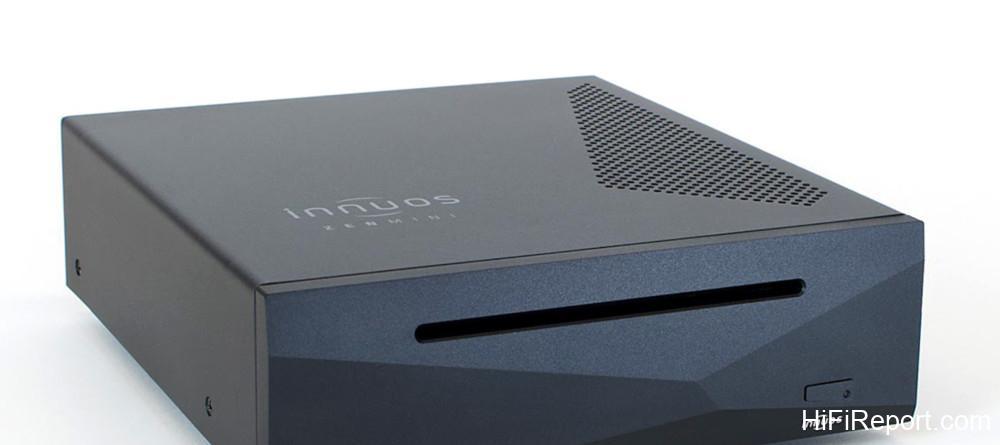
The first and most obvious difference is the inclusion of a built-in DAC, complete with a stereo analog output. This transforms the ZENmini MK3 from solely being a music server (streamer transport) into a fully functional streaming player (streamer with DAC). It can now be connected directly to a stereo power amplifier or even active speakers, forming a simple yet complete system.
Coupled with its existing CD Ripper capability, the ZENmini MK3 becomes a versatile, all-in-one streaming source device.
Secondly, in addition to the analog output, the ZENmini MK3’s digital output options have been expanded. It now features an added optical output and a coaxial digital output. This provides greater flexibility if you choose to use it as a streamer transport, connecting to an external DAC via your preferred digital interface.
Thirdly, the number of network ports has doubled from one to two, labeled LAN and Streamer on the rear panel. Why two network ports? The LAN port is for the standard connection to your router. The port labeled Streamer, however, is designed for a direct connection to other Innuos streaming players (in which case the ZENmini MK3 acts purely as the music server).
This direct link bypasses the router, creating the shortest possible path for audio transmission and minimizing potential interference, which is beneficial for sound quality – a perfectly logical design choice.
Fourthly, as mentioned when discussing the second generation, the ZENmini MKII used a switching power supply as it was the most entry-level model, a design choice that some audiophiles might find less “Hi-End.” Addressing this, Innuos has developed a dedicated linear power supply, the ZENmini Mk3 LPSU, available separately. Consumers seeking the best possible sound quality from the ZENmini MK3 have this optional upgrade path.
Hardware and Software Platform
Beyond these headline features, the ZENmini MK3 benefits from upgrades to both its internal hardware and software. On the hardware front, it utilizes a new mainboard, which is what enables support for the expanded input and output interfaces. For the operating system, it runs Innuos’s latest innuOS 2.0 software, delivering improved performance. Combined with the company’s proprietary Sense App, these enhancements provide a significantly better user experience.
Having covered the differences, let’s focus on the ZENmini MK3’s design in more detail. The ZENmini MK3 features a very compact chassis, standing just 7cm tall with a width and depth of only 22cm, making it remarkably space-efficient compared to many other audio components. The front panel is crafted from sandblasted aluminum with an anodized finish, lending it a premium feel.
Looking at the rear panel, the digital I/O includes the optical and coaxial outputs mentioned earlier, plus four USB 3.0 ports (Type-A connectors). These USB ports can output digital audio, allowing connection to USB DACs, and support a wide range of file formats including WAV, AIFF, FLAC, ALAC, AAC, and MP3. The ZENmini MK3 supports very high-resolution audio over USB, with PCM up to 384kHz/32bit and DSD up to DSD512.
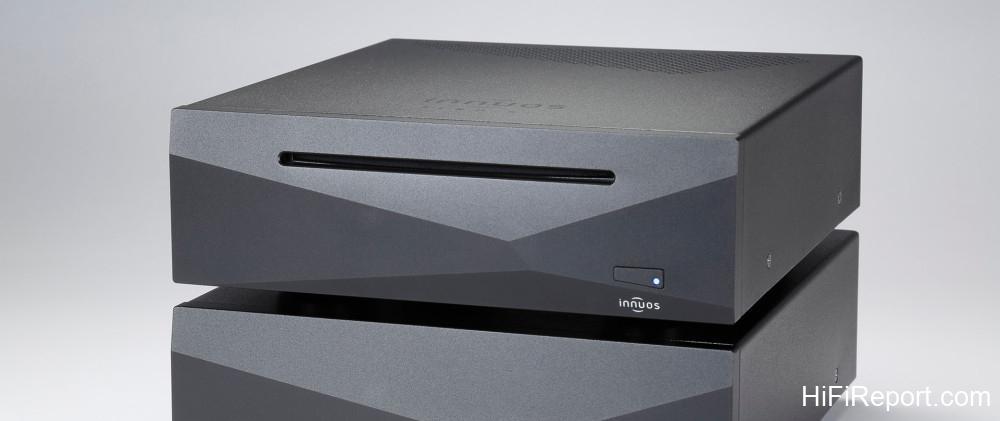
These USB interfaces also support digital audio input, allowing you to import music files from a USB storage device directly to the ZENmini MK3’s internal hard drive.
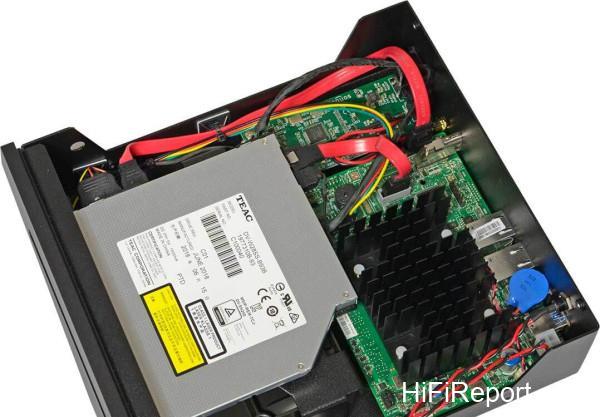
Internally, the ZENmini MK3 is built around a newly developed circuit board and is powered by an Intel Quad Core N4200 2GHz CPU. The CD mechanism is a high-quality TEAC slot-loading drive. When using the CD Rip function, you can choose to rip files in either WAV or FLAC format. For internal storage, you have the option of either a traditional HDD or a faster, vibration-free SSD. Choosing the latter eliminates potential mechanical noise and vibration, contributing to improved sound quality.
Storage capacity options include 1TB, 2TB, or 4TB, with the price naturally increasing with larger capacity.
Versatile Operating Modes
The ZENmini MK3 offers versatile operating modes. The first is Standalone Mode, where it acts as both the server and player at the front-end, connecting to a power amplifier or other equipment downstream. The second is Endpoint Mode, where it connects to another music server and functions solely as the playback device. The ZENmini MK3 also offers strong Roon support. After selecting either Standalone or Endpoint Mode, you can further switch between Roon Core or Roon Endpoint (Bridge) modes.
These mode changes are easily managed via the Settings menu in the Innuos Sense App.
The Innuos Sense App
Let’s delve into the ZENmini MK3’s streaming playback capabilities. This is managed through the Innuos Sense App, developed in-house by Innuos. Sense App is specifically designed for music playback, making it easy to browse, organize, and configure your music library. The app also provides integrated access to major streaming platforms such as Spotify, Tidal, and Qobuz, as well as internet radio stations like Radio Paradise.
Notably, Sense App possesses powerful music file search and integration capabilities. It can search not only the files stored on the internal hard drive but also simultaneously search music libraries on networked NAS drives and cloud-based streaming platforms (like Tidal and Qobuz). This effectively unifies your internal storage, NAS drives, and cloud music streaming services into one large, searchable database.
As audiophiles increasingly use multiple streaming sources, this powerful feature of Sense App provides significant convenience, a capability not found in many competing apps. It truly provides a streamlined and intuitive user experience.
Listening Impressions
For this review, I configured the ZENmini MK3 to function as a streaming player in Standalone mode, utilizing its stereo analog outputs. The downstream system consisted of a NAD M23 stereo power amplifier driving Monitor Audio Platinum 200 3G floorstanding speakers. This setup allowed me to simultaneously evaluate the ZENmini MK3’s server function, streaming playback, and built-in DAC performance.
During listening, the ZENmini MK3 delivered a sound characterized by refinement, clarity, tightness, and cleanliness. The texture was remarkably high, with any music played exhibiting high resolution and fine detail. This was particularly evident with Hi-Res files, allowing the listener to appreciate the subtle beauty enabled by the increased data.
This sound profile was especially captivating with violin music; the tone was fresh and analytical, possessing a sense of effortless grace, with the decay of the string vibrations clearly audible.
For instance, listening to “Across the Stars,” the collaboration album between film score master John Williams and violinist Anne-Sophie Mutter, the opening track “Rey’s Theme” features the violin as the central voice guiding the piece. Mutter’s violin sounded light, airy, clear, and delicate, with a gentle sheen. The accompanying strings that joined later integrated harmoniously, rich with detail.
When detail is sufficient and precise, it allows for a clear soundstage and accurate instrument placement. Playing Beethoven’s String Quartet Op. 18 by the Maggini Quartet, I could hear the four instruments placed with remarkable clarity. Each instrument possessed exquisite detail and beautiful resonance from the instrument’s body. The ensemble passages were equally impressive, revealing the harmonious blending of the different voices, creating a cohesive and beautiful string sound.
Listening to this album, I also perceived a clear sense of space, and combined with the natural positioning, the entire quartet seemed vividly present before me.
The ZENmini MK3 also performed admirably with pop and rock music. While its bass isn’t overtly exaggerated, its fast response, solid energy, and excellent control resulted in elastic and engaging low frequencies that made every track sound exciting. Listening to Guns N’ Roses’ “Welcome To The Jungle,” the electric guitar felt direct, raw, and biting, while the background drum beats were tight, fast, and punchy. Axl Rose’s raw vocals were vividly rendered and incredibly impactful.
Conclusion
In conclusion, the ZENmini MK3 struck me as exceptionally good value. By Hi-End audio standards, its price is very modest, yet it offers a wealth of features. It simultaneously functions as a CD Ripper, music server, music player, streaming preamplifier (via analog out), and DAC. This versatility allows it to be flexibly integrated into various digital streaming systems, a level of adaptability not offered by all streaming players.
Furthermore, the Innuos-developed Sense App is outstanding, providing not only a polished playback interface but also the ability to integrate network streaming platforms, internal hard drives, and NAS drives into a single, searchable super-database. This intelligent search capability is another feature not commonly found in other apps.
It truly feels like the ZENmini MK3 can fulfill almost all digital streaming requirements, and it even offers an upgrade path with the optional linear power supply. Highly recommended.
Specifications
* Type: Network Server, Streamer Player
* CD Drive: TEAC Slot-loading drive
* Internal Storage: Optional HDD or SSD, 1TB, 2TB, or 4TB options
* CPU: Intel Quad Core N4200 2GHz
* Supported Digital Audio Formats: WAV, AIFF, FLAC, ALAC, AAC, MP3
* Supported Audio Sample Rates: 44.1kHz, 48kHz, 88.2kHz, 96kHz, 176.4kHz, 192kHz, 352.8kHz, 384kHz, DSD64, DSD128, DSD256, DSD512 (Note: Original text lists DSD64, DSD128.
Checking Innuos site confirms up to DSD512 for ZENmini MK3 via USB)
* Inputs/Outputs: Digital Coaxial (1), Digital Optical (1), Analog Output (1 pair RCA), RJ45 Ethernet (2 – LAN, Streamer), USB 2.0 (2), USB 3.0 (2)
* Power Consumption: Max 15W
* Dimensions (W.H.D. ): 220×70×220mm
* Weight: 4kg