
In-Akustik Reference NF-204 Micro AIR XLR Review
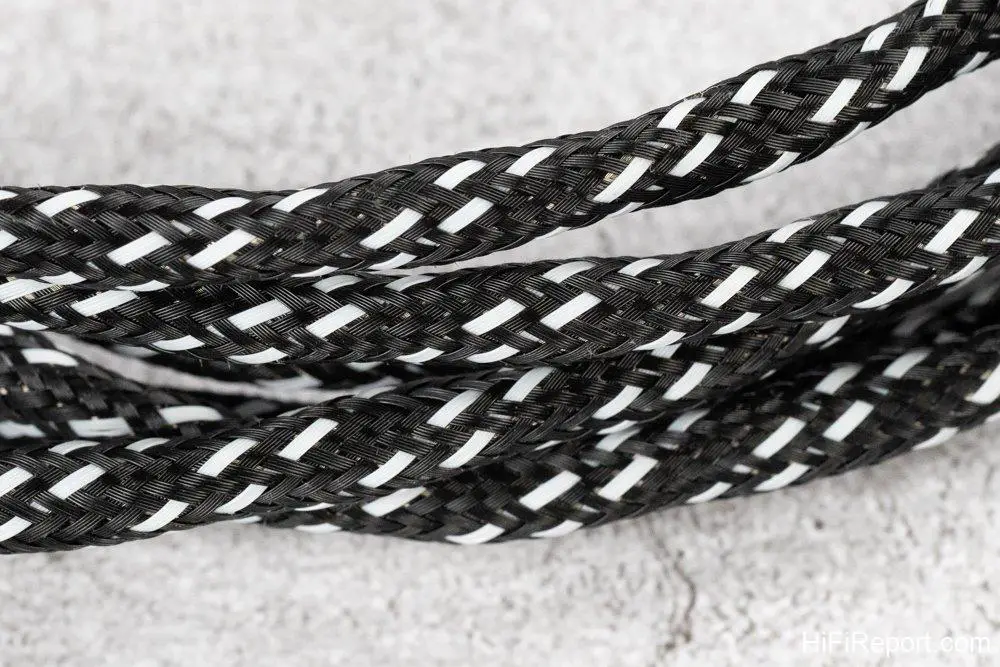
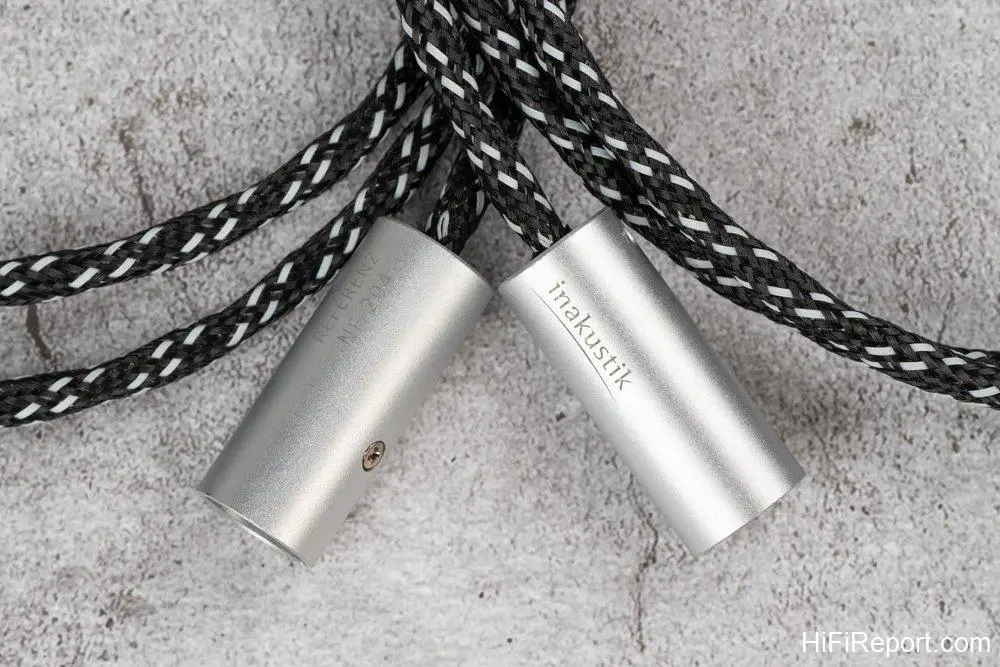
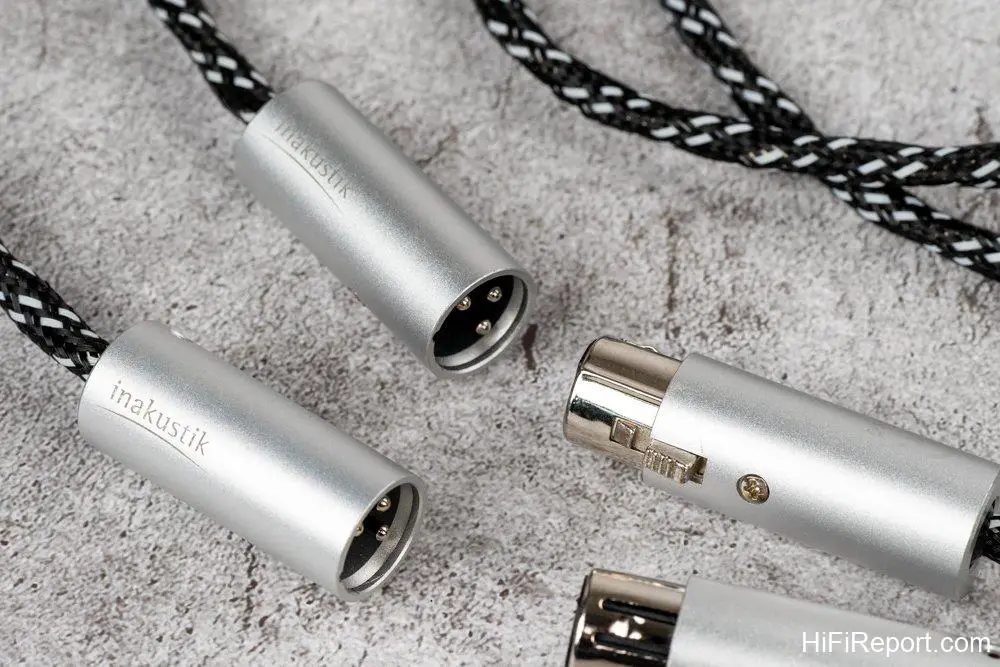
German brand In-Akustik proudly proclaims “Physics Not Voodoo,” championing a scientific approach to cable design. Their exclusive AIR air insulation technology culminates in the flagship Referenz series, albeit at a premium price. The Reference NF-204 Micro AIR XLR (hereafter referred to as NF-204 XLR) shares the same technological principles as the Referenz line, but utilizes “Micro AIR,” making it a more accessible option.
Air-Technology Evolution
In-Akustik’s Air-technology was first introduced in 1999 and has undergone four generations of refinement to reach the pinnacle of the Referenz series. The NF-204 XLR under review represents the third generation of Air-Technology. While based on the same theoretical foundation as the fourth generation, the primary difference lies in the amount of “air” used within the cable.
Why introduce air into audio cables? While air cushions in basketball shoes like Air Jordans protect athletes’ feet and cleverly play on the “Air Jordan” name, what purpose does air serve in audio cables? The answer lies in reducing capacitance.
The Pursuit of Lower Capacitance
I often explain to editors that audio cables essentially involve three key variables: impedance, capacitance, and inductance. Impedance is related to the conductor material, which is why most audio cables use copper or silver due to their excellent conductivity and low impedance. As a result, impedance is rarely a point of discussion for cables. However, silver exhibits lower impedance and inductance than copper, leading to proponents for both types of conductors.
Capacitance, on the other hand, is determined by the cable’s construction. Design philosophies diverge into two schools of thought. One believes that capacitance and inductance introduce a degree of filtering, and therefore, advocate for increasing the thickness of cable shielding and insulation to augment capacitance for tonal shaping. The other camp, to which In-Akustik belongs, views capacitance and inductance as unwanted sonic coloration that should be eliminated as much as possible.
In-Akustik has dedicated over two decades to minimizing capacitance.
Air: The Lowest Dielectric Constant
Where does capacitance originate? From the insulator.
Common insulators in audio cables include PVC, PE, and Teflon, all of which provide good insulation. However, their capacitance characteristics differ. PVC has the highest dielectric constant, resulting in the highest capacitance. PE and Teflon have lower dielectric constants, leading to relatively lower capacitance. Looking at the numbers, PVC’s dielectric constant is approximately 3.5 to 4.5, PE around 2.2 to 2.4, and Teflon roughly 2. But air boasts a dielectric constant of 1. Therefore, air introduces virtually no capacitance. This is the fundamental principle behind Air-Technology: using air to reduce cable capacitance.
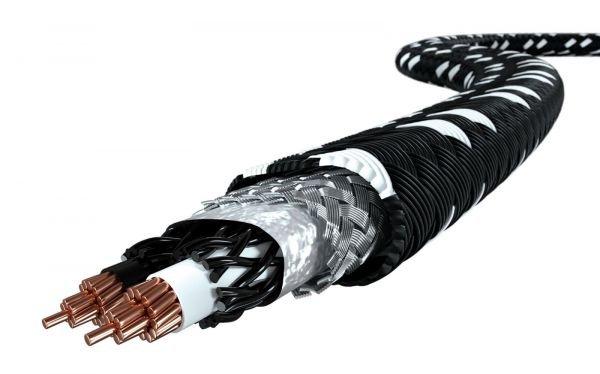
In-Akustik’s top-tier Referenz series employs a unique Air-Helix framework to maximize air volume within the cable to 90%, thereby minimizing capacitance. However, the Air-Helix construction is entirely handcrafted, time-consuming, and costly, inevitably driving up the price. The NF-204 XLR’s Air-Technology shares the same theoretical basis as the Referenz series, but with a reduced air volume, termed “Micro-AIR.” While its capacitance is higher than the Referenz, the structure can be machine-manufactured, making the NF-204 XLR more affordable.
Where is the air incorporated in the NF-204 XLR? It surrounds the central conductor, encased within two ultra-thin layers of PE insulation. Between these PE layers, conduits are introduced, and the air gaps within these conduits constitute the “Micro-AIR.” Compared to the 90% air volume in the Referenz series, Micro-AIR achieves approximately 50% air volume.
Unique Concentric Conductor Arrangement
Beyond the exclusive Micro-AIR technology, the conductor design of the NF-204 XLR is also noteworthy. It utilizes a “Concentric Copper” arrangement, comprising a total of 19 conductors. A central conductor is surrounded by 6 conductors, with an outer ring of 12 conductors. This coaxial structure arranges the conductors in a regular pattern, and the cross-section of each copper conductor contact point forms a concentric circle, hence the name “Concentric Copper.”
The Concentric Cooper design appears logically sound, but why is it not widely adopted by other cable manufacturers? The answer lies in the relatively complex manufacturing process. It requires multiple processing steps to ensure the 19 internal conductors are neatly arranged, allowing their contact surfaces to form concentric circles.
Regarding In-Akustik’s Air-Technology, I find myself reiterating its principles almost every time I review their cables. However, what I admire most is In-Akustik’s dedication over two decades to continuously refine Air-Technology to perfection. This embodies the persistence of engineers, pursuing scientifically grounded cable design. It is rare to see cable manufacturers provide comprehensive test data to substantiate their design principles, but In-Akustik is one of the few exceptions.
Instantly Noticeable 3D Soundstage and Transparency
Having discussed the Micro Air Technology and Concentric Cooper design of the NF-204 XLR, it’s time to evaluate its sonic performance. The NF-204 XLR’s sonic signature is immediately apparent: a transparent and expansive soundstage. Upon connection, a distinct 3D soundstage expansion becomes evident, enhancing height, width, and depth. The musical background is remarkably quiet and black, yet the tonality remains neutral, without artificially boosting any frequency range. Instead, it enhances soundstage transparency, presenting a more open and spacious musical panorama.
During the NF-204 XLR listening session, I connected it between an EAR 868P preamplifier and a 509 MK II power amplifier. The front-end source comprised a YBA CDT-450 transport and a Merging NADAC, driving Wilson Audio Alexia 2 loudspeakers.
Clear Stage Presence with Pianos Separated Left and Right
The moment I connected the NF-204 XLR, the soundstage expansion was immediately noticeable. The flow of musical notes within the listening space became more fluid.
Let’s take the Mozart Double Piano Concerto K.365, performed by Radu Lupu and Murray Perahia, as an example. In the first movement’s orchestral tutti, violins are positioned on the left, cellos on the right, and the brass section emerges from the soundstage’s depth. The brass instruments benefit most noticeably from the NF-204 XLR, with a clear improvement in depth.
When the pianos take over the main theme, the NF-204 XLR seems to enhance channel separation. The two pianos are distinctly positioned on the left and right of the soundstage. The left piano exhibits a brighter tone, while the right piano has a darker timbre. Alternating between solo passages and answering phrases, the NF-204 XLR widens the perceived distance between the two pianos, creating a clear sense of stage presence with left-right separation. During piano duets, the combined force is grand, while solo sections start from the left piano, answered by the right, creating a back-and-forth interplay. The NF-204 XLR makes listening to double piano concertos more engaging and enjoyable.
Enhanced Atmosphere in Live Recordings
The improved 3D soundstage presentation of the NF-204 XLR brings live recordings to life with greater vividness, enhancing the sense of immersion. Listening to Eva Cassidy’s “Live At Blues Alley” album, specifically her rendition of “Bridge Over Troubled Water,” the electric guitar solo intro, subtle background sounds of clinking glasses create the ambiance of a live jazz club recording. Eva Cassidy’s vocals are clear and sweet, with breathy nuances in her voice adding to the emotional depth of her singing.
When the electric bass and drums join in, the NF-204 XLR’s articulate mid-bass performance makes the walking bass lines flow more smoothly. The low-end is tight and controlled, without any muddiness, creating a bouncy and energetic bassline that complements Eva Cassidy’s increasingly powerful vocals, creating a captivating listening experience.
While I have discussed the technical aspects of the NF-204 XLR and In-Akustik’s supporting data, the sonic result translates to cleanliness, transparency, and expansiveness. The cable’s sonic signature is barely perceptible; instead, it naturally expands the soundstage and enhances image definition. Listening to “Bridge Over Troubled Water,” you can vividly imagine Eva Cassidy pouring her heart out on stage, playing the electric guitar, while the electric bass, drums, and piano build a powerful musical landscape. Right up to the final applause from the audience, the NF-204 XLR intensifies the live recording’s atmosphere.
Musicians Seem More Engaged and Passionate
Switching to violin music, Rachel Barton and Samuel Sanders’ “Homage to Sarasate,” the NF-204 XLR’s rich reproduction of musical details adds vibrancy to the recording. Although I described the NF-204 XLR’s tonality as neutral, without artificially boosting any frequency range, the enhanced soundstage transparency and clearer image definition significantly enhance the listening experience. It’s as if the musicians are performing with greater intensity and passion.
Listening to “Serenade Andalouse,” the piano’s slow opening chords are rendered by the NF-204 XLR with substantial weight, contrasting with the violin’s bright and clear tone. As the tempo picks up, the violin’s nimble fingerwork flows smoothly, centered within the soundstage, interwoven with the piano’s rich chords. The NF-204 XLR’s vivid rendering of musical details makes the violin’s subtle nuances more apparent, complementing the piano’s full chords. The two instruments create a vibrant soundstage, and the music’s progression from slow to fast intensifies its dramatic tension. In the middle section, the violin showcases virtuosity, combining bowing with pizzicato plucking – a challenging feat. This transitions into a flowing, gentle melody, before culminating in a final virtuoso passage and a brilliant conclusion. After listening to “Serenade Andalouse” with the NF-204 XLR, I almost felt compelled to stand up and applaud, “Bravo!”
Noticeable Improvement in Recording Vividness
Switching to an audiophile recording, “The Absolute Opus 3: Jazz & Blues,” the first track, “Everybody Loves My Baby,” is a classic jazz standard from Opus 3’s “Live At The Pawnshop” album.
Opus 3 favors Blumlein single-point recording, capturing a natural and lifelike recording environment. Paired with the NF-204 XLR, the recording’s vividness is beautifully enhanced. The opening brass instruments are powerful and dynamic, alternating between the center and left of the soundstage, while the double bass and piano are positioned on the right. Lead vocalist Eva Taylor’s voice emerges from the center, her vocals deep and magnetic. The NF-204 XLR’s fast transient response highlights the brass section’s brilliance and sparkle, and enhances the rhythmic drive of the low frequencies. In short, the music becomes more energetic and alive.
More Lifelike, Closer to the Live Performance
If you are seeking audio cables to boost highs or fill out the bass, the NF-204 XLR may not be your primary choice due to its neutral sonic character, which avoids artificially emphasizing any frequency range. However, the NF-204 XLR’s strengths are clear: an expansive soundstage and rich, articulate musical detail. If you find your audio system’s 3D soundstage lacking in spaciousness, the NF-204 XLR should provide a noticeable improvement. Furthermore, its wealth of musical detail enhances the recording’s sense of realism, bringing you closer to the experience of a live performance.
Specifications
* Type: XLR Analog Interconnect Cable
* Conductor: Concentric Copper Conductor
* Shielding: Dual Shielding
* Dielectric: Micro-Air Dielectric
* Standard Lengths: 0.75 m, 1.0 m, 1.5 m