
Marantz Cinema 60 Review
Home theater enthusiasts have surely noticed the rapid advancements in the capabilities of Japanese AV receivers over the past couple of years. As major brands integrate their resources, technical specifications have become increasingly comprehensive. With AV receiver functionality largely reaching maturity, manufacturers are now focusing on sound quality and aesthetics as key differentiators in the market. Marantz has long been one of my favorite brands.
Not only do they possess a distinctive sonic signature, but their designs are also more aesthetically pleasing than many competitors. Drawing from the classic designs of Marantz audio components built over many years, they feature the iconic circular display paired with flowing panel lines, completely shedding the cold, utilitarian look often associated with AV receivers and instilling a sense of audiophile heritage in the home theater realm.
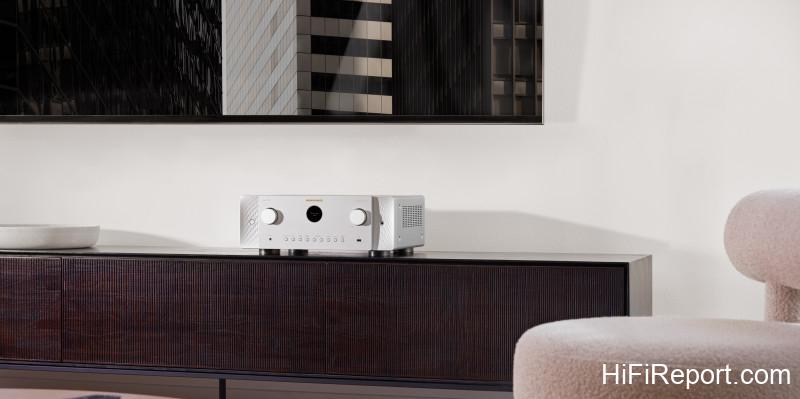
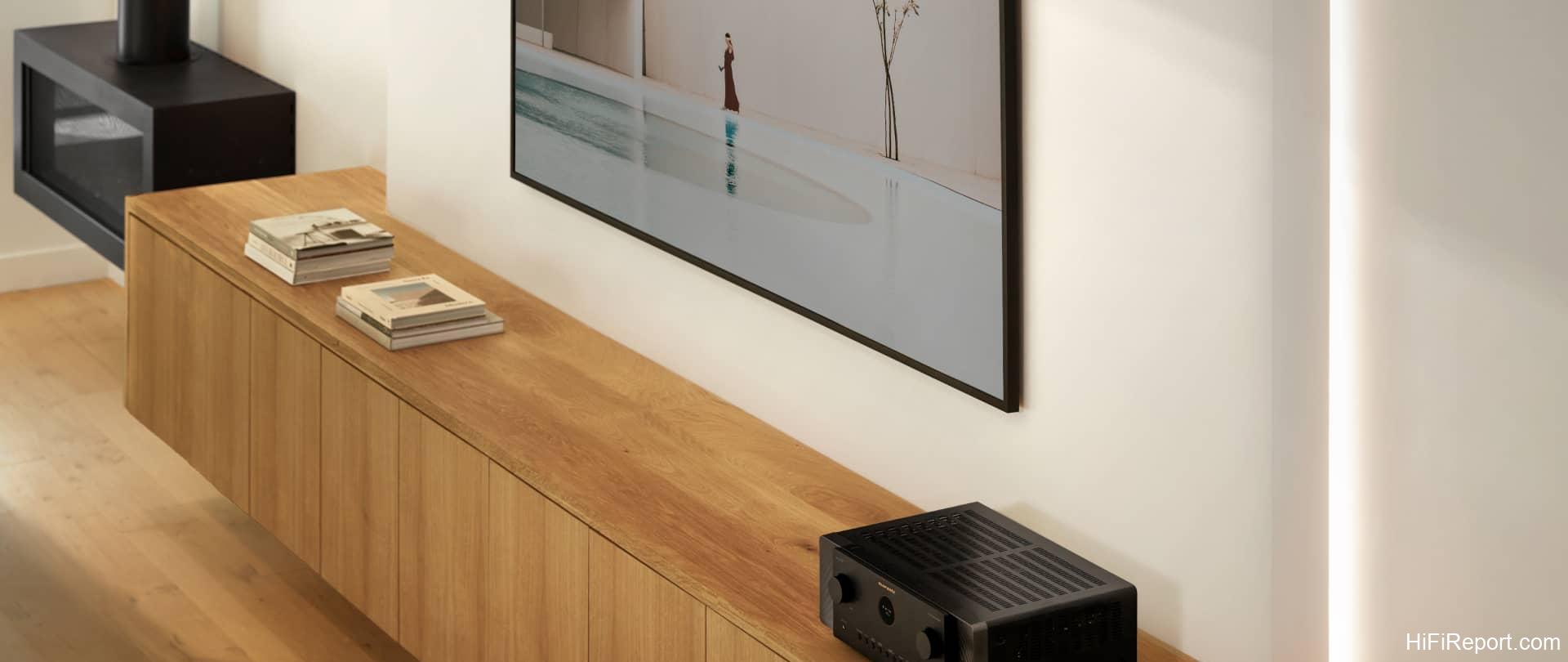
This year, Marantz has truly elevated the design of its home theater lineup, launching the stunning new Cinema series. The Cinema 60, the subject of this review, is the second entry-level model in the series, positioned one step above the slimline Cinema 70s we reviewed previously. It reverts to a standard AV receiver chassis size and is available in both black and silver finishes.

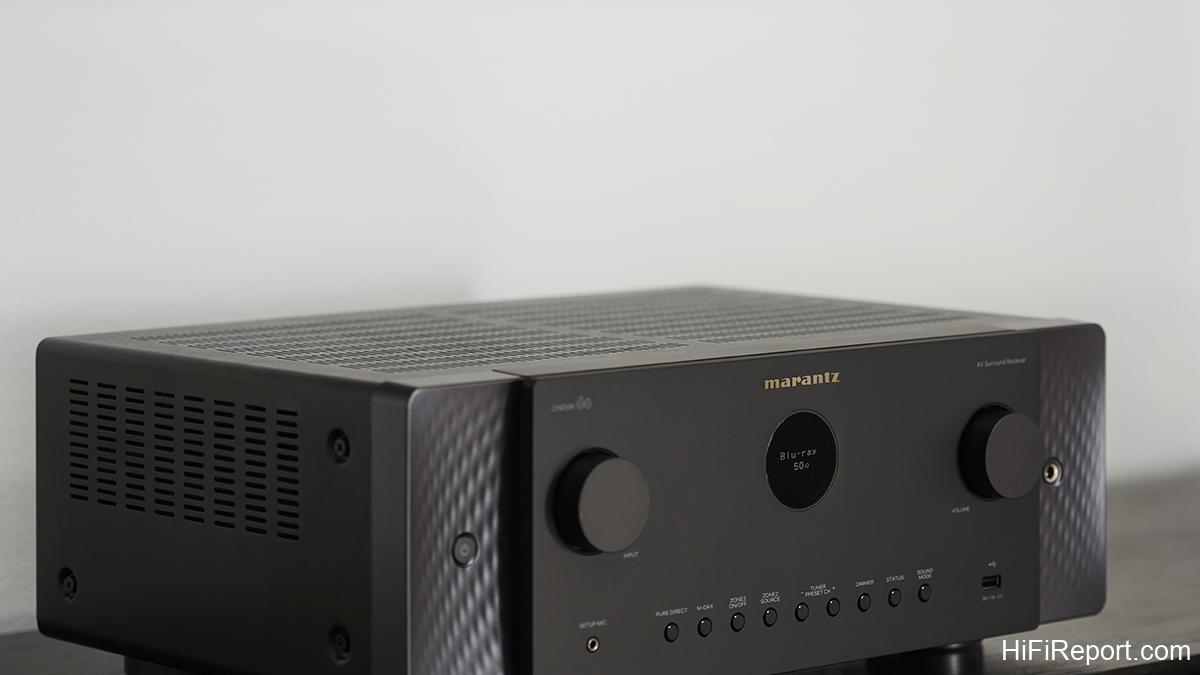
The front panel features the Cinema series’ distinctive dual-layer structure with a matte finish, completely free of the cheap plastic feel often found on budget products. The Cinema 60’s controls are kept as minimal and streamlined as possible, centered around the signature circular display flanked by volume and source knobs, creating a perfectly symmetrical visual appeal. Frankly, it’s probably the most beautiful AV receiver I’ve seen recently!
Adding further elegance to the main panel, the Cinema 60 sports a handsome dark gray decorative plate with a unique diamond pattern. This texture catches the light beautifully, creating a dazzling interplay of reflections. Compared to the monotonous designs prevalent among many AV receivers on the market, the Cinema 60 boasts a level of sophistication closer to that of two-channel amplifiers.
Even the remote control design is meticulously crafted; beyond its refined button layout, the central directional pad is encircled by a rose gold accent line, and the large surface area is covered with a comfortable, non-slip rubber material, making it a pleasure to hold. It also features backlighting for convenient use in a dark theater environment.
Features & Connectivity
Beyond its striking appearance, the Cinema 60 is comprehensively equipped. It features 7.2 channels of output, allowing users to configure a standard 5.2.2 channel Dolby Atmos setup. Coupled with the Audyssey MultEQ XT automatic calibration feature, this ensures precise sound positioning for your speakers. The unit supports object-based audio formats like Dolby Atmos and DTS:X, providing a fully immersive surround experience when watching content from streaming platforms like Netflix or Disney+.
If your space doesn’t accommodate physical height speakers, the Cinema 60 also offers DTS Virtual:X and Dolby Atmos Height Virtualization technologies. These virtualize height effects from planar speaker layouts (like 5.1 or even 3.1), adding a sense of verticality and enhancing the overall dimensionality of the soundstage.
Additionally, the Cinema 60’s channel settings include a “Pre-Out Only” mode, which disables the internal power amplifiers, allowing it to function purely as a surround sound processor. This provides an upgrade path if you wish to use higher-quality external multi-channel power amplifiers.
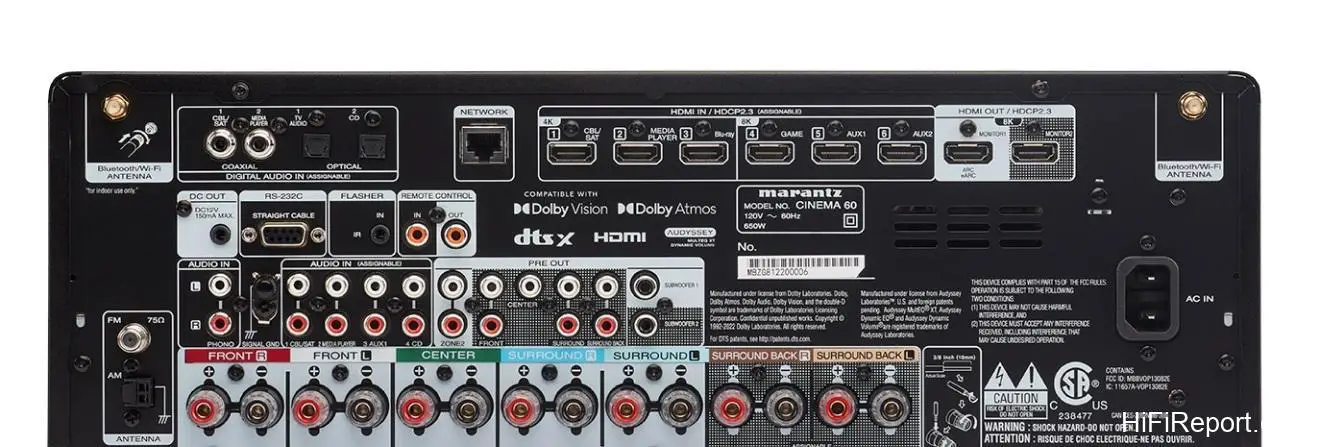
For video, the Cinema 60 is equipped with 6 HDMI inputs and 2 outputs, one more output than the Cinema 70s. Three of these ports are HDMI 2.1 compliant, supporting 8K/60Hz video passthrough and formats like Dolby Vision, HDR10+, and Dynamic HDR. The output ports include eARC audio return functionality, enabling your home theater system to seamlessly replace your TV’s internal speakers and significantly enhance the audio quality for movies and shows.
For music listening, the Cinema 60 offers both wired RJ45 and Wi-Fi connectivity. Besides playing music from PCs or NAS drives on your local network, it supports popular streaming services like Spotify and TIDAL. You can also wirelessly stream music from mobile devices via AirPlay 2. The unit supports high-resolution audio decoding up to PCM 24bit/192kHz and DSD128 files.
Music playback can be conveniently controlled via the HEOS App, which integrates music information and can link with other HEOS-enabled devices in your home for multi-room audio sharing.
In addition to its extensive built-in features, the Cinema 60 also integrates well with other audio sources. It provides 2 optical and 2 coaxial digital inputs as alternatives for connecting devices like TVs or projectors. There are also 5 analog inputs for connecting equipment like CD players or gaming consoles. Furthermore, it offers 6 analog outputs, including Zone 2, allowing you to set up a separate audio system in another room like a bedroom.
For those who enjoy pure analog vinyl, the dedicated Phono input with a built-in MM phono stage allows direct connection of a turntable.
Build Quality & Amplification
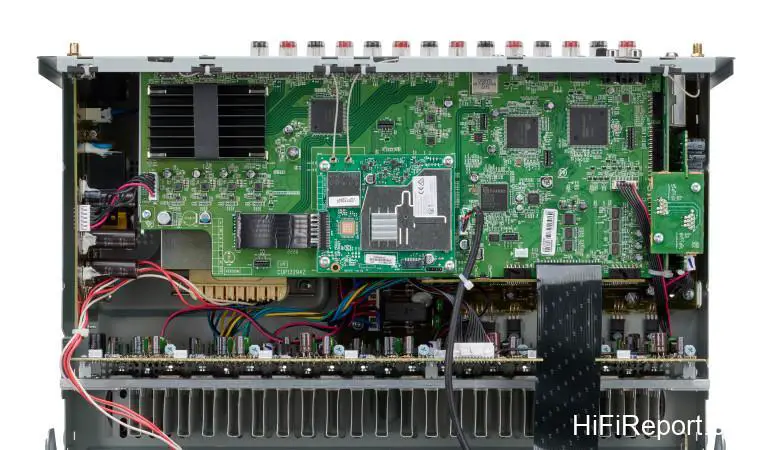
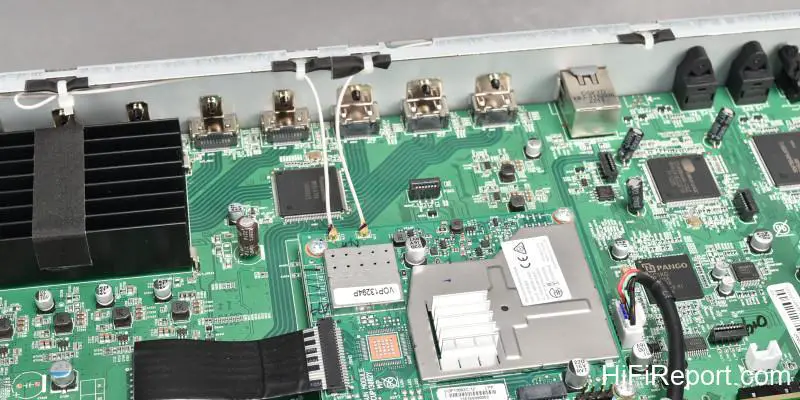
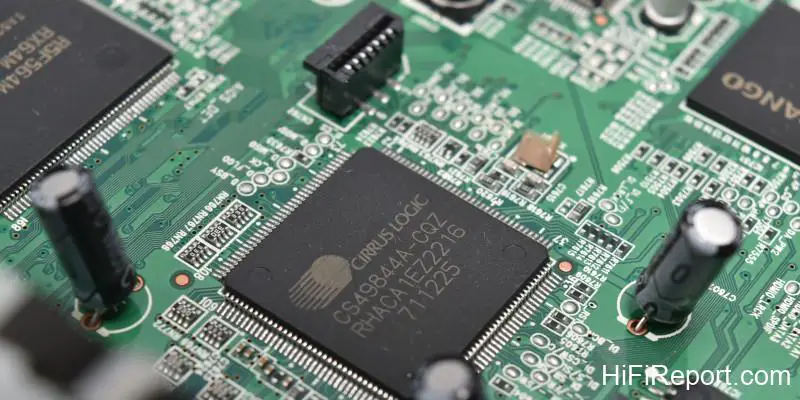
The Cinema 60 features a robust internal design. Lifting the lid reveals a densely packed interior. The main circuit board prominently features the new HDMI 2.1 interface responsible for processing 8K video. Audio processing is handled first by a Cirrus Logic CS49844A 4-core 32-bit DSP chip, tasked with Audyssey MultEQ XT calibration and digital audio processing.
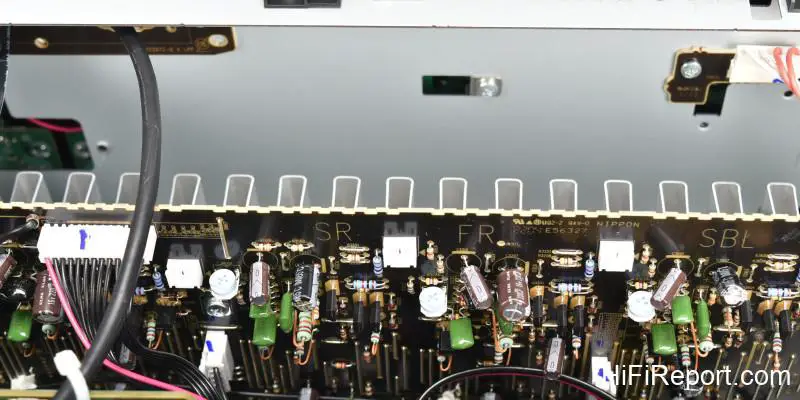
The unit’s decoding section doesn’t rely on a single chip; instead, it uses one 32-bit/384kHz PCM5102A DAC chip per two channels (totaling 4), enhancing music signal-to-noise ratio and improving channel separation. The analog signals then proceed to the amplifier board for amplification. Despite being an entry-level model, the Cinema 60 boasts impressive power capabilities.
Each channel utilizes a pair of discrete power transistors in an A/B class amplifier circuit, delivering 100 watts per channel into 8 ohms (20Hz-20kHz, 2 channels driven). This provides ample power and quality, even for driving larger home theater speakers.
Listening Impressions
Last month, I had the pleasure of experiencing the Marantz AV 10 and AMP 10 multi-channel separates, and their sound quality was truly stunning! The detail and transparency when listening to music were on par with dedicated two-channel amplifiers. This experience left me eagerly anticipating the performance of the mid-range Cinema 60.
If it could inherit the sonic refinement of the flagship models, it would be a significant gift from Marantz to home theater enthusiasts, allowing those with more modest budgets to enjoy this exquisite sound quality.
For testing, I used the Pioneer Excellence series multi-channel speakers from our listening room, along with Monitor Audio in-ceiling speakers for height channels and two M&K V12+ subwoofers, configured as a 5.2.2 channel system. The source was a Sony A80J 4K OLED TV. I began by testing the Cinema 60’s musical performance, playing a live recording of Krystian Zimerman performing Beethoven’s Piano Concerto No. 2. From the very first notes, it did not disappoint!
The piano possessed exceptionally high density, with transparent and well-defined notes completely free of any roughness. The touch dynamics were clear and delicate, and the tone was beautifully resonant. Even the lower keys conveyed a stable sense of the piano’s body resonating. The detailed and refined sonic texture truly rivals that of flagship models – it’s genuinely hard to believe this kind of sound is coming from a budget-friendly AV receiver.
The unit also demonstrated precise instrument positioning, with excellent separation of instruments within a spacious soundstage. I could clearly hear the intricate performance details within each section, down to the metallic quality of the flute. What surprised me even more was that beyond its clear and transparent tone, the Cinema 60 also exhibited powerful dynamics when the full string section played fortissimo.
It drove the physically large Pioneer multi-channel speakers effortlessly, showcasing remarkable control. The immense energy of the strings never masked the performance details, managing to convey both grand scale and delicate musical nuances simultaneously – a feat not easily accomplished by receivers in this class.
The Cinema 60’s precise imaging and high sonic density are its strengths when interpreting movie soundtracks. For instance, playing the slice-of-life animation “The Garden of Words,” the Cinema 60 handled several scenes that are particularly demanding for a home theater system with finesse. The scene where the protagonists take shelter from the rain in a gazebo was rendered beautifully. I could distinctly feel the sparse raindrops falling from above, with clear vertical movement.
As the rain intensified into a downpour, the sense of sonic envelopment immediately expanded, making it feel as if the rain was genuinely falling from the ceiling, without any muddiness, but rather as myriad small, clear water droplets. The distant thunder seemed to roll in from outside the listening room, further highlighting the unit’s excellent spatial rendering.

Another scene, set in a busy school hallway filled with people coming and going, demonstrated the unit’s ability to position not just planar sounds but also vertical effects with accuracy. Conversations and footsteps emanating from various classrooms were clearly discernible in terms of height and distance without needing to see the screen, creating a vivid 3D soundstage. The Cinema 60 consistently portrayed these subtle yet complex sound details and positioning with lifelike naturalness.
Moving on to the action film “Extraction,” during the scene where the protagonist drives the boy to escape, the prolonged in-car perspective allowed me to hear the traffic passing by and the various street sounds coming from all directions. The sonic shapes and positions were incredibly clear, allowing me to accurately gauge distance, creating a sense of being right inside the vehicle. I could hear the police siren approaching and feel the palpable tension of the situation.
In one moment, as the car makes a sharp 360-degree turn to evade pursuit, I could feel the front wheel circling around, kicking up gravel from the ground. The sound movement was seamless and continuous, resulting in vivid and robust surround effects.
Many budget AV receivers that prioritize sound quality often offer refinement but lack power. However, this is absolutely not the case with the Cinema 60. During the final intense firefight on the bridge, I could hear the ferocious exchange of bullets. The moment of impact was delivered with solid, full-bodied force, and the trajectory of their movement was clear and uninterrupted.
The explosive dynamics of rocket launchers hitting their targets were truly impactful, and the unit demonstrated excellent control over dynamic range. The enveloping sound of spreading fire made it feel as though I was right there, immersed in the dangerous battlefield atmosphere.
Conclusion
As home theater technology matures, the competition among AV receivers is no longer solely a battle of specifications. Each brand must now leverage its core strengths to win over consumers. The Marantz Cinema 60 is a recent example of a product delivered with genuine sincerity. Its refined exterior is clearly a significant step up from previous Marantz models in the same class, but having actually listened to the Cinema 60, I can attest that its leap in sonic quality is equally impressive.
If you are a value-conscious enthusiast looking to satisfy both your aesthetic preferences and performance requirements within a reasonable budget, choosing the Cinema 60 leaves absolutely no room for doubt!
Specifications
* Design: 7.2 channel AV Receiver
* Power Output: 100W per channel (8ohm, 20Hz-20kHz, 2ch driven)
* Dolby Support: Dolby TrueHD, Dolby Atmos, Dolby Atmos Height Virtualization, Dolby Atmos Music, Dolby Surround
* DTS Support: DTS HD Master, DTS:X, DTS Neural:X, DTS Virtual:X
* Hi-Res Audio File Support: 24bit/192kHz (FLAC, WAV, ALAC), DSD (2.8MHz/5.6MHz)
* Inputs/Outputs: HDMI In x6, HDMI Out x2, RCA Analog Audio In x5, RCA Phono In x1, Optical Digital Audio In x2, Coaxial Digital Audio In x2, 7.2ch Pre-Out x1, Speaker Terminals x7, 6.3mm Headphone Out x1, USB Type-A x1, FM/AM Antenna x1, RJ45 x1, Remote Control In/Out x1
* Dimensions (W.H.D): 441 × 165 × 342mm
* Weight: 10.8 kg

- Sound Master tuned: Hand-tuned at Marantz’s legendary Shirakawa facility in Japan, CINEMA 60 delivers the warm, enveloping sound that defines The Most Musical Sound in any room
- Timeless design: Symmetrical, elegantly proportioned, and built with premium materials, CINEMA 60 is as refined in appearance as it is in performance
- Immersive audio: Dolby Atmos and DTS:X place you at the center of a three-dimensional sound experience that brings every scene to life
- Uncompromising power: With 7.2 channels and 100 W per channel, CINEMA 60 delivers the commanding dynamics and subtle nuance of a world-class home theater
- Effortless connectivity: Six HDMI inputs — three 8K-compatible — plus analog, digital, and phono connections welcome virtually any source into your entertainment universe